Last Updated on 4 months ago by
Most homeowners assume installing an interior door is a weekend project. Then they pull the old one off the hinges and realize the frame isn’t square, the rough opening is the wrong size, or the new door doesn’t match the old hardware. That’s when the “easy DIY job” turns into a $400 mistake or a call to a contractor who charges twice what it should’ve cost.
We’ve coordinated door installations across dozens of Interior Design Trend renovation projects, from single bedroom swaps in Chicago condos to full-home door replacements in Houston. This guide breaks down what interior door installation actually costs in 2026, what the process really involves, and how to tell whether you should do it yourself or hire someone.
What Does Interior Door Installation Cost in 2026?
Interior door installation costs between $150 and $900 per door, depending on whether you’re installing a slab door into an existing frame or replacing the entire frame and jamb. Most homeowners land around $300 to $450 per door for a standard pre-hung installation with labor included.
Here’s how that breaks down by job type:
| Installation Type | Cost Range (Labor + Materials) | Typical Time |
|---|---|---|
| Slab door only (existing frame reused) | $150 – $300 | 1 – 2 hours |
| Pre-hung door (frame + door together) | $300 – $600 | 2 – 4 hours |
| Full frame replacement + door | $500 – $900 | 4 – 6 hours |
| Pocket door installation | $700 – $1,500 | 6 – 10 hours |
| French or double door installation | $600 – $1,400 | 4 – 8 hours |
The door itself is usually the smaller expense. A basic hollow-core slab door runs $40 to $120 at Home Depot or Lowe’s. Solid-core doors run $100 to $250. Labor is where the real cost sits a carpenter charges $75 to $150 per hour, and a standard door takes 1.5 to 3 hours when the frame is already square.
City matters too. A 2025 remodel we worked on in Manhattan ran $180 per door just for labor the same job in a Houston suburb cost $90 per door. If you’re in New York, Los Angeles, or San Francisco, expect to pay 40% to 60% more than the national average.
Slab Door vs Pre-Hung Door
This is the decision that determines your whole budget, and most homeowners get it wrong before they even call a contractor.
A slab door is just the door panel no frame, no hinges pre-attached. You use this when your existing frame is square, undamaged, and the right size. It’s the cheaper option and the faster install.
A pre-hung door comes with the door already mounted in its frame, hinges attached, sometimes with the lockset bore already cut. You need this when your old frame is warped, rotted, water-damaged, or you’re changing the door size entirely.
Here’s the honest test: open your current door and check the gap around the edges. If it’s wildly uneven wider at the top than the bottom, or the door drags on the floor on one side your frame has shifted, and a slab door won’t fix that. You need a pre-hung replacement.
One mistake we see constantly: a homeowner in Florida bought a $60 slab door to save money, installed it into a frame that had warped slightly from humidity, and ended up with a door that wouldn’t latch. The “savings” cost them another $200 in a second trip and a pre-hung unit anyway.
How to Install an Interior Door The Real Process
If you’re going the DIY route, here’s what the job actually involves. This isn’t a 20-minute job no matter what a YouTube thumbnail tells you.
- Step 1 Measure the rough opening. Width, height, and wall thickness. Standard interior doors run 80 inches tall and 24 to 36 inches wide, but older homes vary. Don’t assume.
- Step 2 Remove the old door and frame. Pull hinge pins, remove the door, then pry the casing and jamb off carefully if you’re replacing the full frame.
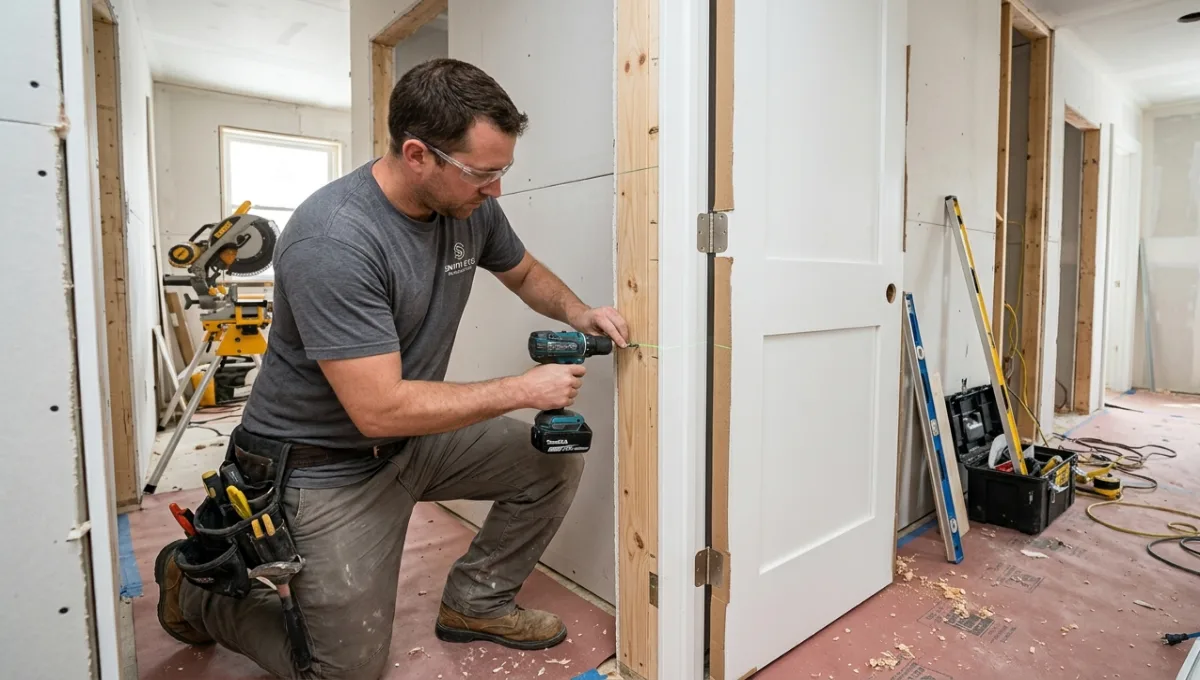
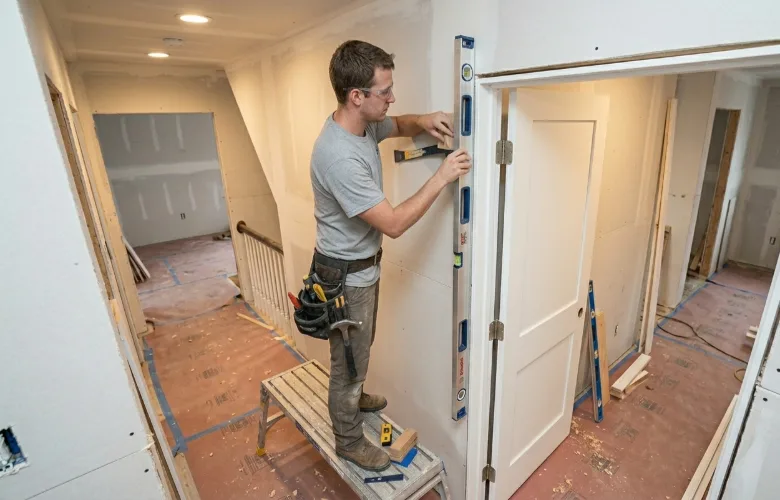
- Step 3 Check the opening is square. Use a level on all four sides. If it’s off by more than a quarter inch, you’ll need shims during installation and this is where DIY installs usually go wrong.
- Step 4 Set the frame and shim it plumb. The frame has to be perfectly vertical and square before you screw it in, or the door will swing open or shut on its own.
- Step 5 Hang the door and check the gap. You want a consistent 1/8 inch gap around the top and sides, slightly more at the bottom.
- Step 6 Install hardware and casing. Hinges, lockset, then the trim that covers the gap between frame and wall.
The shimming step is where most DIY installs fail. A door that isn’t shimmed correctly will look fine for a week, then start swinging shut on its own or refusing to latch as the house settles. We’ve been called in to fix more “almost right” door installs than we can count usually a $50 fix that could’ve been avoided with proper shimming the first time.
DIY vs Hiring a Pro An Honest Breakdown
DIY makes sense if you’re installing a slab door into a frame you’ve confirmed is square, you own a level and a few basic tools, and you’re only doing one or two doors. Expect to spend $80 to $200 total and an afternoon of work.
Hire a pro if you’re replacing the full frame, doing more than three doors, working with an older home where nothing is standard size, or installing a pocket door or French doors. The complexity and the cost of getting it wrong both go up fast.
Here’s the real math on a whole-home job. A homeowner in Chicago replacing eight interior doors got a contractor quote of $2,800 for full pre-hung installation. Doing it himself with pre-hung units from Home Depot would’ve run about $1,400 in materials, plus rented tools and roughly three full weekends. He hired the contractor. His reasoning: “Three weekends of my time was worth more than $1,400 to me, and I wanted it done right the first time.” That’s not a wrong answer it’s just a budget and time tradeoff every homeowner has to make for themselves.
Common Mistakes That Cost You More Later
Buying the wrong door size. Standard sizes exist for a reason custom sizing for a non-standard opening can add $100 to $300 to your cost. Measure twice before you order.
Skipping the square check. A door installed in a frame that’s even slightly out of square will bind, stick, or swing on its own within months.
Ignoring hinge gap. Hinges need to sit flush in their mortise cuts. A hinge that sits even an eighth-inch off causes the door to hang crooked.
Mismatched hardware finishes. We see this constantly in older homes being updated room by room brushed nickel in one hallway, oil-rubbed bronze in the next. It’s a small detail that makes a renovation look unfinished.
Not accounting for flooring height. If you’re installing new flooring after the door, factor in the clearance now. We’ve seen doors installed first, then new hardwood added, leaving a door that won’t clear the floor requiring a full re-trim of the bottom.
Hollow-Core vs Solid-Core Doors What You’re Actually Paying For
| Type | Cost | Best For |
|---|---|---|
| Hollow-core | $40 – $120 | Closets, low-traffic interior rooms |
| Solid-core | $100 – $250 | Bedrooms, bathrooms, sound dampening |
| Solid wood | $200 – $500+ | Statement doors, older home matching |
Hollow-core doors are fine for closets and rarely-used rooms they’re lighter, cheaper, and easier to hang. The tradeoff is sound. If you’ve ever heard every word of a phone call through a bedroom door, it’s probably hollow-core.
Solid-core is worth the extra $60 to $100 per door for bedrooms and home offices. The sound dampening difference is noticeable immediately, and they hold up better to slamming over the years something worth knowing if you have kids or roommates.
What If You’re Just Painting an Interior Door?
If your existing door and frame are in good shape and you’re just updating the look, you don’t need a full install you need paint. The cost math is completely different and a lot cheaper. Our interior paint cost per square foot guide breaks down exactly what a fresh coat runs by room and material grade, which is worth checking before you commit to a full door replacement you might not need.
Interior Door Installation FAQ
How much does it cost to install one interior door?
A single interior door installation costs $150 to $900 depending on whether you’re installing a slab door into an existing frame or doing a full pre-hung replacement. Most homeowners pay $300 to $450 for a standard pre-hung door with labor included. Materials alone run $40 to $250 for the door itself. On a recent project in a 1920s home in Boston, the original frames were so out of square that what should’ve been a $300 job turned into $550 per door old houses rarely follow standard measurements.
Can I install an interior door myself without a contractor?
Yes, if your existing frame is square and undamaged and you’re installing a slab door. This is a manageable weekend project with basic tools. If your frame is warped, the wrong size, or you’re replacing more than a few doors, hiring a pro saves you from costly redo work down the line. Honestly, the tool that matters most isn’t a drill it’s a four-foot level. Skip that and you’re guessing.
How long does it take to install an interior door?
A slab door installation into an existing frame takes 1 to 2 hours. A full pre-hung door with frame replacement takes 2 to 4 hours for an experienced installer, longer for a first-time DIYer. Pocket doors and French doors can take 6 to 10 hours due to the added framing work. First-timers should budget double whatever a YouTube video shows measuring twice and adjusting shims takes real time.
What’s the difference between a slab door and a pre-hung door?
A slab door is just the door panel with no frame attached, used when your existing frame is square and in good condition. A pre-hung door comes already mounted in its own frame with hinges attached, used when the old frame is damaged, warped, or the wrong size for your new door. If you’re not sure which one you need, it’s worth paying a contractor for a 15-minute opinion before buying anything guessing wrong here is the single most expensive mistake homeowners make on this job.
Why does my new interior door swing open or shut on its own?
This almost always means the frame wasn’t shimmed plumb during installation. A frame that’s even slightly out of level causes the door to swing under its own weight. The fix usually involves re-shimming the hinge-side jamb a job that takes about 30 minutes for a professional but is easy to get wrong the first time. If the door swings shut specifically, check the top hinge first that’s where most uneven shimming shows up.
Are prehung doors from Home Depot or Lowe’s good enough, or should I go custom?
For standard 80-inch openings, Home Depot and Lowe’s prehung doors are genuinely fine we use them on the majority of our remodel projects because the quality-to-price ratio is hard to beat. Custom millwork only makes sense for non-standard openings, matching historic trim profiles, or solid wood doors over 36 inches wide, where stock options start to feel flimsy. Don’t pay custom prices for a standard-size bedroom door.
Does interior door installation need a permit?
No, in almost every US city, replacing an interior door like-for-like doesn’t require a permit since you’re not touching structural framing or electrical. The exception is if you’re widening a doorway, which can affect a load-bearing wall that’s a different job entirely and does need a permit and likely a structural assessment first.
What’s the cheapest way to replace several interior doors at once?
Buy all your doors in one trip and ask for a multi-unit discount most lumber yards and Home Depot pro desks will knock 10% to 15% off an order of five or more doors. Then hire one contractor for a single visit instead of paying per-door service fees. We’ve seen homeowners save $400 to $600 on an eight-door job just by bundling the order and the labor visit instead of doing them one at a time over several weekends.
Should the door swing direction change anything about cost?
Not the installation cost itself, but it affects planning. Right-handed versus left-handed swing is about which way the hinges face, and getting it wrong means returning the door most retailers won’t refund a door once the hinge mortises are cut. Stand in the doorway and picture which way feels natural to push before you order, or have your contractor confirm it during measurement.
Getting the Door Right Is Part of a Bigger Renovation Plan
Doors are easy to treat as an afterthought, but they’re one of the details that makes a renovation feel finished or feel rushed. If you’re planning a larger room update alongside your door replacement, it’s worth budgeting for the full picture before you start. Our interior design cost guide breaks down what a full room redesign runs in 2026, and our interior designer cost guide covers when it’s worth bringing in a professional versus handling it yourself.
Get the small details right square frames, the right door weight for the room, hardware that matches throughout the house and the bigger renovation reads as intentional instead of patched together.