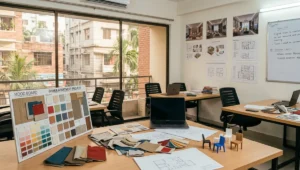
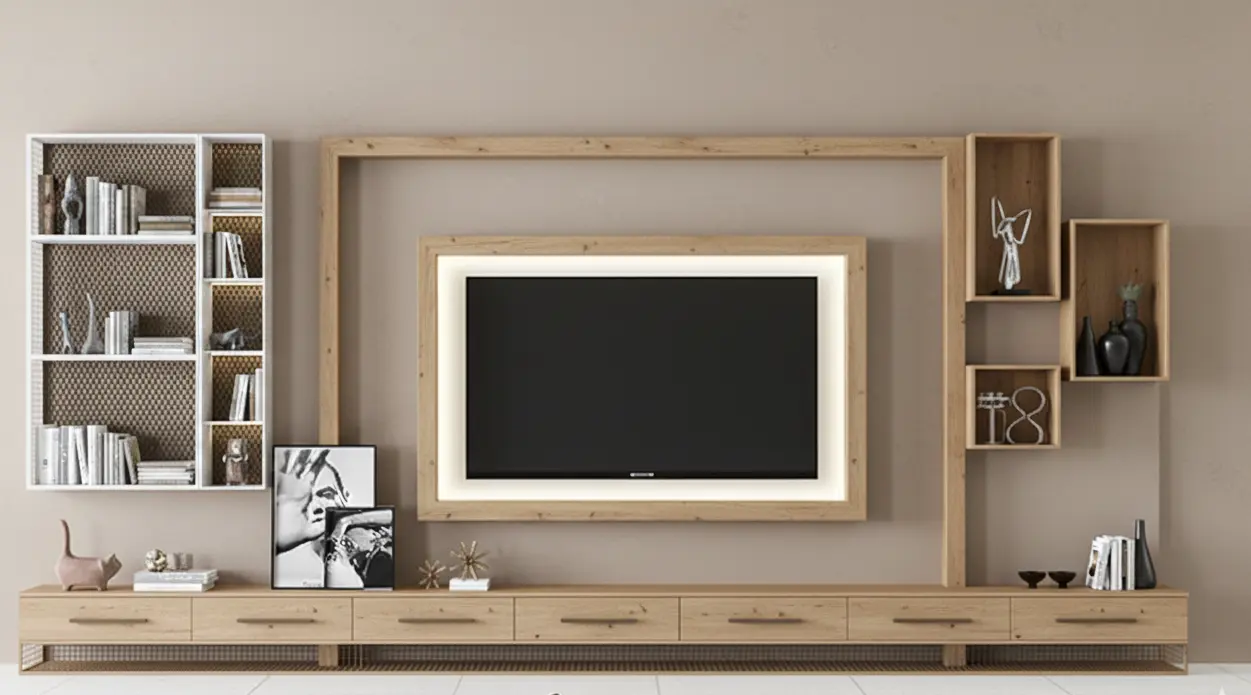

Welcome to Interior Design Trend
Interior Design Trend is a USA-focused design resource run by working interior design professionals. We publish detailed, research-backed guides on home design, room renovations, and commercial interiors with real cost figures, material recommendations, and layout advice drawn from actual projects across the country.
If you’re planning a renovation, redesigning a single room, or trying to understand what good interior design actually costs in your city, you’ll find specific, honest answers here — not generic inspiration content.
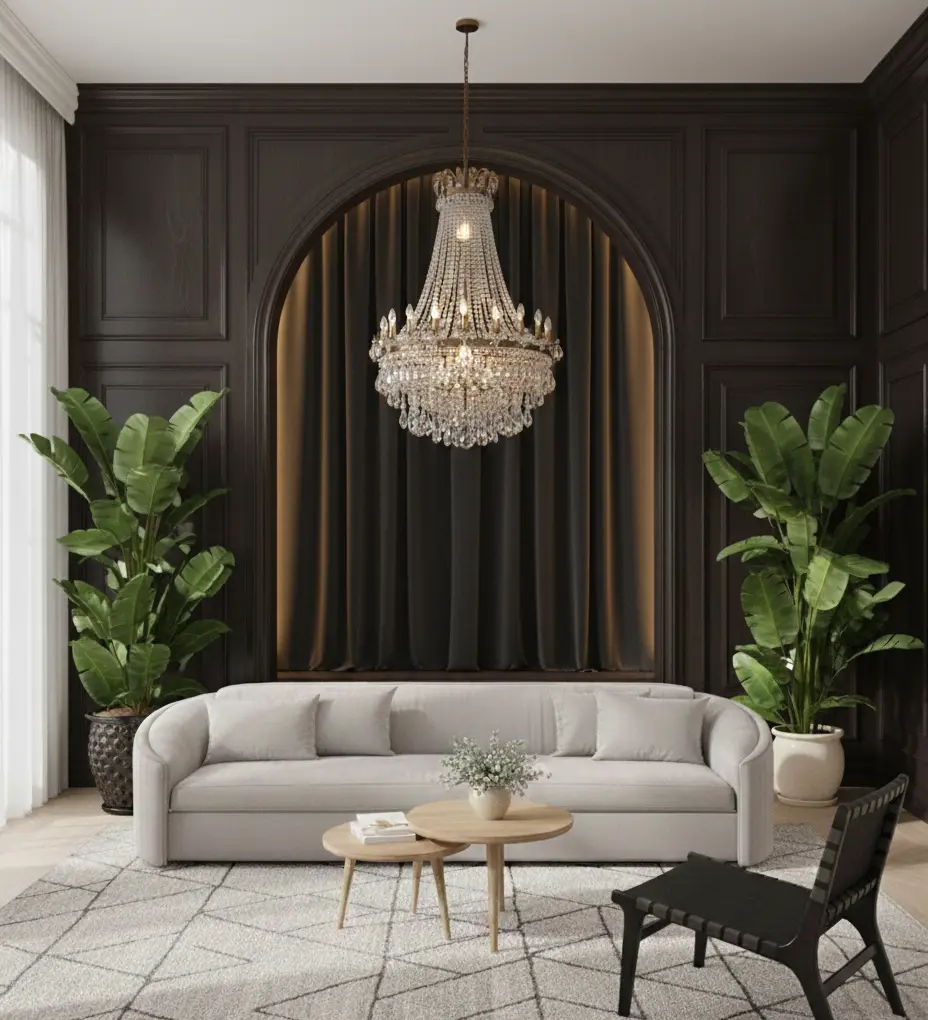
Interior Design Trend 2026
The biggest shift happening in American homes right now isn’t a single trend. It’s a correction.
After a decade of prioritizing how spaces photograph — open shelving, all-white kitchens, furniture arranged for visual symmetry rather than daily use — homeowners are redesigning around how they actually live. Rooms are being built for real families: kitchens with proper storage, bedrooms designed for sleep, living rooms that work for both focused time and social gatherings.
This doesn’t mean design quality is going down. It means the definition of quality is changing. A well-designed room in 2026 is one that reduces friction in daily life, holds up to real use, and still looks considered five years after the renovation.
Here’s what that looks like in practice across different room types.
Home Interior Design
Most home renovation mistakes come from designing for how a space looks in photos rather than how it functions at 7am. The living areas that hold up best over time are the ones built around natural light, sensible traffic flow, and storage that’s actually sufficient for the household using it.
In 2026, the material palette in American homes has shifted noticeably toward warmth. Wide-plank white oak floors, limewash plaster walls, linen and boucle upholstery, and unlacquered brass hardware are appearing across price points — from high-end Manhattan apartments to mid-range suburban renovations in Texas and Ohio. These materials photograph well, but more importantly, they wear well and feel genuinely livable.
The open-plan layout isn’t going away, but designers are getting more intentional about zone definition within open spaces. A reading corner set up with the right chair, lamp, and sight lines functions better than one that exists only conceptually on a floor plan.
Read our Home Interior Design guides →
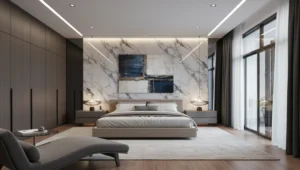
Bedroom Interior Design
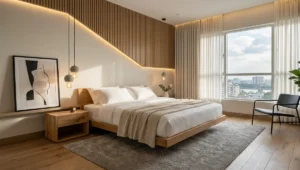
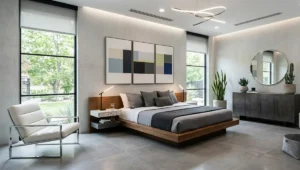
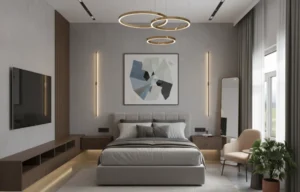
The bedroom has a single primary function — quality sleep — and most bedroom renovations underinvest in the things that support it. Lighting is the most common failure point. Harsh overhead fixtures controlled by a single switch do not create conditions for good rest. A layered system — ambient ceiling light, dedicated reading lamps at each bedside, and a dimmer on everything — costs roughly $300–600 to add to an existing bedroom and makes a measurable difference in how the room feels at night.
Storage is the second consistent problem. Clothes, linens, and personal items need to go somewhere, and if the storage isn’t sufficient, the room looks and feels cluttered regardless of how well everything else is designed. Built-in wardrobes and under-bed storage drawers solve this without adding visual bulk to the room.
Color in 2026 bedrooms leans toward warm neutrals — sand, warm white, dusty rose, soft sage — rather than the cool grays that dominated the last decade. These tones read as calm without feeling clinical.
Read our Bedroom Interior Design guides →
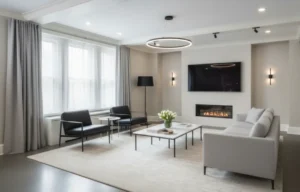
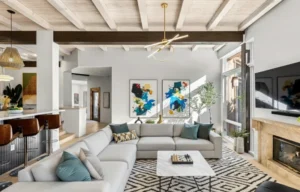
Living Room Interior Design
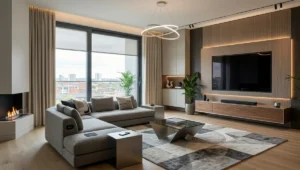
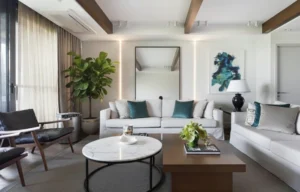
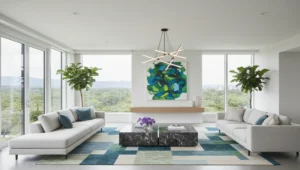
The living room is the hardest room to design well because it has to serve the most conflicting purposes. In households with children, it needs to be functional for active daily use and still feel like somewhere adults want to spend time in the evening. In smaller homes and apartments, it often has to absorb the home office, the entertainment area, and the main social space simultaneously.
Modular seating — sectionals with movable components, ottomans with internal storage — handles changing needs without requiring a full redesign. It’s become one of the more practical investments in living room design, particularly for households that anticipate their space needs changing over the next few years.
One structural choice worth making early: what the room orients around. Rooms organized around a fireplace, a large window, or a well-composed shelving wall tend to feel more considered than rooms where every piece of furniture simply faces the television.
Read our Living Room Interior Design guides →
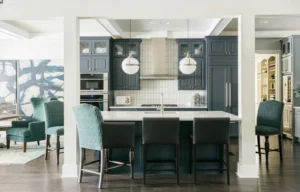
Kitchen Interior Design
Kitchen renovation is consistently one of the highest-ROI projects in residential design — and one of the most frequently over-budgeted. The decisions that make the biggest visible difference are rarely the most expensive ones.
Cabinet color has more impact on how a kitchen feels than most homeowners realize going into a renovation. The shift away from white toward warm-toned cabinetry — cream, sage, soft olive, warm gray — has been consistent across US markets for the past two years. These tones hold up better to daily use and age more gracefully than stark white.
Hardware is a detail that disproportionately affects the finished look. Unlacquered brass or matte black pulls and faucets on otherwise simple cabinetry read as intentional and considered. The cost difference between standard chrome hardware and a quality unlacquered brass alternative is typically $200–500 for a full kitchen, which makes it one of the highest-impact low-cost upgrades available.
Concealed appliances — refrigerators and dishwashers behind cabinet panels that match the rest of the kitchen — are becoming standard in mid-range renovations, not just luxury builds. They make kitchens feel more like rooms and less like appliance showrooms.
Read our Kitchen Interior Design guides →
Office Interior Design
The home office design mistakes made in 2020 and 2021 — when millions of people set up workspaces quickly without planning for long-term use — are still showing up in homes today. Inadequate desk height, chairs that aren’t designed for eight hours of sitting, lighting that creates screen glare, and rooms with no acoustic treatment are the most common problems we see when people describe why their home office “doesn’t feel like it works.”
Fixing these issues doesn’t require a full renovation. A sit-stand desk converter, a quality task chair rated for extended use, a desk lamp positioned to eliminate screen glare, and acoustic panels on one wall (or even heavy curtains and an upholstered chair) address most of the functional problems in a poorly performing home office.
In commercial office design — dental practices, medical clinics, professional service offices — the primary consideration is workflow. Spaces designed around how work actually moves through them, rather than around appearance, consistently outperform on both staff efficiency and client experience.

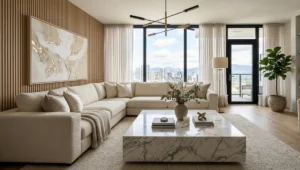
New Design
Interior Design Trend FAQ
What are the interior design trends for 2026?
The largest tendencies are the use of natural elements, the use of muted colors, the use of energy-saving light as well as the use of curved furniture. Flexible designs, smart storage and the warm earthy colors will dominate the USA homes. It is human desire to have more pleasant areas to maintain health, comfort, and rest.
What will be trendy in 2026?
The trends will be environmentally friendly materials, stone surfaces, cozy light, multi-purpose furniture, warm clay and green colors. Very popular too will be home offices, sore spa-style bathrooms and natural wood kitchens.
What will houses look like in 2026?
Houses will appear open, cozy, and inspired by nature. Anything earthy, rounded curves, intelligent lighting and modular designs should be expected. Storage will be more invisible and design will be oriented towards the mental wellness and simplicity.
What paint colors will rule in 2026?
Neutral palette will be dominated by warm beige, taupe, clay, sage green and soft terracotta. These colors make any room soothing and modern.
What are the kitchen colors for 2026?
The kitchens will be made of warm woods, soft green, brown-based neutral, clay orange, and matte black. Natural color variation stone backsplashes shall also gain popularity.