Planning to redesign your home? Interior design in the USA isn’t one-size-fits-all. A modern loft in Chicago needs a completely different approach than a ranch home in Houston or a condo in Miami. Getting this wrong costs you time, money, and a lot of frustration.
At Interior Design Trend, we’ve worked on 200+ residential projects across multiple US states. This guide gives you real costs, honest style breakdowns, city-specific advice, and smart hiring tips. By the end, you’ll know exactly what to do — and what to avoid.
What Does Interior Design in the USA Actually Cost?
Let’s start with the number every homeowner wants to know. Interior design in the USA costs between $2,000 and $12,000 for a single room, depending on your location, designer experience, and scope of work.
But that range is wide. Here’s how it breaks down more specifically.
Full renovation + design in NYC or LA: $50,000–$150,000+
By billing model:
Hourly rate: $75–$450/hour depending on city and experience
Flat fee: Common for defined scopes like one bedroom or one living room
Percentage of project cost: Usually 10%–30% of total renovation budget
Here’s the thing — designers in New York and Los Angeles charge significantly more than those in Houston or Phoenix. In a recent project we handled in a 1,200 sq ft New York City apartment, design fees alone ran $18,000 before a single contractor was hired.
What most people don’t know is this: the design fee is only part of your total cost. Furniture, materials, contractor labor, and permit fees are all separate. Always ask for an itemized quote before signing anything.
The Most Popular Interior Design Styles Across the USA
American homeowners aren’t all chasing the same aesthetic. Regional preferences are real, and your style should match both your taste and your home’s architecture.
Here are the styles driving the most demand right now.
Modern and Contemporary
Clean lines, neutral tones, and functional furniture define this style. It’s the most requested style in urban apartments — especially in Chicago, New York, and Los Angeles. Think open floor plans, low-profile sofas, and minimal clutter.
Furniture costs for a modern living room typically run $4,000–$15,000. IKEA offers budget-friendly modern pieces that work well in smaller spaces. For mid-range quality, Wayfair and Article deliver solid options. Custom furniture from a local maker can push past $20,000 for a single room.
Rustic and Farmhouse
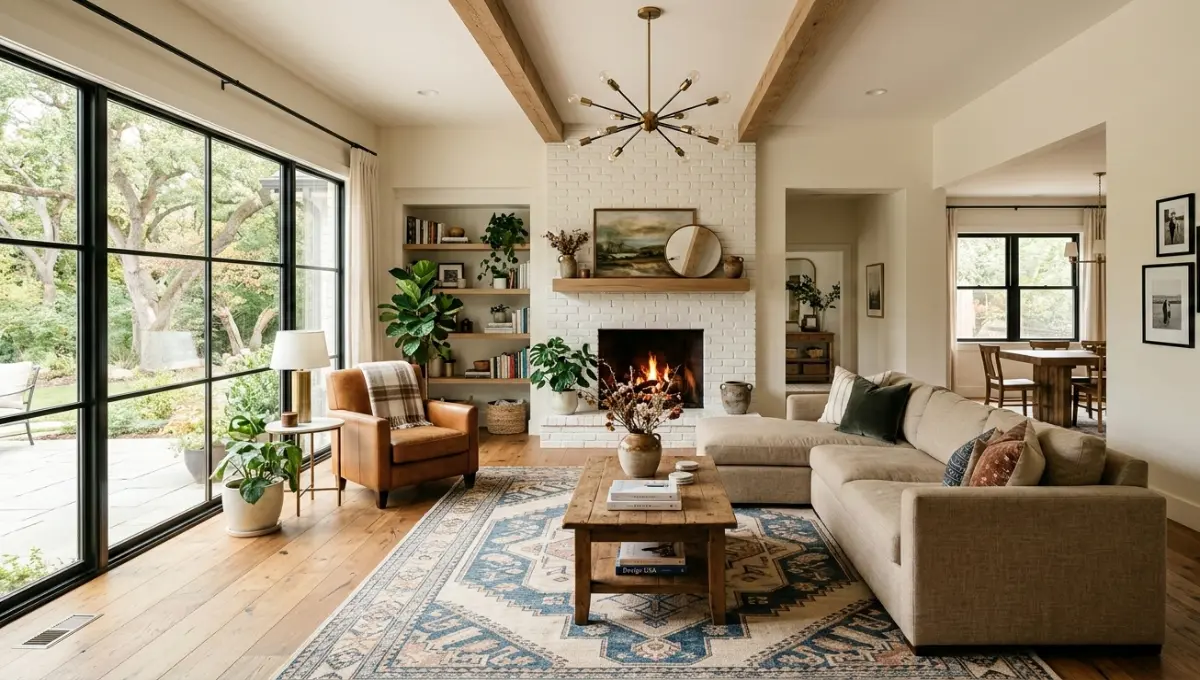
This style is popular in Texas, Tennessee, and the Pacific Northwest. It uses reclaimed wood, exposed beams, shiplap walls, and warm neutral tones. Home Depot and Lowe’s carry most materials you need at reasonable prices.
A farmhouse-style kitchen renovation in Houston runs $15,000–$35,000 on average. The truth is, this style rewards patience — sourcing authentic reclaimed wood takes time. Rushing it leads to cheap-looking results.
Modern Mexican and Spanish Colonial
This one’s booming in California, Texas, Arizona, and Florida. Bold colors, terracotta tiles, carved wood details, and hand-painted accents are the key elements. We’ve covered this in depth — read our Modern Mexican Interior Design guide for the full breakdown.
Brutalist and Postmodern
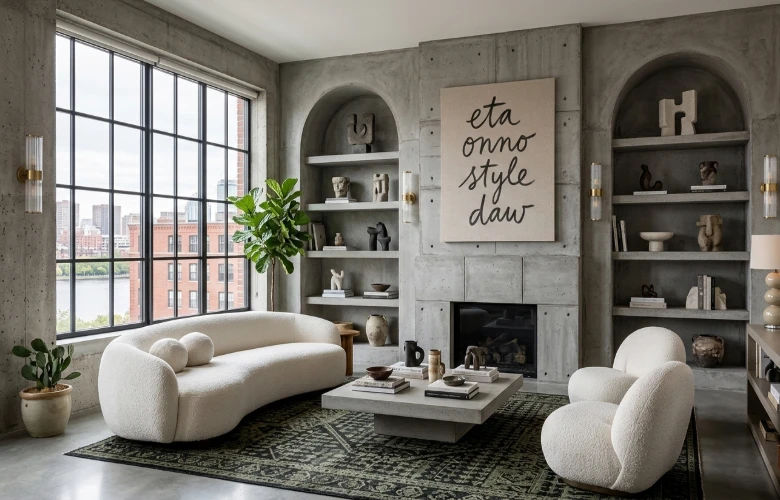
Growing fast among younger homeowners in urban markets. Raw concrete, bold geometry, and intentional imperfection. It looks expensive when done right and chaotic when done wrong. See our Brutalist Interior Design guide if this direction interests you.
Wabi-Sabi and Organic Modern
Wabi-sabi is quietly becoming one of the most-searched design styles in the US right now. Natural textures, muted palettes, linen fabrics, and handmade ceramics. It’s affordable, calming, and genuinely timeless — which is more than most trends can say.
How to Hire an Interior Designer in the USA (Without Getting Burned)
This is where most homeowners make expensive mistakes. Here’s the honest, step-by-step process based on real experience.
Step 1: Define your scope before reaching out. Know the difference between what you want (aesthetic goals) and what you need (specific rooms, timeline, budget ceiling). Designers charge for their time from the first call.
Step 2: Check credentials — but don’t stop there. Look for NCIDQ certification or membership in ASID (American Society of Interior Designers). But also study their actual portfolio. A certified designer whose work doesn’t match your style is still the wrong fit.
Step 3: Interview at least three designers. Ask these specific questions:
How do you handle contractor delays?
Do you receive trade discounts, and how are those passed to me?
What does your contract cover if the project goes over budget?
Have you worked on homes similar to mine in this city?
Step 4: Read the contract line by line. A legitimate contract must include: scope of work, payment schedule, revision limits, timeline milestones, and exit terms. Never pay 100% upfront. A standard split is 30–50% at signing, remainder on completion.
Step 5: Get material specs in writing. This is where the material swap scam happens. A contractor quotes solid oak — but installs MDF with a wood veneer. Both can look similar at first. The difference shows up in two years when MDF swells or warps. Get the exact material spec — brand, grade, and finish — written into your contract.
Red flag: If a contractor pushes back hard when you ask for material specs in writing, walk away. That’s not a negotiation — that’s a warning.
Interior Design in the USA by City: What You Need to Know
Interior design in the USA varies dramatically by location. Here’s what’s different across the five major markets — and links to our full city guides.
New York City
NYC is the most expensive interior design market in the country. Small square footage drives every decision — every inch must earn its place. Storage solutions, multifunctional furniture, and vertical space use are non-negotiable here.
Average designer rate: $200–$450/hour
Single-room design project: $8,000–$25,000
The biggest NYC challenge is load-bearing walls and co-op board approvals. Renovations in co-ops require board sign-off, which adds weeks or months to timelines. We’ve seen solid projects delayed 3–4 months for this reason alone.
LA is style-forward and heavily shaped by indoor-outdoor living. Sliding glass doors, covered patios, natural materials, and California-casual aesthetics dominate. The climate means humidity isn’t the concern — but earthquake-safe furniture anchoring is.
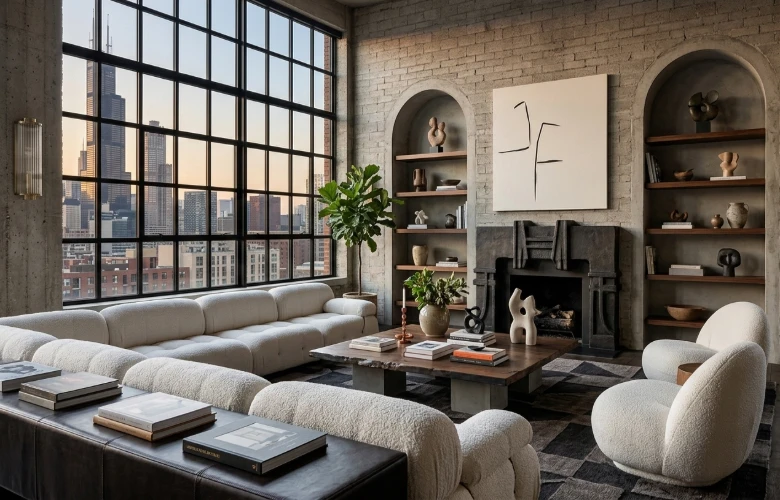
Chicago blends Midwestern practicality with real urban sophistication. Loft conversions, industrial details, and warm layering are common requests. Cold winters mean material durability matters — hardwood over laminate, quality insulation behind every wall.
Houston homes are bigger than the national average. Open floor plans, large kitchens, and formal dining rooms are standard. With no state income tax, more disposable income flows into home improvements — and the design market here is competitive.
Average designer rate: $85–$200/hour
Full home design (3,000 sq ft): $15,000–$50,000
Miami
Miami’s climate is the defining factor for every material decision. High humidity and salt air destroy the wrong materials fast. MDF cabinets in a Miami kitchen will warp within two years — this isn’t an exaggeration. Marine-grade plywood, moisture-resistant finishes, and UV-protective window treatments are essential, not optional.
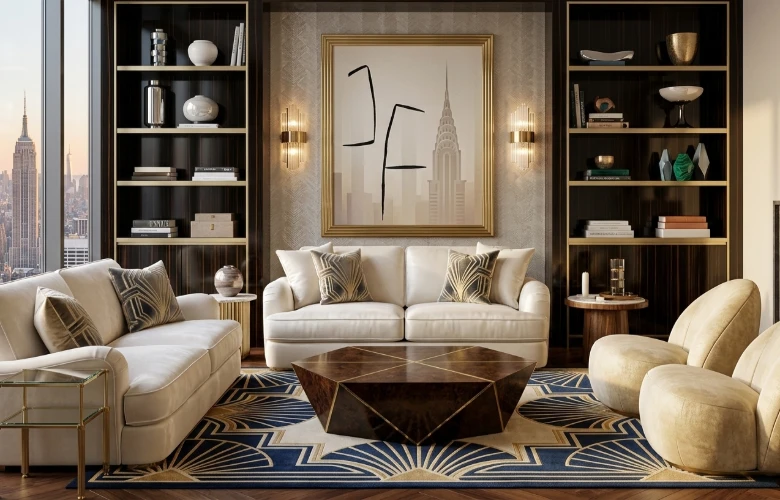
Bold color, tropical accents, and Art Deco influences set Miami apart from every other US market.
Average designer rate: $125–$300/hour
Boston
Boston brings a different challenge — historic architecture that requires permits and careful renovation planning. Colonial and Federal-style homes need designers who understand period-appropriate details. Read our Interior Design in Boston guide for the full picture.
Las Vegas
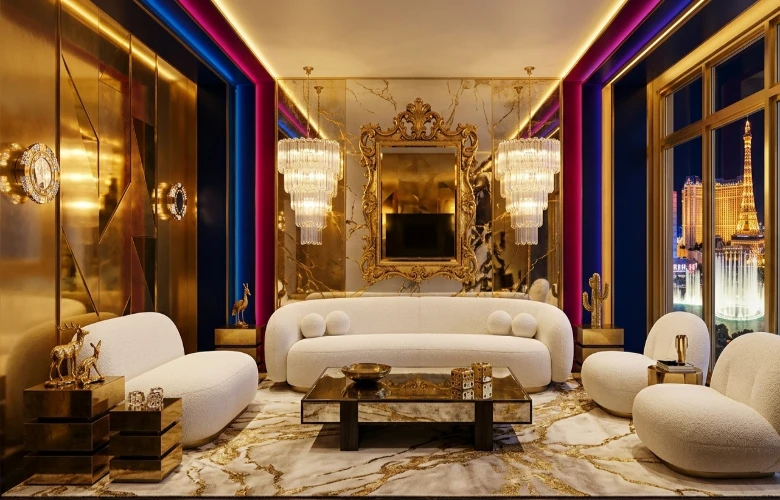
Las Vegas interiors split between two extremes: resort-inspired luxury and practical desert-modern. Natural light management is critical in Nevada’s heat. Read our Interior Design in Las Vegas guide for specific guidance.
Materials That Make or Break Your Interior Design in the USA
The difference between a great interior and a disappointing one often comes down to one thing: materials. Here’s what to know before spending a dollar.
MDF vs Plywood vs Solid Wood
Material
Cost per sq ft
Durability
Best Use
MDF
$1–$3
Poor in humidity
Painted cabinets in dry climates only
Plywood
$2–$5
Good
Cabinet boxes, subfloor
Solid Wood
$5–$15
Excellent
Tabletops, doors, flooring
In humid climates — Miami, Houston, coastal areas — always insist on plywood or solid wood for cabinetry. MDF will fail, and replacing it costs more than doing it right the first time.
Quartz vs Granite Countertops
Quartz (engineered stone) runs $50–$120 per sq ft installed. It’s non-porous, consistent in pattern, and needs almost no maintenance. Granite runs $40–$100 per sq ft installed — natural, unique per slab, but requires annual sealing.
For kitchens with heavy daily use, quartz wins on practicality. For a dramatic statement in a lower-traffic space, granite delivers character quartz can’t replicate.
Paint: Sherwin-Williams vs Benjamin Moore
Both are premium brands trusted by professional designers across the US. Sherwin-Williams offers wider contractor discounts and more retail locations nationwide. Benjamin Moore’s Aura line ($75–$85/gallon) is the gold standard for color accuracy and coverage.
For bold accent walls, Benjamin Moore. For full-home repaints on a tighter budget, Sherwin-Williams SuperPaint at $55–$65/gallon delivers excellent results.
US Interior Design Trends Worth Watching in 2026
Here’s what’s actually gaining traction right now — based on real project demand, not magazine speculation.
Biophilic design — Plants, natural light, stone surfaces, and organic shapes. Every major city market is seeing this grow. It’s moving from trend to baseline expectation.
Multifunctional spaces — Home offices aren’t going away. Murphy beds, fold-down desks, and smart room dividers are in demand across NYC studios and Houston suburbs alike.
Warm minimalism — Cold, stark minimalism is fading. Homeowners want clean spaces that still feel lived-in. Boucle fabric, warm wood tones, and terracotta accents are doing the heavy lifting.
Bold bathroom design — The bathroom used to be an afterthought. Not anymore. Fluted tiles, statement mirrors, and freestanding tubs are being requested at every price point.
Sustainable materials — More clients are asking where their materials come from. FSC-certified wood, low-VOC paints from Sherwin-Williams and Benjamin Moore, and recycled glass countertops are moving from niche to standard.
Interior Design in USA (FAQ)
Q1. How is the cost of interior designer average in USA?
The cost of interior designer in USA is normally between 75USD and 500 USD/Hour. Others set a flat fee or 1030 percent of the overall project cost. The prices will be international depending on the location, experience, and project size.
Q2. What is an interior design quotation supposed to entail?
An interior design quote ought to come with consultation charges, conceptual development, materialization, furniture cost, labor expenses, project management cost, and line on line breakdown of prices, with time frame estimates.
Q3. How much does it cost per square foot to paint the interiors?
The average interior paint per square foot is around $1.50 to 4.00 which includes labor and materials. Finishes, high walls, and ceilings can add to the total costs.
Q4. What is the most demanded city of interior design in the US?
The demand is always high in New York City and Los Angeles as there is high concentration of people, real-estate and commercial development.
Q5. Is it worth employing an interior designer?
Yes. Hiring professional also increases efficiency in layout, costly errors, cohesive design and increases the resale value. Planning of strategic spaces usually enhances comfort and future property value.
Is IKEA worth using for interior design in the USA?
IKEA works well for specific situations — renters, first-time homeowners, or lower-traffic rooms like guest bedrooms. Their kitchen cabinet system (SEKTION) is genuinely solid for the price and used by professional designers as a base even in higher-end projects. The honest limitation: IKEA furniture isn’t built for heavy daily use over 10+ years. For high-traffic living rooms and dining spaces, investing in better-quality pieces from Wayfair, Ashley Furniture, or a trusted local maker will serve you significantly better long-term.
Q: What are the biggest interior design mistakes American homeowners make?
The most common mistakes we see at Interior Design Trend across our 200+ projects: buying furniture before finalizing the floor plan, ignoring regional climate in material selection, skipping the contract review, not getting material specs in writing, and underbudgeting by 20–30%. The material swap scam — where contractors substitute MDF for solid wood, or cheap laminate for real hardwood — is more common than most homeowners realize. Exact material specs in your contract are your best protection.
Q: How do I find a good interior designer in my city?
Start with ASID’s online directory to find certified designers near you. Study their actual portfolio — not just their website, but their published projects and social presence. Interview at least three designers before deciding. Ask specifically about work in your city, because regional experience matters significantly. A designer who’s excellent in a Chicago loft may not understand NYC co-op board restrictions or Miami’s humidity requirements.
Q: What interior design style is most popular in the USA?
Modern and contemporary design is the most requested style across American homes, especially in urban markets like New York, Chicago, and Los Angeles. Farmhouse and rustic styles dominate in Texas, Tennessee, and the Midwest. Coastal and tropical aesthetics lead in Miami and Southern California. Honestly, your style should match your home’s architecture and your city’s climate — not just what performs well on Pinterest or Instagram.
Q: How much does interior design cost in the USA on average?
Interior design in the USA typically costs $75–$450 per hour depending on your city and designer experience. For a full room design, expect $1,500–$8,000 in most mid-sized cities. New York and Los Angeles run higher — often $8,000–$25,000 per room with full styling. Full-home design fees range from $5,000 to $20,000+, not including furniture, materials, or renovation labor. Always request an itemized quote before committing to any designer or project scope.
Conclusion
Personalization, sustainability, and smart innovation have continued to push the growth of Interior Design in USA over the major cities. Regional knowledge is important in small apartments in New York City and in mega-billion dollar residences in Los Angeles and old building rewrites in Boston.
Learning the Interior Designer Cost, reading a crystal clear Interior Design Quotation, and budgeting an Interior Paint Cost Per Square Foot would assist you to create a realistic renovation budget.
Design is not merely an issue of appearance alone–it is also an issue of value in the long run, efficiency and bettering lifestyle.
In case of a project, you intend to work in a city, do your research and choose the guides based on the city, compare the quotation of professionals, and read in-depth cost analysis before making your final choice. The beauty and value of the space tomorrow is guaranteed by smart planning today.
Arch Joy is a licensed interior designer with over 10 years of hands-on experience transforming residential and commercial spaces across the USA, Canada, UAE, and Europe.
With a background in architectural design and space planning, Arch specializes in modern, functional interiors — from open-plan living rooms to compact urban apartments and luxury home makeovers.
Every article on this site is written or reviewed by Arch Joy to ensure the advice is accurate, actionable, and grounded in real project experience.
B.Arch – Architectural DesignBased in USA | Serving Global Clients10+ Years Professional Experience





1 thought on “Interior Design in USA Costs & City Experts Guide 2026”
Comments are closed.