Last Updated on 4 months ago by
Most people go into an interior design project with a number in their head. Then the quotes come in and reality hits hard.
Here’s the thing. Interior design costs aren’t confusing because they’re random. They’re confusing because nobody explains the full picture upfront. You’re not just paying a designer. You’re paying for furniture, materials, labor, sometimes permits, and the designer’s fee on top of all that.
This guide breaks it all down. Real 2026 US numbers. Room by room. Budget level by budget level. No vague ranges that tell you nothing.
By the end, you’ll know exactly what to expect whether you’re redesigning one bedroom in Houston or planning a full home makeover in New York City.
What Does Interior Design Cost in 2026?
Let’s cut straight to it.
The average cost to hire an interior designer in 2026 runs between $2,056 and $15,213 for a full project, with most homeowners landing around $8,500. That’s the designer’s fee plus basic furnishings for one to two rooms.
But that number alone doesn’t help you plan. Here’s the fuller picture:
| Project Type | Total Cost Range |
|---|---|
| Single room refresh (cosmetic only) | $1,500 – $5,000 |
| Single room full redesign | $5,000 – $15,000 |
| Multi-room redesign | $15,000 – $50,000 |
| Whole home design (mid-range) | $50,000 – $150,000 |
| Luxury full home | $150,000 – $500,000+ |
These are total costs designer fee plus furniture plus materials. Not just the hourly rate you’ll see on a designer’s website.
How Interior Designers Charge The 5 Pricing Models Explained
Before you get a single quote, you need to understand how designers actually bill. Most homeowners don’t, and that’s where budget surprises come from.
Hourly Rate
The most common model for smaller projects. In 2026, hourly rates across the US run $100 to $300 on average. Junior designers start around $50 to $100. Experienced senior designers in major cities charge $300 to $500 per hour.
A two-hour consultation in Chicago might cost $200 to $400. That same consultation in Manhattan could run $500 to $1,000.
Flat Fee Per Room
Many designers charge a fixed price per room regardless of hours. This is predictable and works well for homeowners on a defined budget.
Typical 2026 flat fees:
- Bedroom: $1,000 – $2,500
- Living room: $2,500 – $5,000
- Kitchen: $3,500 – $8,000
- Full home: $10,000 – $25,000+
Per Square Foot
Common for larger projects and full home redesigns. The national average runs $5 to $17 per square foot in 2026. Most homeowners spend $7 to $12 per square foot when combining design work, management, and furnishings.
A 1,500 sq ft home at $9 per square foot works out to $13,500 in designer fees alone. Materials and furniture come on top of that.
Percentage of Project Cost
Some designers charge 10% to 30% of your total project budget furniture, materials, and contractor costs included. This model aligns their incentives with yours since they want the project to go well.
Watch out though. On a $50,000 project, a 25% fee means $12,500 just for the designer. Make sure you know what’s included before you sign.
Cost-Plus Markup
The designer buys materials and furniture at trade prices, then marks them up 20% to 40% and bills you retail. This is how many full-service designers operate.
It seems unusual but it’s actually standard. Just ask for itemized receipts so you know what you’re actually paying for.
A Real Project in Austin What $9,500 to $11,500 Actually Got Done
Before we go room by room, here’s a real example that shows what these numbers look like in practice.
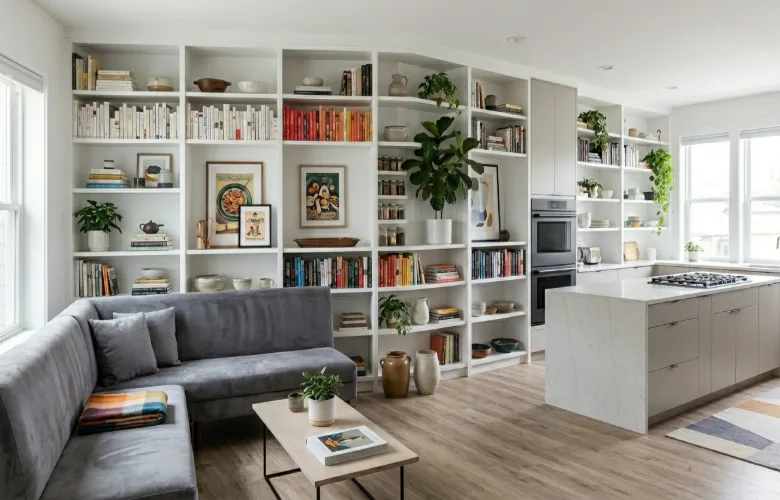
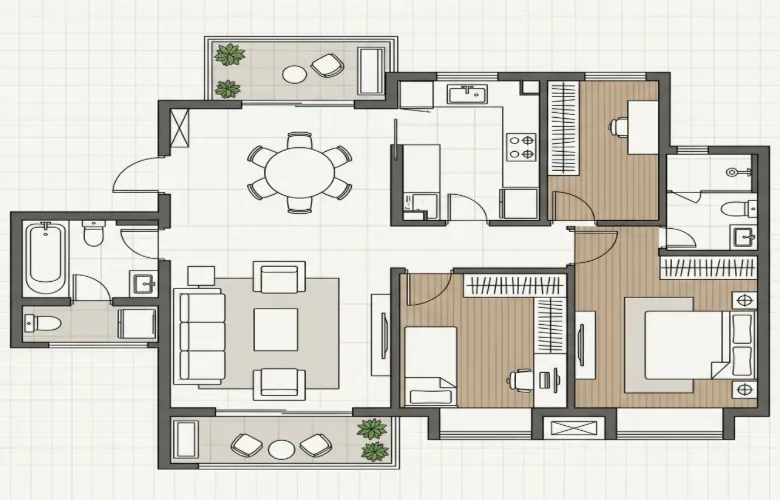
A single homeowner in Austin, Texas bought a new apartment and ran into a problem that a lot of people face. The furniture was decent. But the whole space felt off. The living room and dining area shared one open zone, which made both feel smaller than they were. The lighting was flat and killed any premium feel the space could’ve had.
She didn’t want a full gut renovation. The goal was to fix what wasn’t working without spending a fortune or living in a construction zone.
Here’s what the project actually included. Space planning was redone from scratch to make the open-plan layout feel intentional. A sectional sofa was brought in to properly define the living area. An accent wall was designed to add depth. Pendant lights and layered lighting replaced the flat overhead fixture. A custom storage bench was added at the entry. Rugs, artwork, and accessory styling tied everything together.
The full cost came in between $9,600 and $11,500 over about 20 days. Here’s where the money went:
- Furniture: approximately $4,150
- Lighting: approximately $1,300
- Decor and accessories: approximately $1,750
- Design fee: approximately $1,500
- Installation: approximately $1,200
Her words after the project: “The apartment didn’t get bigger, but now the space is actually being used the right way.”
That’s the honest outcome of a well-executed mid-range project. No walls moved. No major construction. Just smart planning and the right pieces in the right places.
Room by Room Interior Design Cost Breakdown 2026
Kitchen Interior Design Cost
The kitchen is the most expensive room in any home to design. You’re dealing with cabinetry, countertops, appliances, plumbing, electrical, and a designer who has to coordinate all of it simultaneously.
Designer fee only: $3,500 to $8,000 Full kitchen redesign (design plus materials plus labor): $25,000 to $75,000 Budget kitchen refresh: $8,000 to $15,000
The material split in a kitchen matters a lot. Custom cabinets alone can run $15,000 to $30,000. Stock IKEA cabinets with good hardware cost $3,000 to $7,000. That one decision changes your whole budget.
In our experience working with clients across the US, the biggest kitchen cost mistake is choosing custom everything upfront. Semi-custom cabinets with a quartz countertop around $8,000 to $14,000 gives you 90% of the look at 60% of the price.
For a deeper look at kitchen costs, our kitchen remodel cost guide breaks down every line item.
Bathroom Interior Design Cost
Bathrooms are small but expensive. The plumbing constraints, moisture-resistant materials, and tile work add complexity fast.
Designer fee only: $1,500 to $4,000 Full bathroom remodel: $10,000 to $35,000 Basic powder room update: $3,000 to $8,000
Labor runs 40% to 65% of a bathroom budget. That’s higher than most rooms because of the plumbing and tile work involved. A contractor in Los Angeles charging $85 to $120 per hour can eat through your budget quickly if the project scope isn’t defined clearly upfront.
See our full bathroom remodel cost breakdown for detailed numbers.
Living Room Interior Design Cost
Living rooms are where most homeowners want to make the biggest visual impact. It’s also where furniture costs spike fast if you’re not careful.
Designer fee only: $2,500 to $5,000 Full living room redesign: $8,000 to $25,000 Furniture only (no designer): $3,000 to $15,000
The anchor piece in any living room is the sofa. A mid-range sofa from Wayfair or Ashley Furniture runs $800 to $2,500. A custom piece from a boutique maker goes $3,000 to $8,000. That one choice sets the tone for everything else.
For small living rooms, see our small living room ideas guide lots of practical options for tight spaces and tight budgets.
Bedroom Interior Design Cost
Bedrooms are the most approachable room to redesign on a budget. A bedroom is simpler than a kitchen. The bed anchors the layout and fewer pieces need professional coordination.
Designer fee only: $1,000 to $2,500 Full bedroom redesign: $5,000 to $15,000 Budget bedroom refresh: $1,500 to $4,000
The bed is where you spend your money in a bedroom. Everything else nightstands, dressers, lamps can come from Wayfair or Home Depot without compromising the overall look.
Dining Room Interior Design Cost
Dining rooms are often underestimated. A good dining table with quality chairs can easily hit $3,000 to $8,000 on its own.
Designer fee only: $1,000 to $2,500 Full dining room design: $5,000 to $12,000
Most of the budget goes to furniture. Lighting matters here too. A statement pendant over a dining table can transform a room for $300 to $1,500.
Home Office Interior Design Cost
Home offices have exploded in demand and haven’t slowed down. Clients in Chicago and Boston are investing seriously in proper home office setups.
Designer fee only: $800 to $2,000 Full home office design: $3,000 to $10,000
Ergonomics, cable management, and video call backgrounds drive the design decisions here. Built-in shelving runs $1,500 to $5,000 depending on complexity .Commercial-style spaces follow a different cost logic too. If you’re designing a practice space, our dental office design guide and medical office interior design guide break down those budgets separately, since equipment and compliance requirements change the math.
Interior Design Cost by US Location
Where you live affects what you pay more than almost any other factor. Here’s what we see across major US markets in 2026:
| City | Designer Hourly Rate | Mid-Range Room Cost |
|---|---|---|
| New York City | $150 to $500/hr | $10,000 to $20,000 |
| Los Angeles | $120 to $300/hr | $8,000 to $16,000 |
| Chicago | $100 to $200/hr | $6,000 to $13,000 |
| Miami | $90 to $175/hr | $5,500 to $12,000 |
| Houston | $80 to $150/hr | $4,500 to $10,000 |
| Austin | $150 to $500/hr | $5,500 to $12,000 |
| Boston | $100 to $220/hr | $6,500 to $14,000 |
| Las Vegas | $75 to $150/hr | $4,000 to $9,000 |
NYC designers charge 2x to 3x more than Houston designers for the same scope of work. That’s not because NYC design is better. It’s because overhead, rent, and labor costs are genuinely higher.
If you’re in a high-cost city and budget is tight, consider hiring a remote designer. Online design services in 2026 run $199 to $999 per room a fraction of local full-service rates.
For city-specific guides, we cover interior design in New York City, Los Angeles, Chicago, Boston, and Las Vegas separately with local pricing details.
What’s Actually Included in an Interior Designer’s Fee?
This is the question most homeowners forget to ask. And it causes more budget surprises than anything else.
A designer’s fee typically covers:
Always included: initial consultation and space assessment, design concept and mood boards, furniture and material sourcing, layout planning.
Sometimes included ask first: 3D renderings, contractor coordination, site visits during construction, shopping and purchasing on your behalf.
Almost never included: actual furniture cost, material costs, contractor labor, permits.
So when a designer says “my fee is $3,000 for your living room” that doesn’t include the $6,000 sofa they’re recommending or the $1,200 rug. Always ask for total project cost, not just the design fee.
Budget vs Mid-Range vs Luxury Honest Comparison
Same bedroom, three different budget levels. Let’s make this concrete.
Budget $2,500 total
You’re doing this mostly yourself with a consultation-only designer. New paint from Sherwin-Williams ($200 for two gallons), IKEA bed frame and dresser ($600), Wayfair bedding and accessories ($400), new lighting from Home Depot ($150), designer consultation ($500). Looks fresh. Not luxury. But a real improvement.
Mid-Range $8,000 total
You hire a designer for flat fee room design ($1,500), get engineered hardwood flooring ($1,800 for 150 sq ft), choose a solid bed from Ashley Furniture ($1,200), add Wayfair nightstands and dresser ($900), window treatments ($600), professional painting ($900), and designer-selected accessories ($600). This looks genuinely good.
Luxury $22,000 total
Full-service designer manages everything ($5,000 fee). Custom built-in storage ($4,000). Premium solid hardwood flooring ($3,500). Custom upholstered bed from a boutique maker ($4,500). Designer-selected lighting and textiles ($3,000). Professional painting with Benjamin Moore premium paint ($1,200). This is a room you’d see in a magazine.
The honest truth? The mid-range tier gives you 80% of the luxury result at 35% of the price. That’s where most Interior Design Trend clients land and where we usually recommend starting.
Hidden Costs That Blow Budgets Real Warnings
In our 200+ projects, these are the surprises that hit homeowners hardest.
Contractor markup. When a designer coordinates contractors, they typically add 10% to 30% project management fee. On a $20,000 renovation, that’s $2,000 to $6,000 you didn’t plan for. Ask upfront if this applies.
Material swap. This is one of the most common contractor problems. They quote you Sherwin-Williams Emerald paint or premium hardwood. You pay the premium price. They show up with cheap builder-grade materials. Always get brand, model, and grade specified in writing. Walk through materials on day one before work starts.
Scope creep. You start with a bedroom refresh. Then the designer suggests the bathroom needs updating too. Then the hallway. Scope creep is real and expensive. Set a firm scope before signing and get change order pricing in writing.
Permit costs. Most cosmetic work doesn’t require permits. But if you’re moving walls, changing electrical, or touching plumbing permits in major US cities run $500 to $2,500. Some homeowners skip permits to save money. Don’t. It creates problems when you sell.
Delivery and installation. Furniture delivery in NYC runs $100 to $400 per piece. Custom furniture can take 8 to 16 weeks to arrive. Factor both into your timeline and budget.
How to Choose the Right Interior Designer Without Getting Burned
The hiring process matters as much as the budget.
Step 1. Define your scope first. Before you talk to a single designer, know which rooms you’re doing, what you’re keeping, and what your firm budget is. Designers give better quotes when they have clear parameters.
Step 2. Get three quotes minimum. Design fees vary wildly between firms for identical work. Three quotes give you a realistic market rate for your city and scope.
Step 3. Check their actual portfolio. Not their Instagram. Their real portfolio with completed projects similar to yours. Ask specifically for projects in your budget range.
Step 4. Clarify the contract. The contract should specify fee structure, what’s included, revision limits, timeline, and payment schedule. If a designer resists putting details in writing, walk away.
Step 5. Understand the payment schedule. Most designers take 30% to 50% upfront. Remaining payments tie to milestones delivery of design concept, furniture ordering, project completion. Never pay 100% upfront.
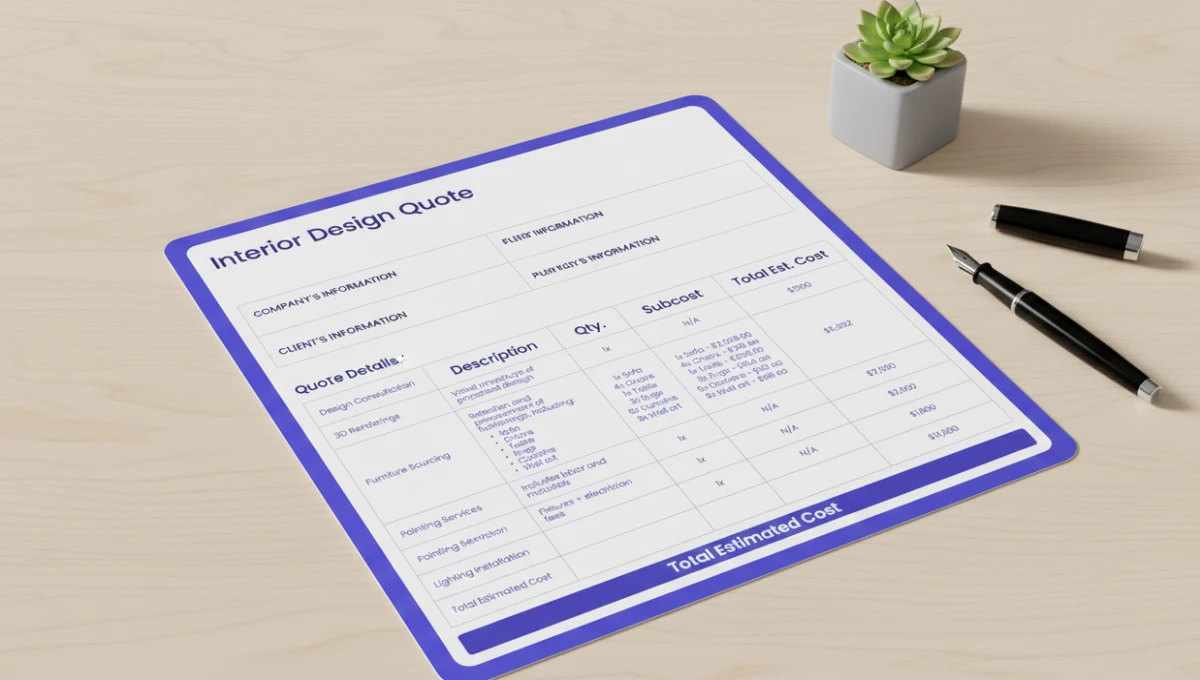
If you’re still early in the process and figuring out your budget, our interior design quotation guide shows exactly what a proper quote should include line by line.
What Happens After You Sign With an Interior Designer Week by Week
Most blogs tell you how to hire a designer. Nobody tells you what happens next.
That gap is exactly where homeowners get frustrated. You’ve signed the contract, paid the deposit, and now you’re wondering why nothing seems to be moving. Here’s the honest picture of what a real project timeline looks like.
Week 1 to 2 Discovery and Measurement
The designer comes to your space for a proper site visit. This isn’t a casual walkthrough. They’re measuring every wall, window, and doorway. They’re photographing existing furniture, lighting, and architectural details. They’re asking you questions you haven’t thought about yet — how do you actually use this room, what bothers you most, what’s your non-negotiable.
This phase feels slow. It’s not. A designer who skips proper discovery causes expensive problems later.
What you should expect from you during this phase: clear answers about your lifestyle, a firm budget number, and a list of what you’re keeping versus replacing.
Week 2 to 4 Design Concept Presentation
Your designer comes back with mood boards, a layout plan, and initial material selections. This is the most exciting meeting of the whole project.
Here’s what most people don’t know — this is also your most important opportunity to push back. Changes at the concept stage cost you nothing. Changes after furniture is ordered or walls are painted cost real money.
Ask every question you have in this meeting. Does this sofa color work with my existing floors? What does this paint look like in afternoon light? Can we see an alternative for the flooring? A good designer welcomes this. A bad one gets defensive.
Week 4 to 6 Material Sourcing and Ordering
Once you approve the concept, the designer starts ordering. Furniture, fabrics, lighting, accessories — everything gets placed at once if possible.
This is where the waiting begins. Standard furniture from Wayfair or Ashley Furniture ships in 1 to 3 weeks. Mid-range custom pieces take 6 to 10 weeks. High-end custom furniture from boutique makers can take 12 to 20 weeks.
The truth is, this phase is mostly out of your hands. Your job is to stay available for quick decisions. If a fabric is backordered and the designer needs your approval on an alternative, a slow response from you adds weeks to your timeline.
Week 4 to 8 Contractor Work Begins
If your project involves painting, flooring, built-ins, or any construction — this phase runs parallel to the ordering phase.
For a project like the Austin apartment we worked on earlier, contractor work took about two weeks. Painting, lighting installation, and the storage bench build all happened while furniture was being delivered.
For larger projects involving flooring replacement or wall changes, this phase can run 3 to 6 weeks depending on contractor availability. In cities like New York and Chicago, good contractors are booked 4 to 8 weeks out. Factor that into your timeline before you sign.
Site visits during this phase matter a lot. Your designer should be on-site at least once during active construction — not just at the start and end. That’s when material swap problems get caught. That’s when layout issues get fixed before they’re permanent.
Week 8 to 12 Installation Day
Everything comes together on installation day. Furniture arrives, accessories get placed, lighting gets connected, rugs go down.
For most mid-range projects, installation takes one full day. For larger projects, it’s two to three days. A good designer stages the room as they go — they’re not just placing furniture, they’re adjusting proportions, swapping accessories between rooms, and making real-time decisions about what works and what doesn’t.
This is the day most homeowners get emotional. After weeks of waiting and coordinating, seeing it all come together is genuinely satisfying. That Austin client we mentioned earlier said the space looked completely unrecognizable from the day she moved in — in the best way.
Week 12 and Beyond Final Walkthrough and Punch List
After installation, your designer should do a formal final walkthrough with you. This is where you go through everything together and note anything that isn’t right. A damaged furniture piece. A paint touch-up needed. A fixture that isn’t sitting level.
This list is called the punch list and it’s standard in every professional design project. Get it in writing. Your contract should specify how long the designer has to resolve punch list items — typically 2 to 4 weeks.
The Payment Schedule What’s Normal and What’s a Red Flag
Understanding payment milestones protects you. Here’s what a standard 2026 payment schedule looks like:
| Milestone | Typical Payment |
|---|---|
| Contract signing | 30% to 50% of designer fee |
| Design concept approval | 25% of designer fee |
| Furniture ordering begins | 50% to 100% of furniture cost |
| Installation complete | Remaining designer fee balance |
Never pay 100% of anything upfront. A contractor or designer who demands full payment before work starts is a red flag. Reliable professionals tie their payment to your satisfaction at each stage.
For furniture specifically, most vendors require 50% at order and 50% at delivery. Your designer handles this on your behalf. Ask for receipts at every stage so you know exactly what was ordered and at what price.
Is Interior Design Worth the Cost?
It depends on two things your budget and your project complexity.
For a simple bedroom refresh under $3,000? You can DIY it well with some research and discipline.
For anything involving flooring, custom furniture, contractor coordination, or budgets over $8,000? A designer typically saves you more than they cost. They catch mistakes before they happen. They know which materials hold up and which ones look cheap after a year. They have contractor relationships that get your job done faster.
One client in Dallas chose to skip the designer on a kitchen remodel to save $4,000. The contractor installed the wrong cabinet hardware, the countertop color clashed with the backsplash, and the lighting was too dim for a cooking space. Fixing those mistakes cost $6,800.
The designer would have prevented every one of those problems.
That said, if budget is genuinely tight, a two-hour consultation ($200 to $400) is always worth it. You get professional eyes on your space, real advice on materials, and a list of what to prioritize. That’s not a full design engagement. But it can save you thousands in wrong decisions.
Interior Design Styles and Their Cost Implications
The style you choose directly affects what you spend.
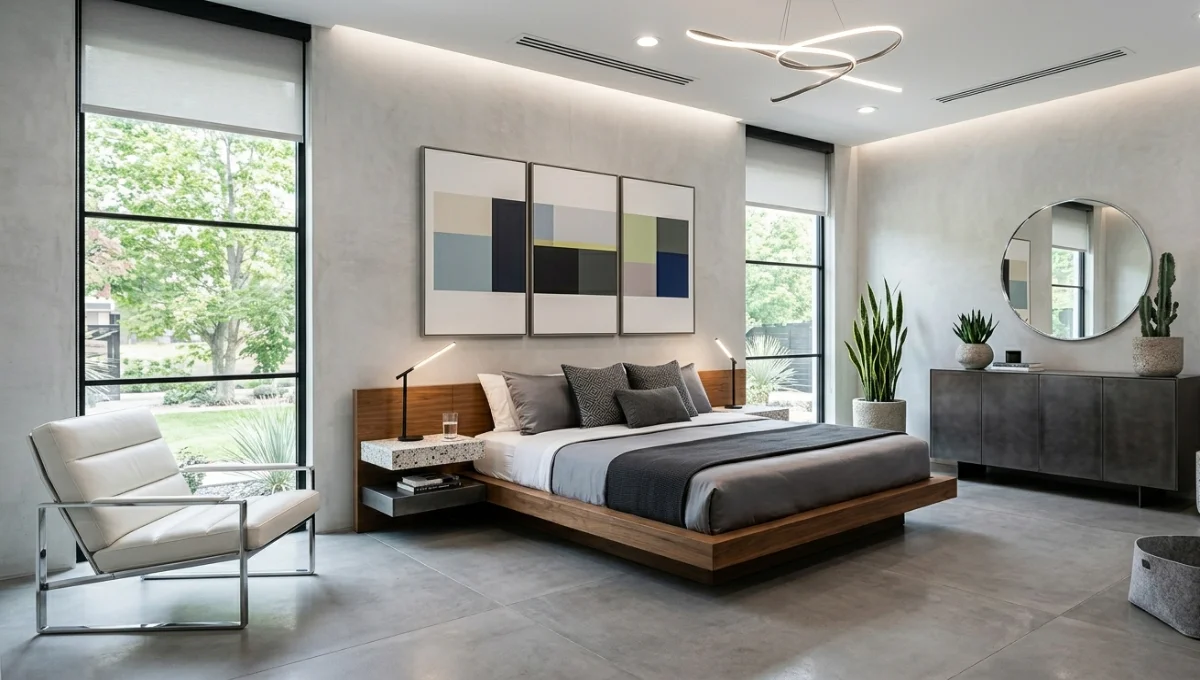
Modern and minimalist tends to be mid-range in cost. Fewer pieces, but each piece matters more. A minimal bedroom with one statement bed and quality flooring looks better than a cluttered room full of cheap furniture.
Rustic and farmhouse can actually be budget-friendly if you source smart. Reclaimed wood pieces, vintage finds, and natural textures from Wayfair’s clearance section can build a convincing rustic bedroom for $3,000 to $5,000.
Bohemian is one of the most DIY-friendly styles. Layered textiles, plants, vintage pieces from thrift stores a boho bedroom can come together for $1,500 to $3,000 without a designer.
Modern classic and luxury styles cost more because they rely on quality materials. Marble, solid hardwood, custom upholstery these details add up fast.
Wabi-sabi and Japanese-inspired design is gaining traction in the US. It’s intentionally imperfect and can be surprisingly affordable when done right natural textures, neutral tones, quality over quantity.
Bold, statement-making styles carry their own cost logic too. Modern Mexican and Spanish-influenced interiors lean on custom tile and hand-painted details that push budgets up fast. On the opposite end, brutalist and postmodern styles often save money on furniture but spend more on structural finishes like concrete and bold paint work. Victorian-inspired interiors sit at the luxury end — ornate trim and period-accurate materials aren’t cheap.
For style inspiration tied to realistic budgets, Interior Design Trend covers everything from modern interior design to rustic style, wabi-sabi, and modern classic.
8 Practical Ways to Save on Interior Design Without Cutting Quality
These actually work. Not generic advice things we’ve seen make a real difference across projects.
Paint first, buy furniture second. Wall color affects how everything else looks. Get the paint right before spending a dollar on furniture.
Invest in one anchor piece per room. One quality sofa, one solid bed, one statement dining table. Build everything else around it at lower price points.
Buy lighting at Home Depot, not boutique stores. Lighting markup at boutique design stores is enormous. Home Depot and Wayfair carry comparable quality at 40% to 60% less.
Use LVP flooring instead of hardwood. Luxury vinyl plank in 2026 is genuinely hard to distinguish from real hardwood. It costs $3 to $7 per square foot installed versus $8 to $15 for solid hardwood.
Time your Sherwin-Williams purchase. They run 30% off sales quarterly. Buy your paint then. On a whole-home paint job, you’ll save $300 to $600.
Skip matching furniture sets. The sofa-loveseat-coffee table combo from one collection is how rooms end up looking generic. Mix pieces from different sources. It looks more designed, not less.
Hire a designer for consultation only. Two hours of professional advice for $200 to $400 is the best ROI in interior design. You get material guidance, layout feedback, and a clear priority list without the full-service price.
Phase your project. You don’t have to do everything at once. Get the flooring and paint right first. Add furniture over 6 to 12 months. The room looks good immediately and improves over time.
FAQ Interior Design Cost 2026
How much does it cost to hire an interior designer for one room?
For a single room, most US homeowners pay $1,000 to $5,000 in designer fees alone. Add furniture and materials and the total runs $3,000 to $15,000 depending on the room type and quality level. Kitchens and bathrooms cost more than bedrooms and living rooms because of the plumbing and structural complexity involved.
What’s the cheapest way to redesign a room with a designer?
Book a consultation-only session. Most designers offer 2-hour consultations for $100 to $300 per hour. You get professional advice on layout, color, and materials without the full project management fee. Combine that with Wayfair and IKEA sourcing and you can redesign a bedroom for $1,500 to $2,500 total.
Does hiring an interior designer actually save money?
For projects over $8,000, yes, usually. Designers catch material and layout mistakes before they happen. They have contractor relationships that prevent overcharging. And they know which budget choices look cheap after a year versus which ones hold up. One wrong contractor or one bad material choice can cost more than the designer’s fee.
How do I avoid getting scammed by a contractor during an interior design project?
Get everything in writing. The contract should specify exact brand, model, and grade of every material. Do a site walkthrough before work starts to verify materials match the quote. Never pay 100% upfront. A reliable contractor accepts milestone-based payments typically 30% to 40% upfront, the rest tied to completion stages.
What should I spend the most money on when redesigning a room?
Flooring and one anchor furniture piece. Flooring affects how the entire room feels and it’s expensive to change after the fact. The anchor piece bed, sofa, dining table sets the visual tone for everything else. Cut costs on accessories, lighting from big box stores, and secondary furniture. Spend on the foundation.
Take your time with a design project. The biggest budget mistakes happen when people rush. Get quotes, compare materials, and understand what you’re actually paying for before you sign anything.
If you’re figuring out which design style fits your home before budgeting, our interior design style quiz helps you get clear in a few minutes. And for more on how designers actually charge, the how much does an interior designer cost guide goes deeper into fee structures and what to negotiate before you sign.