Last Updated on 5 months ago by
If you’ve already typed “living room interior design cost” into Google, you’ve probably seen numbers like “$2,000 to $50,000” plastered across half a dozen articles with zero explanation of what actually moves that needle. That range is technically accurate and practically useless.
So let’s do this differently. The living room interior design cost in the US in 2026 runs anywhere from $3,500 for a focused style refresh to $60,000+ for a full luxury redesign and knowing which end of that spectrum applies to your project comes down to four things: your room size, whether you’re hiring a designer and how, how much new furniture you need, and where you live.
At InteriorDesignTrend, we’ve been through this process with homeowners in New York, Texas, Florida, Chicago, and across the country over 200 residential projects. Living rooms come up more than any other space. They’re the most visible room in the house, they hold the biggest furniture, and they’re where people most often either blow their budget or stop short of what they actually wanted. This breakdown covers everything you need to plan it right.
How Living Room Interior Design Cost Actually Works
Most people assume the designer’s fee is the cost. It’s usually not not even close.
The living room interior design cost is really three things layered together: designer fees, furniture and materials, and labor or installation. Some projects need all three. Some only need one or two. The ratio between them shifts dramatically based on scope.
A homeowner in Austin, Texas who wants a completely new look on a realistic budget might spend $300 on a two-hour consultation, $6,000 on furniture from Wayfair and West Elm, and another $800 on a new rug and lighting. Total: just under $7,200 and it looks like a professionally designed room because they had expert direction on what to buy and where to place it.
A homeowner in Manhattan doing a full-service redesign of a 350 sq ft pre-war living room might spend $3,500 in designer fees, $18,000 on custom and trade-sourced furniture, and $2,000 on installation, artwork, and accessories. Same concept. Very different numbers.
Room size, service level, city, and furniture quality are what separate a $5,000 project from a $30,000 one. Not magic.
What Interior Designers Actually Charge for a Living Room in 2026
Designer fees have four main structures. Each one makes sense in a different situation.
Hourly Rate The most flexible model. In 2026, interior designer hourly rates in the US range from $100 to $200/hour for mid-market professionals, with experienced designers in NYC, Los Angeles, Boston, or Miami charging $300 to $500/hour. A typical living room project at this rate covering initial consultation, space planning, furniture selection, and a couple of revision rounds runs 15 to 25 hours. That puts designer fees alone at $1,500 to $5,000 before a single piece of furniture is ordered.
Hourly works well when your scope is focused and you’re doing a lot of the legwork yourself. Set a firm cap upfront say, 12 hours so there’s no billing shock halfway through.
Flat Fee Per Room Many designers offer packaged rates for living room projects. Design-only packages (mood board, floor plan, shopping list, material selections) average $450 to $1,500. Full-service packages that include sourcing, ordering, and installation management typically run $2,000 to $6,000 in design fees. Some top-tier firms charge more.
This model is the easiest for budget planning. You know the number going in. Just make sure the contract spells out what’s included specifically revisions, site visits, and whether 3D renderings are covered or billed separately.
Percentage of Total Budget For larger or luxury projects, some designers charge 10% to 25% of the total project cost. If your living room budget is $40,000, the designer’s fee would be $4,000 to $10,000. This model is common when the designer is coordinating contractors, custom fabricators, and multiple vendors simultaneously.
The upside is that the designer has real skin in keeping the project on track. The risk is scope creep inflating the base number which directly inflates the fee. Define the ceiling budget in writing before you sign anything.
Per Square Foot Less common, but useful for straightforward projects in larger spaces. Rates run $5 to $17 per square foot for design services. A 450 sq ft living room at $12/sq ft comes to $5,400 in design fees. Add furniture on top.
One thing most people don’t ask about and should: designer markups on furniture. When a designer purchases furniture on your behalf, many charge a markup of 10% to 40% over what they paid at trade pricing. That’s separate from the design fee. Always ask: “Do you pass on trade discounts or apply a markup to purchases, and what’s the percentage?” A designer who answers that clearly and honestly is worth trusting
Living Room Furniture Cost Breakdown
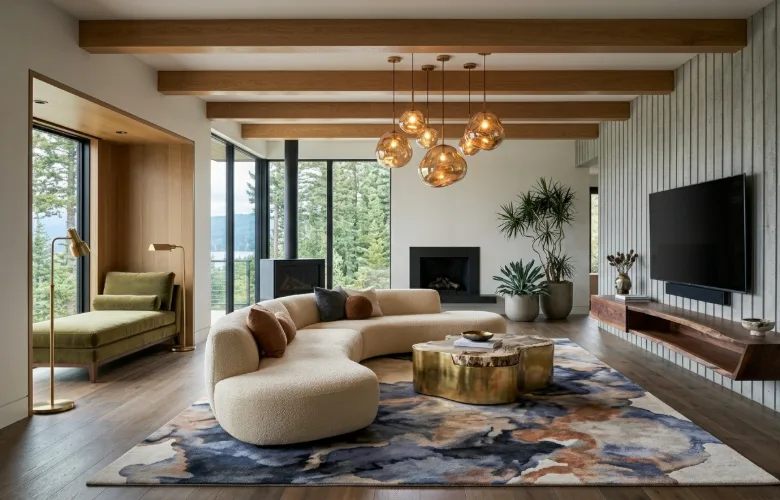
This is where most budgets actually go and where most people underestimate. Furniture and materials consistently make up 60% to 80% of the total living room interior design cost.
Here’s what a realistic mid-range living room budget looks like item by item in 2026:
| Item | Mid-Range Cost (USD) |
|---|---|
| Sofa or sectional | $1,400 – $5,000 |
| Coffee table | $350 – $1,400 |
| Accent chairs (pair) | $700 – $2,200 |
| Side tables (pair) | $250 – $900 |
| Area rug | $350 – $1,800 |
| TV console or media cabinet | $450 – $1,600 |
| Floor and table lamps | $350 – $1,400 |
| Window treatments (curtains, rods, or blinds) | $450 – $2,200 |
| Throw pillows, artwork, accessories | $400 – $1,200 |
Mid-range total: roughly $4,700 – $17,700 just for furnishings.
Budget-conscious homeowners sourcing from IKEA, Wayfair, or CB2 can bring a living room together for $3,500 to $6,500 if they’re selective and patient. The trade-off is durability a $900 sofa from a big-box retailer might need replacing in five to seven years, while a $3,500 trade-grade frame can last twenty. When you spread the cost over time, the quality piece often wins.
At the luxury end custom upholstered sectionals, hand-knotted wool rugs, bespoke lighting fixtures furniture alone can reach $25,000 to $50,000 for a single room. That’s before the designer’s fee.
All-In Cost Ranges by Project Type
Style Refresh $3,000 to $6,500 New accessories, a rug, updated lighting, maybe one new accent chair. You keep your existing furniture and work with what’s there. A two-hour design consultation ($200–$400) helps you avoid the wrong choices. Good for renters, recent buyers who like their furniture, or anyone who wants a new feel without starting over. If square footage is tight, small living room ideas that focus on layout and visual tricks can do more than a full furniture swap.
Mid-Range Redesign $7,000 to $18,000 New furniture set, updated lighting, window treatments, and a professional design package. This is the most common tier for US homeowners. A family in Chicago or Boston at this level typically works with a flat-fee designer ($1,000–$2,500), sources mid-market furniture from West Elm or Pottery Barn, and finishes with a few quality accent pieces.
Full-Service Professional Design $18,000 to $35,000 The designer handles everything: space planning, sourcing from trade vendors, coordinating delivery, overseeing installation. You make decisions; they manage execution. This is where InteriorDesignTrend typically works with clients who want a finished space without spending every weekend tracking down throw pillows. Custom window treatments, layered lighting, and statement furniture come standard at this level.
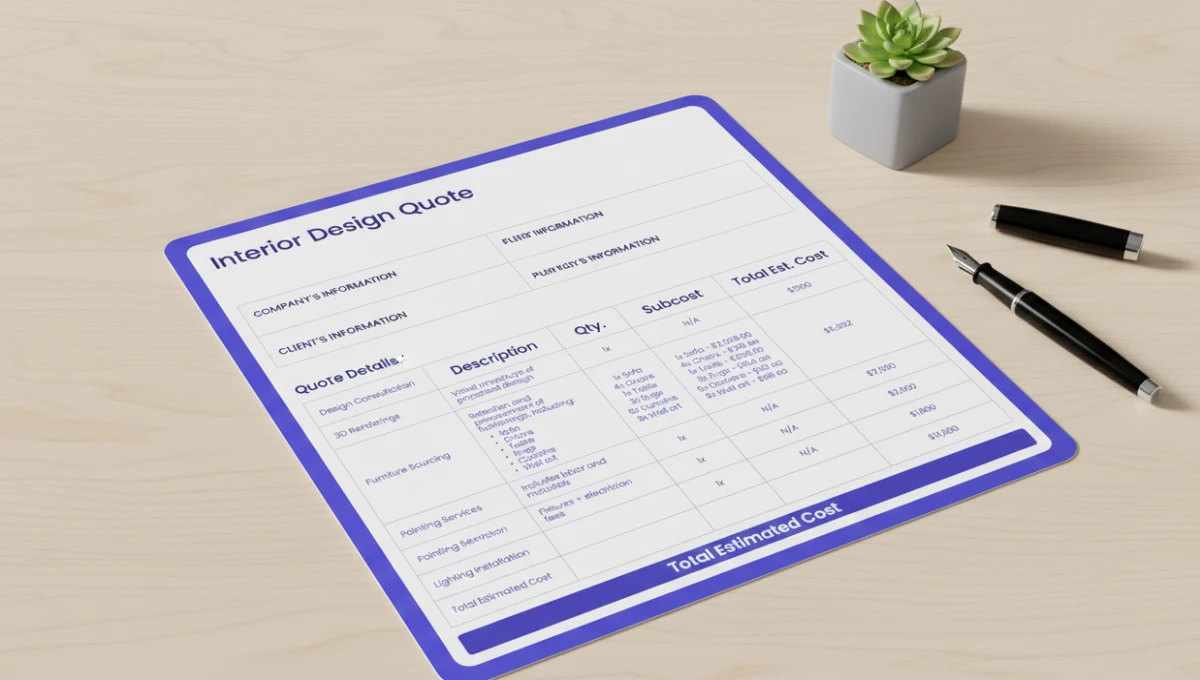
Luxury or Custom $35,000 to $75,000+ Custom furniture built to spec, architectural elements (built-ins, fireplace surrounds, coffered ceilings), curated art, specialty rugs, and high-end lighting design. Most common in New York, Miami, and Los Angeles markets and in custom-built homes regardless of location. If you’re curious how a project like this is typically quoted, our interior design quotation guide breaks down what line items to expect and which ones to push back on.
City-by-City Cost Differences in 2026
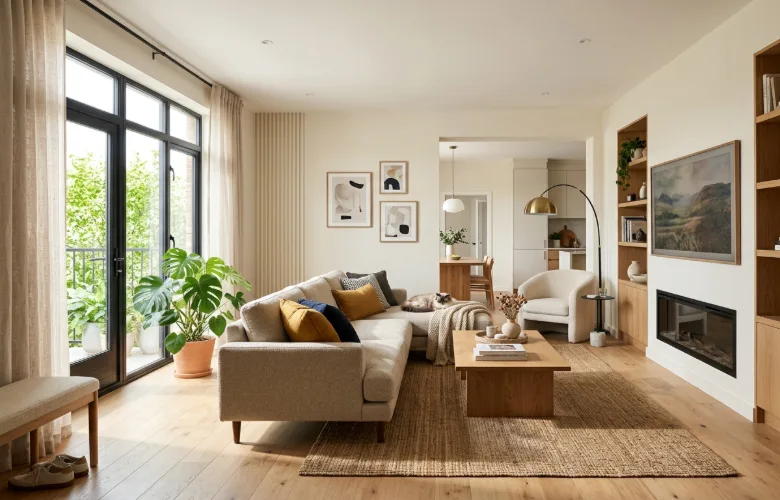
Where you live might affect your living room interior design cost more than any other single factor. Same 350 sq ft room. Very different numbers.
New York City: Designer hourly rates run $200–$500. Labor and delivery costs are higher. Smaller apartments often require custom solutions built-in storage, furniture that doubles as something else which adds cost. Expect a mid-range redesign to run $18,000 to $40,000 all-in. See how designers in New York City approach small-space constraints specifically.
Los Angeles: Designer rates are comparable to NYC. But LA has exceptional trade showroom access, and designers with strong vendor relationships can often bring furniture costs down meaningfully for clients. Mid-range projects run $15,000 to $35,000. Los Angeles interior design also tends to factor in indoor-outdoor flow in a way other markets don’t which sometimes extends scope and budget.
Chicago: More moderate across the board. Designer rates average $125–$200/hour. Mid-range living room redesigns typically land at $10,000 to $22,000. Interior design in Chicago often prioritizes warmth and layering for the long winters more textiles, more rugs, more lighting which can add $1,000–$3,000 to a typical project budget.
Texas (Dallas, Houston, Austin): One of the better markets for budget. Rooms are often larger, labor is more affordable, and designers are generally used to working with a range of budgets. A full living room redesign in a Dallas suburb runs $8,000 to $20,000.
Florida (Miami, Tampa, Orlando): Miami is luxury-forward pricing similar to LA. Tampa and Orlando are more mid-market. One real consideration across Florida: humidity affects material choices. Solid wood furniture and certain fabrics need more maintenance in humid climates, and better designers will flag this. Skipping that advice early often means replacing furniture within a few years.
Las Vegas: A mixed market with strong access to hospitality-grade furniture vendors (a bonus for clients who want durable, high-traffic materials at reasonable prices). Mid-range projects run $8,000 to $18,000. Interior design in Las Vegas often draws on the city’s bold, layered aesthetic in unexpected ways.
Three Mistakes That Make Living Room Redesigns Cost More Than They Should
Not defining scope before getting a quote. A vague brief produces a vague quote and vague quotes grow. Be specific about what you want: new sofa, updated lighting, no structural changes. A well-scoped project is a controlled budget.
Buying furniture before finalizing the layout. This is the single most expensive mistake in living room design. A sectional that “should fit” often doesn’t and returns on large furniture cost time, redelivery fees, and sometimes restocking charges of 10%–20%. Get the floor plan done first, even if it’s just a sketch with measurements.
Ignoring markup on designer purchases. Some designers charge a flat fee and pass trade discounts to you meaning you actually pay less for furniture than retail. Others charge retail plus a fee. The difference on a $15,000 furniture order can be $3,000 to $6,000. Ask before you sign. Any designer who gets defensive about this question is a red flag.
What’s a Realistic Budget for Most Homeowners?
A practical rule: living room interior design cost should be roughly 1.5% to 2.5% of your home’s current value for a thorough mid-range redesign.
On a $350,000 home, that’s $5,250 to $8,750 enough for new furniture, a flat-fee design consultation, and quality accessories. On a $600,000 home, $9,000 to $15,000 covers a genuine full redesign with professional direction.
These numbers align with what we see on real projects. Most US homeowners who work with a designer and replace their main furniture pieces end up spending between $8,000 and $20,000 when all is said and done.
If the living room is part of a larger renovation, it’s worth looking at the full picture. Our breakdowns on kitchen remodel cost and bathroom remodel cost help you understand how to allocate across rooms without stretching any one budget too thin. And if you’re still weighing whether hiring a designer makes financial sense at all, how much an interior designer costs is a useful starting point for that decision.
Frequently Asked Questions
How much does living room interior design cost in 2026?
Most US homeowners spend between $7,000 and $25,000 on a living room redesign that includes both designer fees and new furniture. Budget refreshes start around $3,000–$5,000. Full-service luxury redesigns in major cities can reach $50,000 to $75,000 or more. The biggest variables are room size, how much new furniture you need, and whether you hire a designer for full service or just a consultation.
What is the interior designer fee for a living room?
Interior designer fees for a living room range from $450 to $1,500 for design-only services mood board, floor plan, and shopping list. Full-service project management typically runs $2,000 to $6,000 in design fees, separate from furniture costs. Hourly rates average $100 to $200 nationally, with premium designers in NYC and LA charging $300 to $500 per hour.
Can I redesign my living room for under $5,000?
Yes if you’re strategic. A $4,000–$5,000 budget works well for a style refresh: new sofa or reupholstered existing one, a quality area rug, updated lighting, and accessories. Use a designer for one focused consultation ($150–$300) to guide your choices. Source from Wayfair, CB2, or IKEA for pieces you need quickly. Prioritize what people see first the sofa and the rug do the most visual work.
How long does a living room interior design project take?
A design-only engagement mood board, floor plan, shopping list typically takes two to four weeks. A full redesign with furniture ordering and delivery runs six to twelve weeks on average. Custom or trade-sourced furniture often adds four to eight weeks. Build a buffer into any project involving custom pieces; lead times have been inconsistent across the US market in 2025–2026.
Is hiring an interior designer worth it for a living room?
For projects over $10,000, almost always yes. A designer prevents layout mistakes, gives you access to trade pricing, and saves the time most people spend making three rounds of wrong decisions. The ROI isn’t just aesthetics it’s buying the right things once. For smaller budgets, a single consultation is often enough to steer the project in the right direction without a full-service fee.