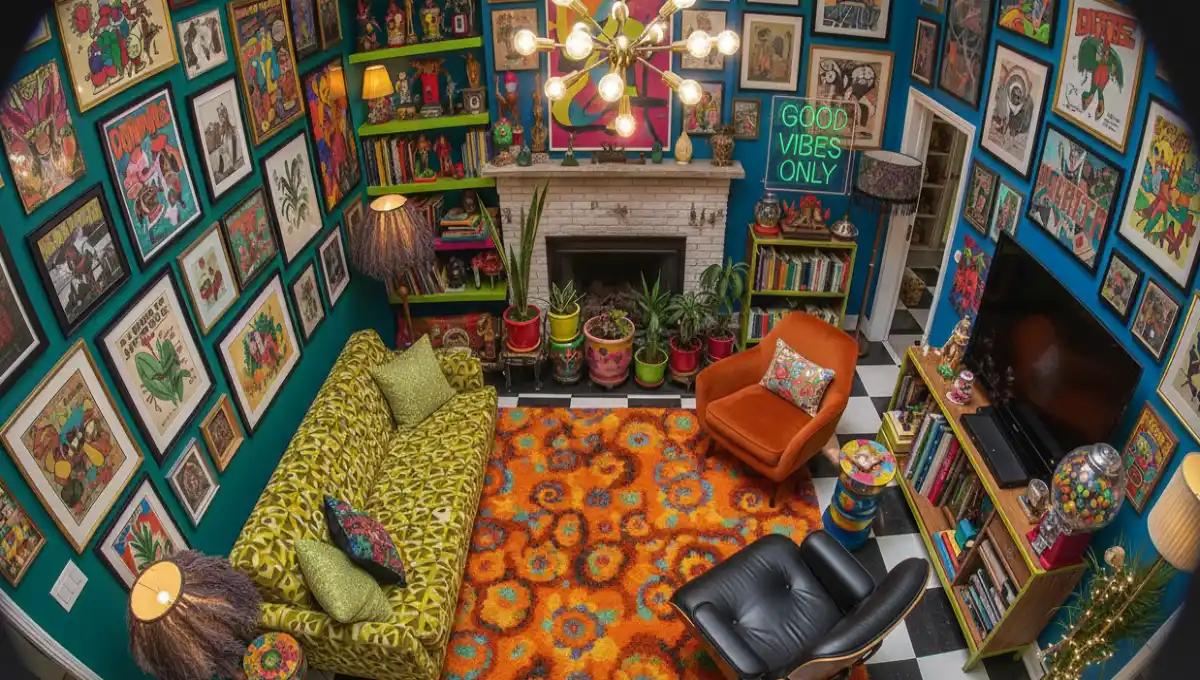
Some design styles want to impress you. Brutalist interior design doesn’t care.
It shows its structure. It leaves its materials unfinished. It refuses to hide how a space is built behind decorative surfaces and polished veneers. That honesty is the entire point, and for a growing number of American homeowners in 2026, it’s exactly what makes brutalism the most compelling design direction available.
The style takes its name from the French term béton brut, meaning raw concrete. In architecture, brutalism produced some of the most polarizing buildings of the 20th century — massive concrete structures that critics called cold and oppressive and devotees called honest and permanent. In interiors, the same raw materials create spaces that feel grounded, serious, and stripped of any pretense about what design is trying to do.
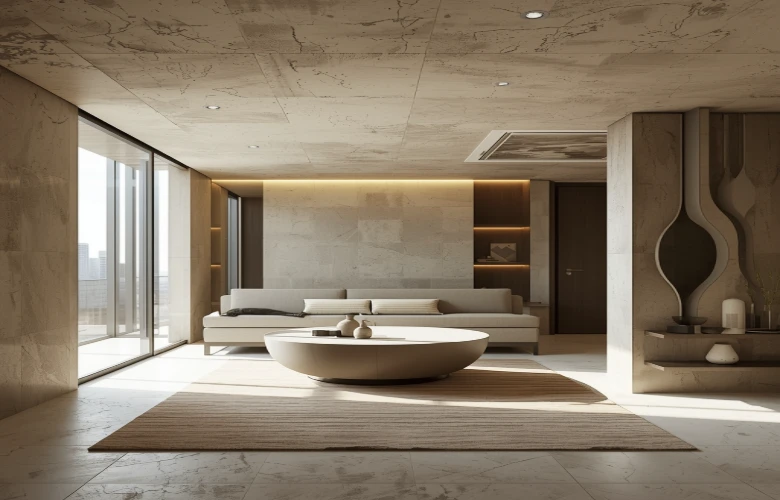
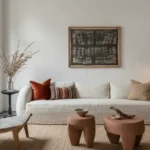
What’s different in 2026 is a shift toward what designers are now calling Soft Brutalism. The raw materials and structural honesty of classic brutalism paired with warm textiles, natural wood accents, biophilic elements, and considered lighting that softens the visual weight without compromising the philosophy. The result is a brutalist interior that feels like a genuine home rather than an architectural statement piece.
What Brutalist Interior Design Actually Means
The term gets misused regularly. Worth being precise.
Brutalist interior design is not dark for the sake of darkness. It’s not industrial design with the lights turned down. And it’s definitely not just concrete countertops and exposed brick slapped into a kitchen renovation.
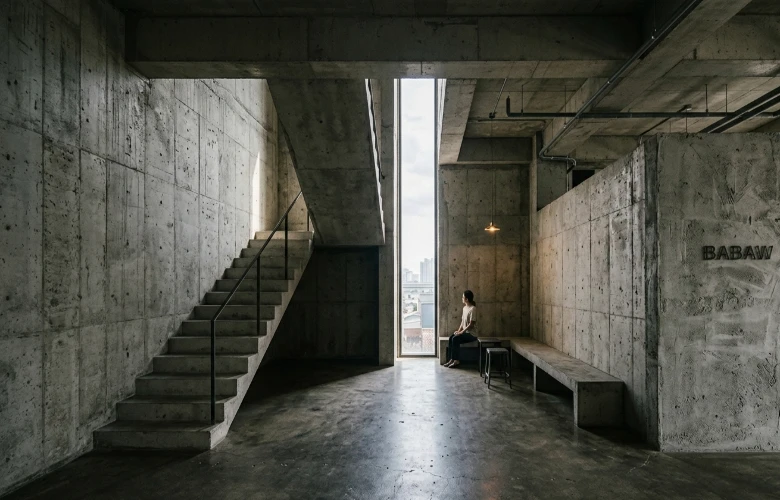
True brutalist interior design is a philosophy before it’s an aesthetic. It believes that the materials and structure of a space should be visible and honest rather than concealed and decorated. A concrete wall doesn’t need to be plastered over. A steel beam doesn’t need to be hidden behind drywall. The formwork lines left in poured concrete tell the story of how the wall was made. That story is worth keeping.
In practice, this translates to interiors where raw materials are the primary design statement. Concrete, steel, unfinished stone, and exposed brick carry the visual weight that pattern, color, and decoration carry in other styles. The palette is narrow and dark. Forms are geometric, blocky, and substantial. Ornamentation is minimal to nonexistent.
What separates brutalist interior design from industrial design is intention. Industrial design borrows the aesthetic of factories and warehouses as a reference. Brutalism is a genuine philosophical position about what design should do and what it should reveal.
The History That Explains the Style
Architectural brutalism emerged in the 1950s and peaked in the 1960s and 1970s. Le Corbusier’s Unité d’Habitation in Marseille, France, completed in 1952, is widely considered the first major brutalist building. Paul Rudolph’s Art and Architecture Building at Yale, the Barbican Estate in London, and Boston City Hall are American and British examples that shaped how the world understood the movement.
These buildings were genuinely controversial. Supporters argued they represented architectural honesty at a scale previously impossible. Critics found them cold, inhuman, and hostile to the people who had to use them. Both assessments contained truth, which is part of why brutalism became one of the most debated architectural movements of the century.
In interiors, the movement translated into spaces that celebrated concrete floors, exposed ceiling services, raw masonry walls, and furniture with the geometric weight and simplicity of the architecture around it. The aesthetic fell out of fashion in the 1980s and 1990s when warmer, more decorative styles dominated residential design.
Its 2026 revival reflects something real about where design culture is right now. After years of warm neutrals, soft curves, and the pressure to make everything look cozy and approachable, there’s a genuine appetite for spaces with more authority, more permanence, and more willingness to make demands on the people who inhabit them.
The 6 Core Elements of Brutalist Interior Design
1. Concrete as the Primary Material
Concrete is to brutalist interior design what wood is to rustic design. It’s the material that defines the style most immediately and most completely.
In its most authentic form, brutalist interior design uses poured concrete for walls, floors, and structural surfaces. Board-formed concrete, where the wooden formwork leaves a pattern of horizontal lines in the finished surface, is particularly valued because it makes the construction process literally visible in the finished wall.
For most American homeowners, poured concrete isn’t a realistic option unless they’re doing significant renovation work or building new. The practical alternatives are more accessible and have improved significantly in recent years.
Microcement is a thin-coat cement-based material applied over existing surfaces. It creates a genuine concrete appearance and texture without the structural requirements of poured concrete. Application costs typically run $8 to $15 per square foot installed, which is significantly less than structural concrete work.
Concrete-look porcelain tile has become dramatically more convincing in the past five years. Large-format tiles in 24×24 or 24×48 inch sizes in warm gray, cool gray, or charcoal tones create a strong brutalist floor or wall surface at $4 to $12 per square foot for materials.
Roman clay and limewash paint in deep gray, warm charcoal, or cool stone tones creates a textured, matte wall surface that reads as brutalist at a fraction of the cost of any concrete application. Brands including Portola Paints and ROMAN DIY Paints sell these products at most major home improvement retailers.
2. Exposed Structural Elements
Brutalist interior design reveals what other design styles hide. Steel beams, concrete columns, brick walls that haven’t been plastered, ceiling joists, and ductwork all belong in a brutalist interior when they’re structurally present.
In older American buildings, particularly in cities like New York, Chicago, and Detroit where industrial and warehouse conversions are common, these elements already exist and simply need to be maintained rather than covered. In newer construction, adding these elements requires deliberate choices during renovation.
Exposed brick walls are the most accessible structural element for most homeowners. The condition and color of the brick matters significantly. Warm, aged brick in earthy tones creates a slightly warmer brutalist environment. Gray or very dark brick reads as more severe and more classically brutalist.
Ceiling height is important in brutalist spaces. The style benefits from the scale that higher ceilings provide. In standard 8-foot ceiling residential spaces, brutalist design requires careful restraint to avoid feeling oppressive.
3. Dark, Narrow Color Palette
Brutalist interior design is not colorful. The palette ranges from white through every shade of gray to near-black, with warm brown tones added through wood and occasional leather elements.
The specific gray tones matter more than most people realize. Warm grays with yellow or red undertones feel more livable and contemporary. Cool blue-grays read as more classic brutalist but can feel cold in smaller spaces. The choice between warm and cool gray is one of the most important single color decisions in a brutalist interior.
Specific paint colors that work well in brutalist spaces in 2026:
Benjamin Moore Gravel Gray 2102-30 for a medium warm gray
Sherwin-Williams Peppercorn SW 7674 for a deep warm charcoal
Farrow and Ball Down Pipe No. 26 for a sophisticated dark blue-gray
Benjamin Moore Wrought Iron 2124-10 for near-black with warm undertones
Sherwin-Williams Dorian Gray SW 7017 for a lighter, more livable option
Black appears as an accent rather than a primary color in most brutalist interiors. Matte black metal fixtures, black-framed windows, and black furniture legs and hardware reinforce the palette without making the space completely dark.
4. Geometric, Monolithic Furniture
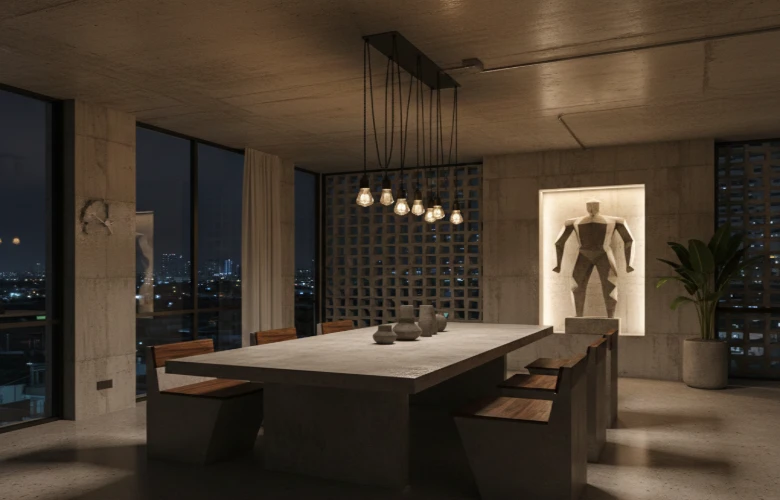
Furniture in a brutalist interior is chosen for its architectural quality. Pieces feel more like objects than furnishings. Blocky, geometric forms with straight lines, minimal curves, and substantial visual weight are characteristic. Low-profile sofas with wide, flat arms. Rectangular coffee tables in concrete, stone, or dark wood. Dining tables with thick slabs for tops and simple geometric bases.
The furniture doesn’t need to match — but it needs to share a formal quality. Everything in a brutalist space should look like it was chosen with intention rather than acquired over time.
In 2026, several USA furniture brands and retailers carry pieces with the right brutalist character:
Restoration Hardware for oversized, blocky upholstered pieces in neutral tones
Article for clean-lined sofas and tables with a more architectural silhouette
CB2 for geometric furniture with industrial and brutalist sensibility
1stDibs and Chairish for vintage pieces from the original brutalist era
West Elm for accessible pieces that work in a soft brutalist direction
5. Considered, Dramatic Lighting
Lighting in a brutalist interior does two things simultaneously: it reveals texture in raw surfaces and it humanizes spaces that could otherwise feel cold and impersonal.
Concrete walls look completely different under raking light at an angle than under flat overhead illumination. Angled wall washers and spotlights that graze across a concrete or masonry surface reveal every texture variation and create shadows that make the material dramatically more interesting. This is one of the most powerful and most underutilized lighting techniques in residential brutalist design.
For fixtures, the brutalist direction runs toward geometric metal pieces in matte black, aged steel, or dark bronze. Industrial-style pendants with exposed bulbs, architectural wall sconces with minimal decoration, and simple track lighting systems all fit the aesthetic. Neon and Edison-style filament bulbs in warm tones (2200K to 2700K) soften the clinical quality that cool-white lighting creates in a brutalist space.
Candles deserve mention here. In the Soft Brutalism direction that’s dominant in 2026, candles are one of the most effective ways to add warmth to a heavy concrete environment. Large, simple pillar candles in white or natural beeswax on a concrete surface create a contrast between the permanence of the material and the transience of the flame that is genuinely beautiful.
6. Texture Over Color
Because brutalist interior design works within such a narrow color palette, texture carries the visual interest that color provides in other styles. The contrast between different raw surfaces — smooth concrete beside rough stone, warm wood grain against cold steel, soft linen next to hard masonry — creates the depth and complexity that makes the space feel rich rather than flat.
This is the core principle of Soft Brutalism in 2026: achieve visual and tactile depth through material and texture contrast rather than color variety. A room in shades of gray, black, and warm brown can feel extraordinarily rich if the surfaces have sufficient textural variation. The same palette on uniformly smooth surfaces will feel sterile and clinical.
In practice, this means:
Never using the same finish on two adjacent major surfaces
Pairing every hard material with at least one soft one nearby
Including at least one warm natural material (wood, leather, linen) in every primary room
Using plants deliberately to introduce organic, living texture that concrete and steel cannot provide
Soft Brutalism: The 2026 Evolution
The most significant development in brutalist interior design for 2026 is the widespread adoption of what’s being called Soft Brutalism. Understanding it matters because it’s the version of the style most likely to work in American homes where full architectural brutalism isn’t feasible.
Soft Brutalism keeps the philosophy and the material palette of traditional brutalism but introduces specific elements to address the style’s most persistent weakness: livability. The raw materials, structural honesty, dark palette, and geometric forms are all present. What changes is how they’re balanced.
Warm wood accents against concrete surfaces. A walnut shelf floating on a concrete wall. A wooden dining table in a room with raw masonry walls. These warm-toned wood elements create the contrast that makes the heavy materials feel grounded rather than oppressive.
Soft textiles in significant quantities. Oversized linen throws on concrete-colored sofas. A large wool area rug on a concrete floor. Linen curtains that soften the hard edges of steel-framed windows. These textile elements are not concessions to comfort — they’re design tools that make the brutalist elements more powerful by contrast.
Biophilic elements. Large plants in simple containers bring living, organic matter into a material environment that can otherwise feel entirely inert. A large fiddle leaf fig in a concrete corner, a cluster of snake plants against a raw masonry wall, or trailing ivy on a steel shelf all add the living quality that Soft Brutalism specifically values.
Warm lighting throughout. The contrast of cool, board-formed concrete against warm timber or soft textiles is the essence of the emerging Soft Brutalism trend for 2026. Warm-toned bulbs (2200K to 2700K) throughout the space are non-negotiable in this direction. Cool lighting undoes the warmth that textiles and wood accents create. Fluent Trends
Brutalist Interior Design Room by Room
Living Room
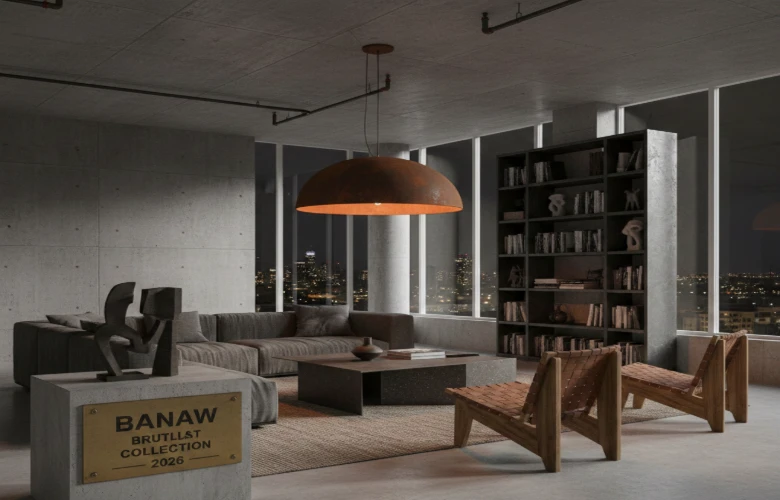
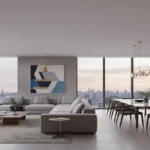
The living room is where brutalist interior design makes its strongest statement and where the Soft Brutalism approach has the most practical value.
One concrete or microcement wall — typically the wall behind the primary seating — anchors the room’s brutalist character. This single application costs significantly less than treating all surfaces and makes a stronger design statement than spreading the material thinner across multiple walls.
The sofa selection is the most important furniture decision. A deep, wide, low-profile sofa in a neutral textured fabric — warm gray bouclé, natural linen, or performance velvet in a warm charcoal — provides the soft counterpoint to the hard wall surface. Dimensions matter: look for seating depth of at least 38 inches for the right proportional weight.
A large rectangular coffee table in concrete, dark stone, or thick dark wood sits in front of the sofa. Keep the surface largely clear — one or two deliberate objects, not a collection of accessories.
One large plant in a simple container in a corner. One significant piece of art — abstract, large-scale, and graphic — on the concrete wall. Track lighting or wall washers angled to graze across the textured surface. These three elements complete the room without overloading it.
Kitchen
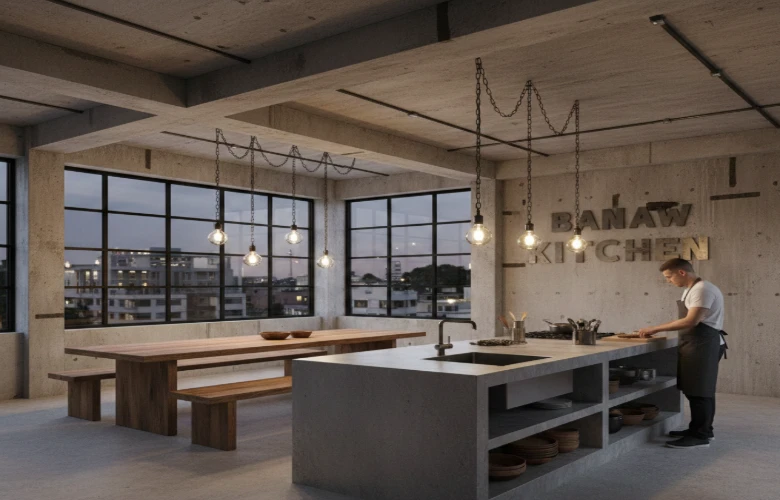
The brutalist kitchen in 2026 is one of the most commercially successful applications of the style, particularly in renovations of urban apartments in cities like New York, Chicago, and Washington DC.
Concrete countertops or thick microcement-coated counters set the tone immediately. True poured concrete countertops are heavy, require sealing, and need professional installation, typically costing $75 to $150 per square foot installed. Microcement over existing countertops costs $25 to $60 per square foot installed and achieves a similar visual result with less structural intervention.
Flat-front cabinetry in a matte dark tone — charcoal, near-black, or deep warm gray — with minimal or no hardware is the standard cabinet approach. Integrated handles or push-to-open mechanisms keep the surface clean. Black or dark bronze pull hardware works when visible hardware is preferred.
Open steel shelving on one wall provides display space for the ceramic objects, cast iron cookware, and simple glass vessels that suit the aesthetic. A single pendant light or two industrial-style pendants over the island or peninsula in matte black metal reinforces the material palette.
Bedroom
The brutalist bedroom requires more care than any other room in the home because the style’s cold and authoritative qualities are directly at odds with what bedrooms need to do: help people sleep.
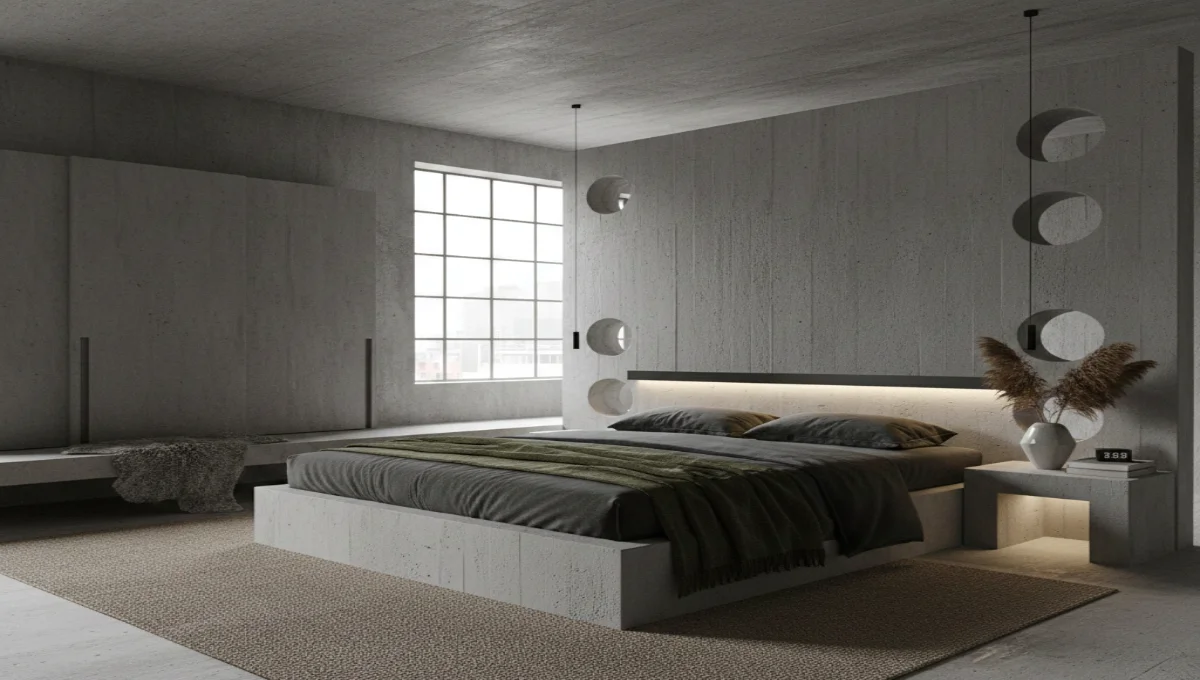
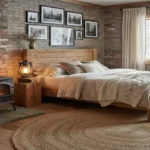
The Soft Brutalism approach is essentially mandatory here. One textured wall, either board-formed concrete look, microcement, or dark limewash paint, behind the bed creates the brutalist anchor. Everything else in the room moves toward softness and warmth.
Linen bedding in warm white or warm cream. An oversized chunky wool throw at the foot. A large area rug that extends well beyond the bed perimeter to soften the floor. Warm bedside lighting — simple geometric table lamps with warm-toned bulbs, not overhead fixtures. These elements make the brutalist wall element work as a design statement rather than a sleep disruptor.
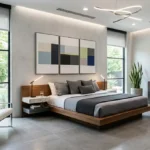
Furniture keeps to simple, clean-lined pieces in dark wood or black metal. A platform bed with a simple wooden or upholstered headboard. Floating bedside shelves rather than nightstands. A simple wooden or metal chair in the corner. Nothing excessive.
Bathroom
Microcement walls, a monolithic stone or cast concrete basin, blackened brass fixtures, and a single large mirror are the signature elements of a brutalist bathroom, and the room is one of the most achievable applications of the style for most homeowners. Houzz
The contained scale of a bathroom means a microcement wall treatment has maximum impact at relatively low total cost. A 60 to 80 square foot bathroom with microcement on the walls and floor requires 400 to 600 square feet of coverage, typically costing $3,000 to $8,000 professionally applied. The before-and-after is dramatic.
A concrete basin or dark stone vessel sink on a simple floating vanity is the statement piece of a brutalist bathroom. Brands including Native Trails, Kohler, and various independent ceramic studios all produce options in the right material direction.
Blackened or dark-toned fixtures throughout: matte black, unlacquered bronze, or dark stainless. A single large mirror with a minimal frame. One plant — a small fern or trailing pothos — on the vanity. Nothing else on surfaces.
Brutalist Interior Design for Renters
Full architectural brutalism requires ownership. Soft Brutalism is completely achievable in a rental apartment with zero permanent modifications.
Roman clay or limewash paint on one wall, if your lease permits painting, creates a textured, matte surface that reads as brutalist at low cost and with minimal landlord concern. Removable versions using peel-and-stick concrete-look wallpaper from brands including Tempaper and Chasing Paper achieve a similar effect without any paint at all.
Furniture selection does most of the work in a rental. A blocky, geometric sofa in a dark neutral, a concrete-look coffee table from CB2 or West Elm, and black metal shelving on the wall create the brutalist character through objects rather than architecture.
Lighting changes are typically permitted in most rentals as long as you restore the original fixtures on departure. Replacing a generic ceiling fixture with a matte black industrial pendant costs $80 to $300 and changes the character of a room significantly.
Large plants in simple containers add the biophilic element of Soft Brutalism with zero modification. A large snake plant, a rubber tree, or a ZZ plant in a plain concrete-look pot costs $30 to $80 total and moves the room meaningfully in the right direction.
Brutalist Interior Design Cost Breakdown
Approach
Cost Per Room
What It Gets You
Renter-friendly soft brutalism
$500 to $2,500
Paint or wallpaper, furniture updates, lighting, plants
Mid-range renovation
$5,000 to $20,000
Microcement application, new flooring, cabinetry updates, furniture
Full brutalist renovation
$20,000 to $75,000
Concrete or microcement throughout, structural exposure, full furniture refresh
Microcement application is the single highest-impact investment for most homeowners at $8 to $15 per square foot installed. In a typical living room of 300 square feet of wall surface, treating one accent wall (roughly 100 square feet) costs $800 to $1,500 professionally applied.
Working with a designer who understands brutalist interior design specifically saves time and prevents the most common mistakes. Understanding what professional designers charge in your market helps you plan the professional services portion of the budget realistically.
Acoustic Considerations in Brutalist Spaces
This is one of the most consistently overlooked challenges in brutalist interior design, and it’s worth addressing directly because it affects daily livability significantly.
Concrete, stone, and hard plaster surfaces are acoustically reflective. A room with concrete floors, masonry walls, and minimal soft furnishings creates significant echo and sound reverberation that makes normal conversation uncomfortable at higher volumes and makes the space feel institutional rather than residential.
The solution is exactly what Soft Brutalism prescribes anyway: soft furnishings that absorb sound. A large area rug on a concrete floor reduces reverberation significantly. Upholstered furniture absorbs mid and high frequencies. Textile wall hangings, curtains, and oversized throw pillows all contribute to acoustic absorption.
Acoustic panels in concrete-look finishes are available from brands including Acoustics First and ATS Acoustics for spaces where architectural treatments aren’t sufficient. In home theater or media room applications of brutalist design, dedicated acoustic treatment is often necessary.
How Brutalist Interior Design Compares to Related Styles
Style
Key Difference
Industrial
Industrial borrows factory aesthetics as a reference. Brutalism is a genuine philosophical position. Industrial is warmer and more eclectic.
Minimalism
Both edit aggressively, but minimalism pursues perfection. Brutalism celebrates rawness and structural honesty. Minimalism can use any material. Brutalism specifies concrete, steel, and masonry.
Modern
Modern home design uses natural materials refined and finished. Brutalism uses them raw and unprocessed. Modern is warmer and more accessible. Brutalism is more demanding.
Post Modern
Post modern interior design uses irony and historical reference. Brutalism is entirely sincere. Post modern is theatrical where brutalism is austere.
Wabi Sabi
Both value imperfection and honest materials. Wabi sabi design finds beauty in aging and natural variation. Brutalism finds beauty in structural honesty and raw construction. Wabi sabi is warmer and more organic.
Rustic
Rustic interior design uses natural materials for warmth and character. Brutalism uses raw materials for structural honesty. Both reject decorative excess, but their emotional registers are completely different.
Common Brutalist Interior Design Mistakes
Treating every surface the same. Applying concrete or microcement to all walls, the floor, and every horizontal surface creates a space that feels like a bunker rather than a home. One strong concrete element per room, balanced by warm contrasting materials, is more powerful and more livable than total material saturation.
Skipping the soft elements entirely. Classic brutalism without any textiles, plants, or warm accents is genuinely difficult to live in for most people. The Soft Brutalism direction that defines 2026 exists because the pure version, while architecturally interesting, fails as daily domestic space for most American homeowners.
Using cool-white lighting. This is the fastest way to make a brutalist interior feel cold and hostile. Warm-toned bulbs throughout are non-negotiable.
Choosing furniture that’s too small in scale. Apartment-sized furniture surrounded by heavy concrete walls looks lost and wrong. Brutalist spaces need furniture with enough visual weight to hold their own against the architecture.
Ignoring acoustic consequences. Hard surfaces plus minimal soft furnishings creates echo. Plan textile and rug placement with acoustic performance in mind from the beginning.
Does brutalist interior design work in small houses?
Yes. Minimalist brutalist interior design is effective in small areas when the number of materials used is carefully picked and layouts are kept open.
Is it possible that brutalist interior design is warm and comfortable?
Absolutely. Wood highlights, warm light, and comfortable fabrics are used to play off the raw materials and enhance comfort.
What is the most suitable furniture in brutalist interior design?
Clean lines, solid materials and simple forms of furniture are best. The interior design furniture manufactured in Brutalist style ought to be hardy and purposeful.
What is the difference between modern brutalist and traditional brutalism interior design?
Contemporary brutalist interiors design is more comfortable, polished and easy to live in, preserving the fundamental brutalist principles.
Is brutalist interior design costly?
It depends on materials. Although concrete and stone may be expensive, simplified layouts and little decoration can be used to regulate the final cost.
What is minimal Brutalist architecture?
Minimal Brutalism is a style that involves the use of unfinished concrete buildings with straightforward clean designs. It leaves ornamentation away and concentrates on heavy forms, utility, and nature.
Key materials used to achieve a brutalist aesthetic in homes?
The major materials are concrete, steel, stone, and unfinished wood. They are frequently left unfinished so as to emphasize the texture and structural beauty.
How to source brutalist style concrete furniture?
A search can be done on custom furniture manufacturers, craft studios or luxury modern design shops.
Is brutalism still popular in 2026?
Yes. Brutalism is one of the most searched interior design styles in 2026. The emerging Soft Brutalism trend — which pairs raw materials with warm textures and earthy tones — has made the style more accessible and appealing to mainstream homeowners.
Final Thoughts
Brutalist interior design is still in the process of development as it provides integrity, power and classicism. It is convenient, comfortable, and aesthetically impressive when combined with such modern interior design elements.
Brutalism, as an interior design movement, has shown that both raw materials and being mindful can be beautiful, and that should be demonstrated throughout all the rooms in the house.
Arch Joy is a licensed interior designer with over 10 years of hands-on experience transforming residential and commercial spaces across the USA, Canada, UAE, and Europe.
With a background in architectural design and space planning, Arch specializes in modern, functional interiors — from open-plan living rooms to compact urban apartments and luxury home makeovers.
Every article on this site is written or reviewed by Arch Joy to ensure the advice is accurate, actionable, and grounded in real project experience.
B.Arch – Architectural DesignBased in USA | Serving Global Clients10+ Years Professional Experience