Last Updated on 6 months ago by
Here’s something most design guides won’t tell you upfront: modern interior design is one of the most misunderstood styles in the industry. People confuse it with minimalism. They mistake it for cold and sterile. They assume it means all-white everything and zero personality.
None of that is accurate.
Modern interior design is a specific design movement with a clear philosophy, a defined material palette, and a distinct visual language — and in 2026, it’s evolved into something warmer, more human, and more livable than any previous version of itself. If you’ve ever felt drawn to clean lines and uncluttered spaces but worried the result would feel like a hotel lobby rather than a home, this guide will show you exactly how to get it right.
What Modern Interior Design Actually Means
The word “modern” is used loosely in everyday conversation — people say it when they mean new, or contemporary, or updated. In design, it means something much more specific.
Modern interior design refers to a design movement that emerged in the early-to-mid 20th century, rooted in the Modernist philosophy that form should follow function. The Bauhaus school in Germany, Scandinavian designers like Alvar Aalto, and American architects like Frank Lloyd Wright all contributed to a movement that rejected the ornate, decorative excess of Victorian and Edwardian interiors in favor of honesty, simplicity, and purpose.
The core belief: a well-designed space should look beautiful because it works well — not because it’s been decorated into beauty.
In practical terms, modern interior design is defined by clean lines, open floor plans, minimal ornamentation, a neutral-leaning color palette, natural materials used in simple ways, and furniture that prioritizes function without sacrificing elegance. Every element in a modern space earns its place by doing something — contributing to comfort, to function, or to the visual harmony of the whole.
What it is not: cold, empty, or personality-free. The best modern interiors feel calm and intentional — qualities most people deeply want in the homes they come back to every day.
Modern Interior Design vs. Contemporary Design
This is the single most common point of confusion in interior design, and it’s worth clearing up clearly before going further.
Modern design refers to a specific historical movement — the Modernism of the early-to-mid 20th century. Its aesthetic principles are relatively fixed: clean lines, natural materials, functional furniture, minimal ornamentation, and an architectural sensibility that treats space as a design element in itself.
Contemporary design refers to whatever is current right now — the design of the present moment. By definition, contemporary design is always changing. In 2010, contemporary design looked very different from contemporary design in 2026.
The two overlap significantly, which is where the confusion comes from. Modern design principles — clean lines, open spaces, functional furniture — have heavily influenced contemporary design for decades. But a contemporary interior might include elements that a purist modernist would reject: bolder color, mixed materials, maximalist touches, or nostalgic references.
In practical terms: if you want a space that feels timeless and rooted in a clear philosophy, modern interior design is the direction. If you want something that feels of-the-moment and eclectic, contemporary is the better label.
The 7 Core Principles of Modern Interior Design
1. Form Follows Function
This is the foundational principle — the sentence that defines the entire movement. Every element in a modern interior should have a reason to be there. Furniture that doesn’t serve a purpose, decoration that doesn’t contribute to the visual experience, accessories that are purely ornamental with no connection to the room’s function — these are the things modern design edits out.
This doesn’t mean a modern room can’t have art on the walls or a beautiful vase on a shelf. It means those choices are made deliberately and placed intentionally, rather than accumulated by default.
2. Clean Lines and Simple Geometry
Modern design favors straight lines, gentle curves, and simple geometric forms over the ornate curves, decorative moldings, and elaborate silhouettes of traditional design. Furniture profiles are clear and uncluttered. Architectural details are minimal. Cabinet fronts are flat or subtly textured rather than raised-panel or heavily detailed.
This visual simplicity is what creates the sense of calm that modern interiors are known for. When there’s nothing competing for your attention, the eye settles — and the room feels restful.
3. Open, Connected Floor Plans
Modern architecture broke down the walls between rooms. The open floor plan — where kitchen, dining, and living areas flow into each other without physical barriers — is a direct product of modern design philosophy. Open space is treated as a design element in itself, not just a gap between rooms.
In practice, this means modern interior design thinks carefully about how rooms connect, how light moves through connected spaces, and how furniture arrangement can define areas within an open plan without walling them off.
4. Natural Materials Used Simply
Wood, stone, metal, glass, and concrete are the primary material palette of modern interior design — but used in ways that honor their natural character without fussing over them. A walnut dining table with a matte oil finish. A stone countertop in a honed rather than polished finish. A concrete floor with a simple sealer. An exposed steel beam left visible rather than hidden behind drywall.
The materials are allowed to be what they are — natural, honest, and imperfect — rather than being processed into uniformity.
5. A Neutral-Dominant Color Palette
Modern interior design is not all white — that’s a misconception worth correcting. The color palette is neutral-dominant, meaning the majority of surfaces and large furniture pieces stay in a warm or cool neutral range. But “neutral” in 2026 includes warm white, warm beige, warm taupe, warm gray, soft sage, dusty blue, and muted terracotta — not just the stark white and cool gray that characterized earlier iterations of the style.
Bold color enters modern interiors as accents — a single deeply colored sofa, a statement artwork, a colored vase, or an architectural element like a painted ceiling. The contrast between a largely neutral room and a deliberate moment of color is one of the most effective tools in modern interior design.
6. Purposeful Negative Space
Negative space — the empty areas in a room — is not wasted space in modern interior design. It’s an active design element. The breathing room between a sofa and a wall, the empty surface on a coffee table, the clear floor area between a dining table and a window — these open areas give the eye somewhere to rest and allow the pieces that are present to be fully appreciated.
This is the principle that most people struggle with when attempting modern interior design on their own. The instinct is to fill space. Modern design asks you to resist that instinct — and trust that less genuinely does more.
7. Integrated Lighting Design
Modern interior design takes lighting seriously as an architectural element rather than an afterthought. Recessed lighting, integrated LED strips, architectural pendants, and well-placed floor and table lamps are all considered from the beginning of the design process, not added at the end.
The goal is layered lighting that works at different times of day and for different activities — bright enough for task work, dimmable for relaxed evenings, and architectural enough to be a design element even when switched off.
Modern Interior Design Trends 2026
Modern design’s core principles haven’t changed — but the way those principles are being expressed in 2026 has evolved meaningfully from even five years ago.
Warmth is the defining shift. The cold, stark, all-white modernism of the 2010s has been definitively replaced by something warmer. Warm whites replace cool whites. Natural wood replaces lacquered finishes. Warm neutrals — warm beige, warm taupe, warm gray with yellow or red undertones — replace the cool grays that dominated the previous decade. Modern interiors in 2026 feel grounded and human rather than clinical.
Texture has become essential. Smooth, uniform surfaces were a hallmark of earlier modern design. In 2026, texture is deliberately introduced through bouclé upholstery, limewash walls, honed stone, hand-thrown ceramics, and natural linen textiles. These tactile elements add depth and warmth without disrupting the clean, uncluttered visual quality of the style.
Curves are back — selectively. Pure geometric modernism was angular. Contemporary modern design in 2026 incorporates gentle curves: rounded sofa arms, oval coffee tables, arched doorways, and curved dining chairs. These organic forms soften the geometry without abandoning the clean-lined quality of the style.
Sustainability is no longer optional. Reclaimed materials, low-VOC paints, sustainably sourced wood, and energy-efficient lighting have moved from design preference to design expectation for most USA homeowners pursuing modern interiors in 2026.
Color is getting bolder at the accent level. Deep forest green, dusty terracotta, rich burgundy, and deep navy are all appearing as statement colors in otherwise neutral modern interiors — in a single colored sofa, an accent wall, or a set of deeply colored dining chairs. The neutral base remains, but the accents are getting more confident.
Modern Interior Design Room by Room
Living Room
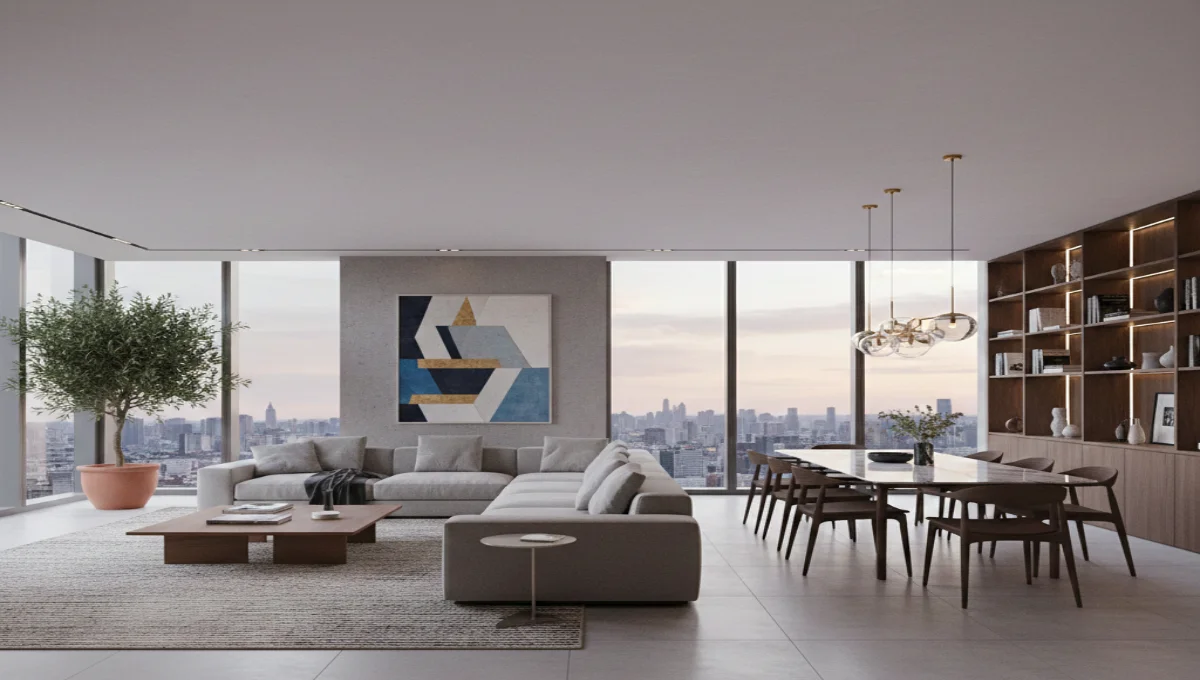
The modern living room is built around a sofa as the room’s primary statement piece. In 2026, the most popular modern living room sofas are low-profile with clean lines and upholstered in bouclé, warm linen, or textured fabric in warm neutral tones — cream, warm beige, warm gray, or soft sage. A deeply colored sofa — forest green, dusty blue, warm terracotta — makes a strong statement against otherwise neutral walls.
Coffee table selection matters enormously in a modern living room. A single, well-proportioned piece — oval or rectangular, in natural wood, stone, or a combination — reads cleaner and more intentional than a cluster of smaller tables. The surface should be kept largely clear: one or two books, a small plant, a simple ceramic object. Resist the temptation to fill it.
Walls in a modern living room stay simple. One large piece of artwork — a single canvas or framed print — creates more visual impact than a gallery wall of smaller pieces. The scale of the artwork relative to the wall it occupies is critical: too small and it looks lost, too large and it crowds. As a general rule, artwork should fill roughly two-thirds of the wall width above the sofa.
Avoid: matching furniture sets, decorative pillows in more than two or three complementary tones, and accessories that don’t have a deliberate reason for being there.
Kitchen
The modern kitchen is defined by clean, flat-front cabinetry, integrated or flush-mounted appliances, and uncluttered countertop surfaces. The most popular modern kitchen cabinet finishes in 2026 are warm white, warm off-white, and sage green — a shift away from the all-white or cool gray kitchens that dominated the previous decade.
Countertops in modern kitchens are almost universally in natural materials: honed quartz, honed granite, concrete, or butcher block. Polished surfaces are becoming less common — the matte, honed quality reads as more sophisticated and more consistent with the warmth that characterizes 2026 modern design.
Hardware should be minimal and consistent. Integrated pull handles — long linear bars or recessed finger pulls — give a cleaner look than traditional knobs or pulls. When visible hardware is used, one finish throughout the entire kitchen is the rule: brushed brass, brushed nickel, or matte black, but never mixed.
Open shelving works in modern kitchens only when the objects displayed are intentional and consistent. A shelf with five or six carefully chosen objects — a few white ceramic pieces, a wooden cutting board, a small plant — reads as modern and considered. A shelf loaded with miscellaneous items reads as clutter, regardless of the visual style around it.
Keeping kitchen remodel costs in mind from the start of a modern kitchen project helps you make smarter decisions about where to invest — cabinetry and countertops deliver the most visual impact for the money spent.
Bedroom
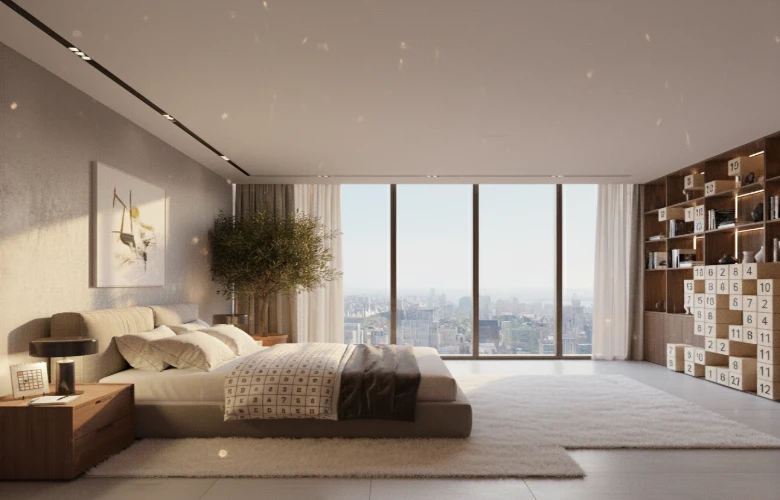
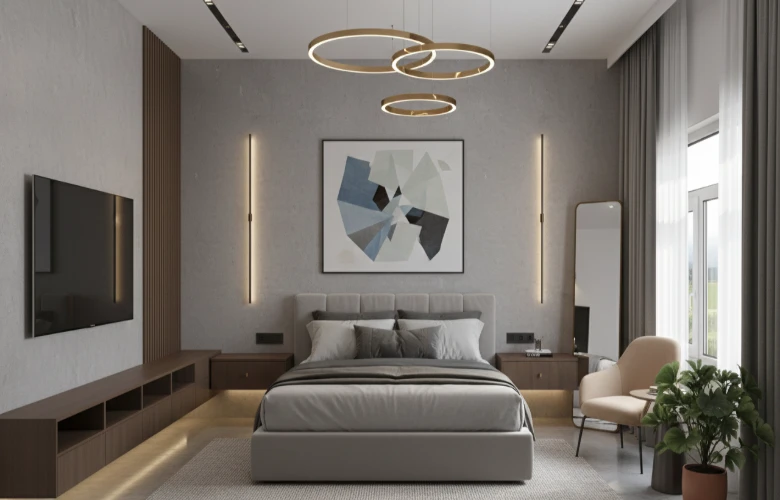
The modern bedroom prioritizes rest and calm above everything else. The bed frame sets the tone: a platform bed with a clean profile, upholstered in a natural fabric or in a simple wood finish, anchors the room without competing for attention. Headboards in modern bedrooms are typically low and understated — a simple upholstered panel in a warm neutral, or a clean wooden slab, rather than a tall, elaborate statement piece.
Bedding in a modern bedroom stays neutral and textural: warm white linen, warm cream cotton, or a muted tone that works with the overall palette. The texture of the fabric matters more than any pattern. A single accent throw or two accent pillows in a complementary tone — but no more — keeps the bed looking intentional rather than styled.
Nightstands should match or be clearly complementary. A single floating shelf on each side, a pair of simple wooden pedestals, or two identical ceramic table lamps on minimal surfaces — consistency and simplicity on both sides of the bed contributes to the symmetry and calm that makes a modern bedroom feel genuinely restful.
Storage is a major functional priority in modern bedroom design. Built-in wardrobes with flat-front doors that blend into the wall, under-bed storage frames, and minimal visible furniture all contribute to the uncluttered quality that the style requires. Visible clutter — clothes draped over chairs, items on the floor, a crowded dresser surface — dismantles the modern aesthetic immediately.
Bathroom
The modern bathroom is one of the most compelling rooms to design in this style because the functional requirements of the space align naturally with modern design’s principles: clean surfaces, minimal ornamentation, high-quality materials, and impeccable organization.
Large-format tile — particularly in a warm white, warm gray, or natural stone look — creates the visual continuity that modern bathrooms depend on. Running the same tile from floor to shower wall eliminates the visual breaks that make a bathroom feel smaller and more fragmented. For a strong modern statement, floor-to-ceiling tile in a single material with minimal grout lines creates a spa-like quality that immediately elevates the room.
Freestanding bathtubs — particularly in simple oval or rectangular forms with clean profiles — are the modern bathroom’s most aspirational element. Against a tiled wall with a floor-mounted faucet, a freestanding tub transforms a bathroom from functional to extraordinary.
Vanities in modern bathrooms favor the floating design — mounted to the wall with visible floor space below. This detail makes the floor appear larger, makes cleaning easier, and creates the kind of visual lightness that characterizes modern design at its best.
Understanding interior designer fees for bathroom projects helps you decide whether professional help is worth it — for a modern bathroom where precision and material selection make the biggest difference, many homeowners find the investment pays off significantly.
Home Office
The modern home office has become one of the highest-priority rooms in American homes since 2020, and modern design principles apply here with particular force. A clear, well-organized desk surface directly affects focus and productivity — which aligns exactly with modern design’s core belief that how a space works determines how it feels.
A large, simple desk — solid wood surface, clean legs, minimal profile — is the foundation. Position it to face the room with a view of the door where possible, and ensure the wall behind you is solid and neutral rather than distracting.
Cable management is non-negotiable in a modern home office. Visible cable clutter is both visually disruptive and genuinely stressful. Built-in cable channels, a monitor arm that positions the screen cleanly, and a charging station organized out of sight all contribute to a workspace that feels calm and controlled.
One large artwork, a small plant, and one or two meaningful objects on the desk or shelf — nothing more. The office is where the principle of purposeful negative space matters most, because cognitive clarity and visual clarity are directly related.
The Modern Interior Design Color Palette A Practical Guide
Modern interior design doesn’t prescribe a single color scheme, but it does operate within a consistent logic that makes color selection much clearer.
The foundation layer — walls, large furniture, flooring — stays neutral. In 2026, the most popular modern foundation colors are:
- Warm white (Benjamin Moore White Dove, Sherwin-Williams Alabaster)
- Warm greige (Benjamin Moore Edgecomb Gray, Sherwin-Williams Accessible Beige)
- Warm taupe (Benjamin Moore Revere Pewter, Farrow & Ball Elephant’s Breath)
- Soft sage (Benjamin Moore Saybrook Sage, Sherwin-Williams Clary Sage)
- Deep charcoal for a bolder, more dramatic modern approach
The accent layer — one sofa, artwork, a set of dining chairs, or an architectural element — introduces one deliberate color with confidence:
- Deep forest green
- Dusty terracotta
- Rich burgundy
- Warm mustard
- Deep navy
The detail layer — cushions, ceramics, small objects — stays within the palette established by the first two layers, using varying tones rather than introducing new colors.
The most common modern color mistake is introducing too many different accent colors across the same space. Choose one — commit to it throughout the room — and let the neutrals do the rest.
Modern Interior Design on a Budget Real Numbers for USA Homeowners
Modern design is sometimes associated with expensive furniture and premium materials. In practice, its principles — simplicity, quality over quantity, purposeful editing — make it one of the most budget-friendly approaches available if applied thoughtfully.
High-impact changes under $500:
- Repainting walls in a warm neutral — $150 to $400 for materials, DIY
- New cabinet hardware in brushed brass or matte black throughout kitchen — $75 to $200
- Replacing overhead light fixtures with simple modern pendants — $100 to $300
- Decluttering and editing — free, and often the single highest-impact change available
Mid-range investments ($500 to $3,000):
- A quality bouclé or linen sofa — $800 to $2,500
- New flat-front cabinet doors for kitchen — $500 to $2,000
- A solid wood platform bed frame — $400 to $1,200
- Large-format art print professionally framed — $200 to $600
Significant investments ($3,000+):
- New kitchen countertops in honed stone — $3,000 to $8,000
- Floating bathroom vanity installation — $1,500 to $4,000
- Built-in wardrobe with flat-front doors — $3,000 to $10,000
- Wide-plank hardwood flooring throughout — $8 to $18 per sq ft installed
The single most cost-effective modern interior design move: edit ruthlessly, repaint in a warm neutral, replace light fixtures, and add one quality piece of furniture or art. This sequence — done well — transforms the feel of a space for under $1,000.
Modern Interior Design Mistakes That Undermine the Look
Going too cold. All-white walls, cool gray floors, chrome fixtures, and no warm tones anywhere create a space that feels institutional rather than modern. Modern design in 2026 requires warmth — in the paint color, the wood tones, the textile choices, and the lighting. If a room feels like a hospital, add warm tones before removing anything.
Buying cheap furniture in a modern silhouette. Modern design is particularly unforgiving of poor quality because the simplicity of the forms leaves nowhere to hide manufacturing shortcuts. A cheap sofa with a modern shape reveals its quality immediately. Better to have one genuinely well-made piece than three mediocre ones in the right silhouette.
Overdoing the accessories. The instinct to add personality through accessories frequently results in too many small objects competing for attention on surfaces, shelves, and side tables. Modern interiors need breathing room. Remove half of what you think is right, then evaluate.
Ignoring texture. A modern room with no textural variation — all smooth surfaces, no tactile difference between materials — feels flat and lifeless regardless of how clean and uncluttered it is. Bouclé, linen, honed stone, natural wood grain, and ceramic objects all add the tactile dimension that makes a modern space feel warm and alive.
Using too many different wood tones. Modern design works best when wood tones are consistent or at most vary within a single warm or cool family. A warm walnut floor with a light blonde oak coffee table and a dark espresso dining table creates visual confusion. Choose a direction — warm or cool, light or dark — and stay within it.
Neglecting window treatments. Bare windows can work in modern design when the view is beautiful and privacy isn’t a concern. In most homes, bare windows look unfinished rather than intentional. Simple linen or cotton curtains in a color that matches or closely relates to the wall — hung high and wide — add the softness and frame that modern rooms need.
How Modern Interior Design Compares to Other Styles
Modern design shares DNA with several other popular styles, and understanding the relationships helps you decide how far to take the aesthetic — and how to layer it with other elements you’re drawn to.
Modern vs. Minimalism — Minimalism takes modern design’s principles to their logical extreme. Where modern design is clean and purposeful, minimalism is spare to the point of near-emptiness. Modern design allows for more — more furniture, more objects, more color accent — as long as each element is intentional. Minimalism is stricter about how little is enough.
Modern vs. Scandinavian — Scandinavian design shares modern design’s love of clean lines, natural materials, and functional furniture. The difference is warmth and coziness — hygge, the Scandinavian concept of cozy contentment, brings softness, layered textiles, and warm lighting into spaces that might otherwise feel too austere. Modern design is more architecturally precise; Scandinavian design is warmer and more domestic.
Modern vs. Japandi — Japandi design principles combine Japanese minimalism and Scandinavian warmth. It shares modern design’s love of natural materials and honest craft, but goes further in its embrace of imperfection, negative space, and the beauty of things that age naturally. Modern design is more precise and architectural; Japandi is more contemplative and organic.
Modern vs. Industrial — Both styles value honesty in materials — exposed structure, visible construction. Industrial design embraces the unfinished rawness of factories and warehouses: exposed brick, pipes, ducts, and rough concrete. Modern design is more refined in its material expression — the concrete is smoother, the metal is more elegant, the raw elements are edited rather than celebrated in their entirety.
Modern vs. Modern Classic — Modern classic interior design adds traditional elements — crown molding, paneled walls, formal symmetry, richer textiles — to a modern base. It’s warmer and more formal than pure modern design, and appeals to homeowners who want the clean lines of modern design with the historical gravitas of classical architecture.
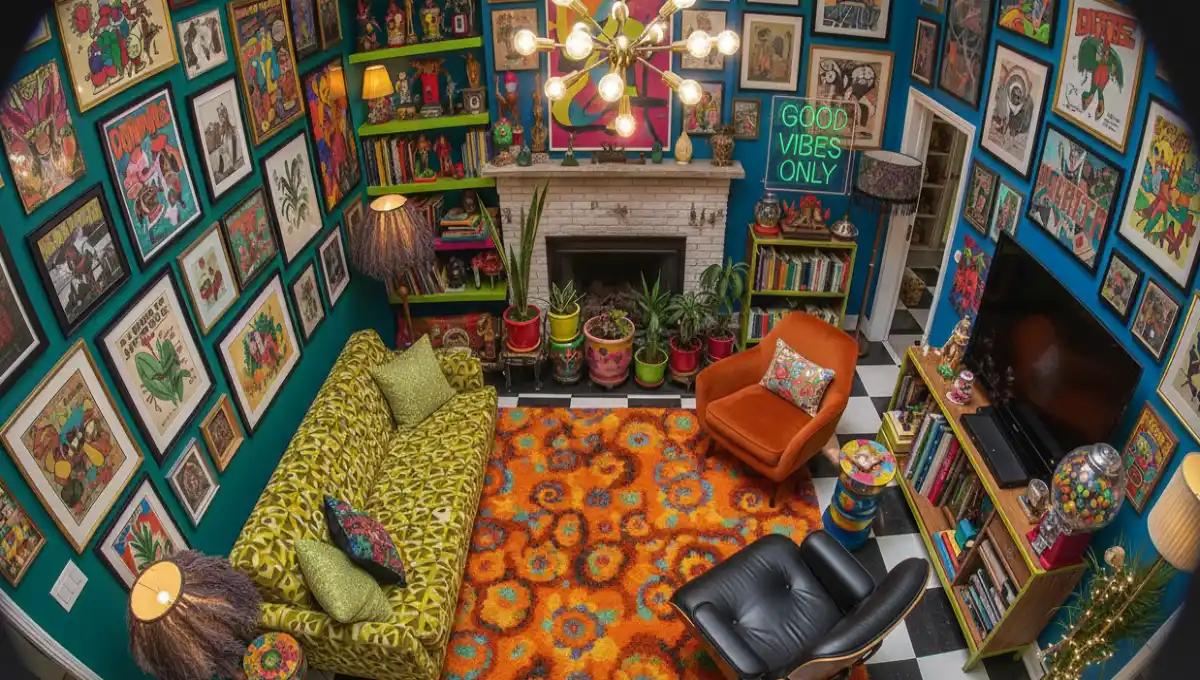
Modern vs. Bohemian — About as different as two styles can be in intent. Bohemian design celebrates layering, eclecticism, cultural mixing, and personal accumulation. Modern design celebrates editing, restraint, and deliberate simplicity. They can coexist in a single home — a modern architectural shell with bohemian styling in a single room — but their core philosophies pull in opposite directions.
Frequently Asked Questions
Q: What is the difference between modern and contemporary interior design?
Modern interior design refers to a specific historical design movement rooted in early-to-mid 20th century Modernism — characterized by clean lines, functional furniture, natural materials, and minimal ornamentation. Contemporary design refers to whatever is current right now, which changes constantly. The two overlap significantly because modern principles have heavily influenced design for decades, but they aren’t the same thing. Modern is a fixed aesthetic philosophy; contemporary is a moving target.
Q: Is modern interior design expensive?
Not necessarily. Modern design’s core principles — editing, simplicity, quality over quantity — actually make it quite achievable on a modest budget. The most impactful modern design changes are often free or very low cost: decluttering, repainting in a warm neutral, and reorganizing what you already have. The style rewards restraint, which means you need fewer pieces rather than more.
Q: Can modern interior design work in an older home?
Yes, and the contrast between modern interiors and historic architectural details — original molding, brick fireplaces, wood beams — often produces some of the most interesting modern interiors available. The key is to treat the historical elements as design assets rather than problems to be hidden. A modern interior within a Victorian shell, for example, creates a compelling tension that neither style alone could achieve.
Q: What colors work best in a modern interior?
The foundation palette stays warm neutral: warm white, warm beige, warm taupe, warm gray, or soft sage. One deliberate accent color — deep forest green, dusty terracotta, rich burgundy, warm mustard, or deep navy — is introduced through a single major element like a sofa, a set of dining chairs, or an accent wall. The detail layer — cushions, ceramics, small objects — stays within the established palette rather than introducing additional colors.
Q: How do I make my modern interior feel warmer without losing the clean, uncluttered look?
Warmth in a modern interior comes from four things: warm paint colors rather than cool ones, natural materials with visible texture and grain, warm-toned lighting (2700K to 3000K bulbs), and soft textiles in natural fibers like linen, cotton, and bouclé. You can add all four of these without adding clutter or compromising the clean, purposeful quality of the style.
Q: How much does it cost to hire an interior designer for a modern home?
Understanding what interior designers charge helps set realistic expectations. For a modern interior project, hourly rates typically run $100 to $500 depending on location and experience, with flat-fee packages for single rooms starting around $1,500 to $5,000. Many modern design principles — editing, decluttering, repainting — can be implemented without professional help, which makes modern design one of the more DIY-friendly approaches for homeowners who understand the core principles.