Last Updated on 3 months ago by
Most people think rustic interior design means log cabins, antler chandeliers, and plaid everything. That version exists — but it’s not what’s driving the massive resurgence of this style across the USA right now.
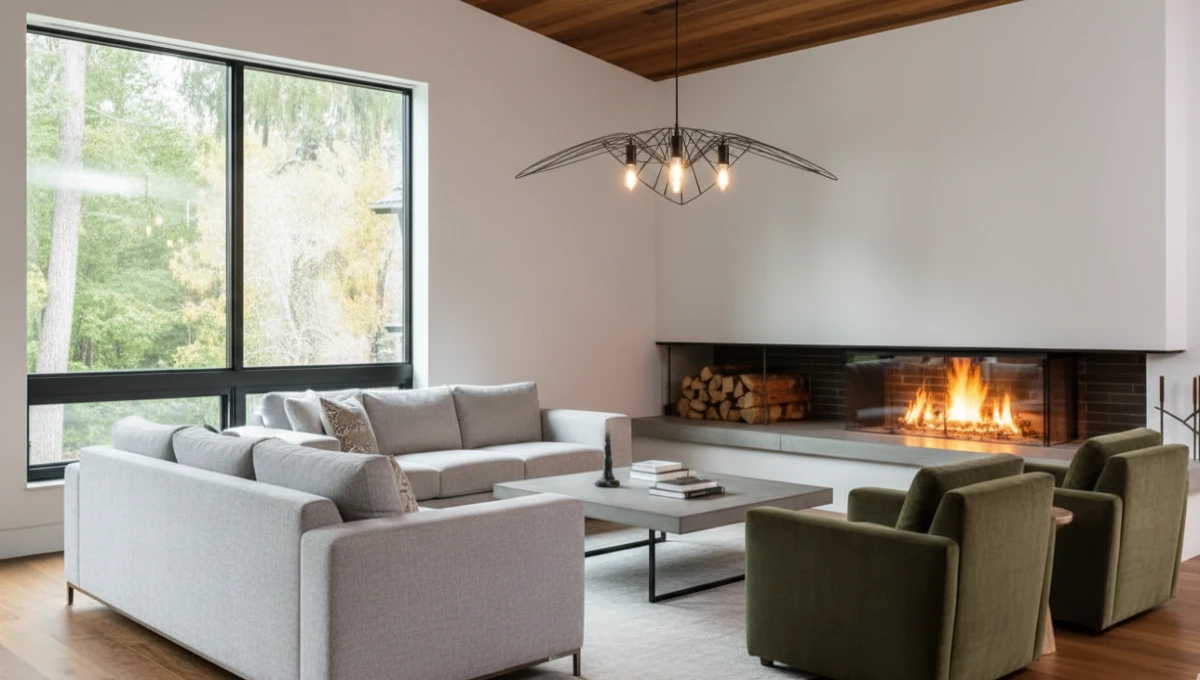
The rustic design that’s dominating 2026 home renovations looks nothing like a mountain lodge. It’s warmer, smarter, and far more wearable in everyday homes. Designers are calling it the Rustic Modern Revival — a sophisticated evolution that pairs the honest beauty of natural materials with cleaner lines, better editing, and a lighter overall hand. The result feels grounded and authentic without ever tipping into themed or heavy.
Whether you’re redesigning a single room or planning a full renovation, this guide gives you everything — the core elements, room-by-room breakdowns, 2026’s biggest shifts in the style, how to do it on a budget, where to shop, and the mistakes that make rustic rooms look wrong.
Why Rustic Interior Design Is Having Its Biggest Moment in Years
After a decade of cold minimalism — white walls, concrete floors, zero decoration — Americans are craving something warmer. Something that feels like it was lived in rather than assembled. Something with texture, history, and genuine character.
Rustic interior design delivers all three. And in 2026, it’s doing it without the heaviness or nostalgia that held the style back in the past. Surveys of interior designers show that natural materials, tactile surfaces, and handcrafted objects are the top priorities for USA homeowners right now. Rustic design is the natural home for all of them.
This isn’t a trend cycle. It’s a fundamental shift in what people want from their homes — spaces that support wellness, feel genuinely personal, and age beautifully rather than looking dated in three years.
What Rustic Interior Design Actually Means
Rustic interior design is a style built around natural, honest materials — wood, stone, fiber, and metal — used in ways that celebrate their natural character rather than hiding it. Grain, knots, texture, imperfection, and the evidence of age are not problems to be corrected. They’re the entire point.
The style draws from early American homesteader living and the traditional country houses of Europe, where homes were built from whatever the land provided and decorated with objects that were genuinely useful. Nothing was decorative for decoration’s sake. Everything belonged because it served a purpose — and looked beautiful doing it.
That unpretentious quality defines rustic interior design at its core. It doesn’t try to impress. It tries to feel real.
The 6 Core Elements That Make Rustic Design Work
1. Wood — The Most Essential Material
No single material matters more in rustic interior design than wood. Raw, reclaimed, or lightly finished — with visible grain, honest knots, and natural imperfections — wood is the foundation everything else builds on.
In 2026, medium to dark wood tones are the preference: walnut, aged oak, dark pine, and cherry rather than the lighter honey-pine tones that dominated earlier versions of the style. Darker wood reads warmer and more sophisticated. It also ages more gracefully.
Reclaimed wood is the gold standard. Old barn wood, salvaged floorboards, and repurposed timber carry a depth of character that brand-new wood cannot manufacture — because it’s earned. Every crack, weathered surface, and worn edge tells a real story.
For flooring, wide-plank hardwood in a matte or natural oil finish is ideal. Avoid high-gloss — it reads formal and modern rather than warm and rustic. For walls, wood paneling in shiplap, board-and-batten, or vertical plank formats adds texture and warmth that paint alone can’t deliver.
Exposed ceiling beams are the single most impactful architectural element in rustic design. They add visual height, character, and a connection to traditional construction that nothing else replicates. Structural beams are best — but decorative beams installed for effect deliver the same visual result at a fraction of the cost.
2. Stone — Weight, Permanence, and Earthy Grandeur
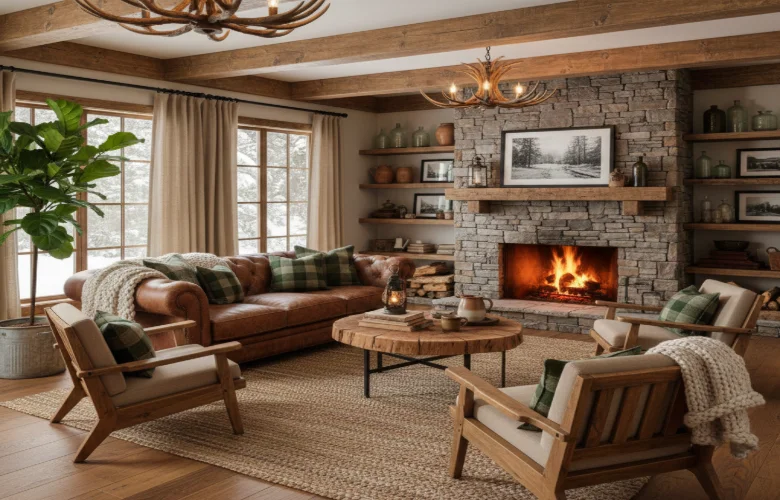
Stone brings something wood can’t: a sense of age and permanence that makes a space feel as though it has always been there. A rough-cut stone fireplace is the most iconic rustic living room element for good reason — it anchors the room, commands attention, and communicates the style’s values immediately.
Beyond fireplaces, stone appears as floor tile, kitchen countertops, bathroom feature walls, and accent surfaces throughout rustic homes. Travertine has emerged as the stone of choice for 2026 — warmer and more organic than marble, with natural variation and texture that feels genuinely at home in rustic spaces.
The key with stone in rustic interior design is to keep it raw. Minimal shaping, light finishing, and visible natural character. Polished stone reads contemporary. Rough, honest stone reads rustic.
3. Texture — The Ingredient That Makes Everything Come Alive
Without layered, varied texture, a rustic room just looks brown. With it, the space becomes rich, complex, and genuinely interesting to live in.
Texture in rustic interior design comes from every direction at once. Rough stone wall beside smooth plaster. Weathered wood against soft linen. A jute rug under a chunky wool throw. Woven baskets beside hammered metal candleholders. This variety — visual and tactile — creates the warmth and depth that people respond to so strongly in well-executed rustic spaces.
Two texture trends worth knowing for 2026:
Limewash walls — applied over standard drywall, limewash creates a softly uneven, naturally aged surface with incredible depth and warmth. It works beautifully in living rooms and bedrooms where you want texture without full wood paneling. It’s also one of the most cost-effective ways to add a genuinely rustic quality to any room.
Tambour and fluted surfaces — narrow, repeating vertical slats on cabinet doors, kitchen islands, and vanity fronts. These add rhythmic, subtle texture that elevates a simple wooden surface without relying on shiplap or traditional rustic details.
4. An Earthy, Warm Color Palette
Rustic interior design doesn’t use dramatic or saturated colors. Its palette comes directly from the natural landscape — the tones of earth, bark, stone, dried grass, and autumn light.
Warm neutrals form the backbone: creamy white, warm beige, sandy taupe, warm greige, and the full spectrum of brown wood tones. These serve as backgrounds that let natural materials and textures do the visual work without any competition.
Accent colors stay muted and earthy: terracotta, deep forest green, dusty sage, warm rust, aged ochre, and dusty rose. These feel natural rather than decorative — as if they arrived organically rather than being chosen from a paint chip.
What to avoid: cool grays, stark bright whites, and high-contrast black-and-white combinations. These read as modern and crisp — qualities that work directly against the warm, softened character that rustic interior design is built around.
5. Handmade and Vintage Objects
Rustic design is deeply hostile to perfection. Mass-produced uniformity — every piece matching exactly, every edge perfectly smooth — contradicts everything this style stands for.
Rustic interior design loves objects that show their age, carry history, and reflect a human hand. A dining table with visible hand-planing marks. A ceramic bowl with an uneven glaze. A woven basket from a local artisan. A vintage iron lamp with genuine patina. An old wooden crate repurposed as a side table.
These objects carry something that no factory-produced equivalent can replicate: authenticity. And in rustic interior design, authenticity isn’t a bonus. It’s the entire point.
Estate sales, antique markets, thrift stores, and local craft fairs are the best sources for this kind of object. An imperfect piece with real history contributes more to a rustic room than a perfect reproduction every single time.
6. Warm, Layered Lighting
Lighting in a rustic space should feel like late afternoon sun through old windows, or firelight on a winter evening. Warm, atmospheric, and layered rather than bright and functional.
Always use warm-toned bulbs — 2700K to 3000K range — that cast golden, amber light. Cool daylight bulbs strip the warmth from natural materials and make rustic spaces feel clinical.
Fixtures should reinforce the material palette: wrought iron chandeliers, wooden pendant lights, simple exposed-bulb pendants with Edison-style filaments, and aged brass or bronze wall sconces. Avoid chrome, polished nickel, and glass globes — they pull toward modernity.
Layer multiple light sources at different heights. Overhead lighting plus table lamps plus candles plus firelight creates the atmospheric depth that makes rustic rooms feel genuinely alive in the evening.
Modern Rustic vs. Traditional Rustic — The Key Differences in 2026
This distinction matters enormously right now, and most guides gloss over it.
Traditional rustic — log walls, antler chandeliers, matching plaid throughout, cabin-themed accessories in every corner — is a complete and coherent aesthetic. But it’s heavy, it’s themed, and it requires a specific type of home and a specific level of commitment that most people aren’t ready for.
Modern rustic takes the same core materials and applies them with more restraint, more contemporary furniture silhouettes, and a significantly lighter editing hand. It doesn’t feel themed. It feels collected, warm, and genuinely livable.
| What Traditional Rustic Does | What Modern Rustic Does in 2026 |
|---|---|
| Heavy distressed wood everywhere | Walnut and aged oak used selectively |
| Matching furniture sets | Mixed pieces that evolved over time |
| Themed accessories throughout | A few meaningful handcrafted objects |
| Dark, enclosed, cozy feeling | Natural light, open, connected outdoors |
| All-rustic material palette | Rustic materials paired with contemporary contrast |
| Literal cabin references | Abstract warmth and natural character |
The modern version is warmer, more adaptable, and considerably more wearable in the wide variety of homes Americans actually live in. It’s why this interpretation of rustic interior design is dominating 2026.
Rustic Interior Design Room by Room
Living Room
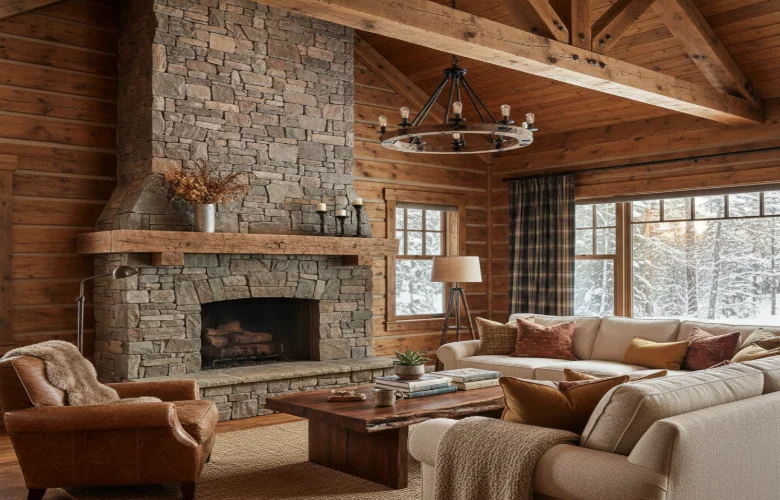
The rustic living room organizes itself around one strong anchor — typically a fireplace, a substantial stone or wood feature wall, or a large piece of statement artwork. Everything else in the room serves that focal point rather than competing with it.
Start with a well-scaled sofa in natural linen, warm leather, or textured boucle. In 2026, leather is making a strong return to rustic living rooms after years of fabric domination — particularly aged, worn leather in caramel, cognac, and deep espresso tones. Pair it with a reclaimed wood coffee table that shows genuine character: knots, natural edges, evidence of previous life.
Layer textiles generously. A large area rug in natural jute, a vintage-style kilim, or a wool flatweave in earthy tones grounds the seating area. Add throw pillows in linen, canvas, and chunky knit textures. Drape a wool throw across the back of the sofa. These layers transform a well-furnished room into one that feels genuinely warm and inviting.
Avoid furniture sets. A matched sofa-and-loveseat combination creates a showroom look that works directly against the collected, evolved quality that rustic spaces should have. Mix pieces that feel complementary in spirit but not identical in origin.
For walls, consider a limewash treatment on one wall behind the sofa or fireplace. It adds instant texture and depth for under $200 in materials if you apply it yourself — and the effect is considerably more sophisticated than a simple painted wall.
Kitchen
The rustic kitchen is one of the most universally loved versions of this style, and one of the most achievable at almost any budget level.
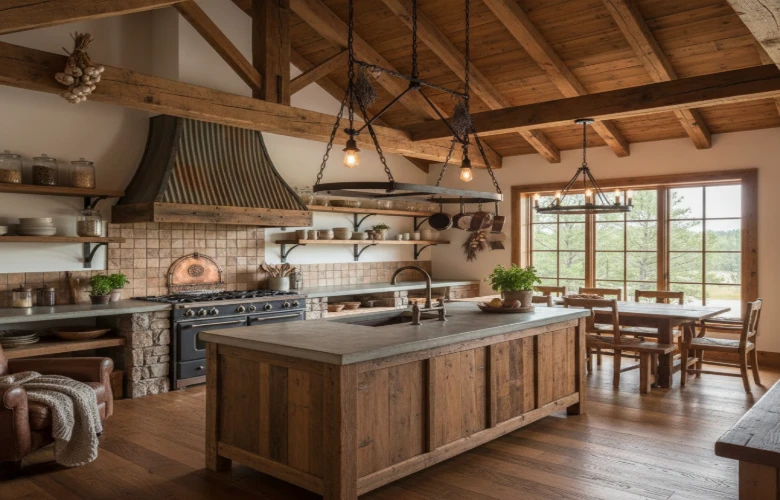
Cabinet strategy is the first decision. Natural wood cabinets in a medium to dark stain are the most authentically rustic choice. If replacement isn’t in the budget, painting existing cabinets in a warm white or sage green with new hardware — aged bronze or hand-forged iron pulls — delivers a dramatic transformation for $500 to $2,000 depending on kitchen size.
Open shelving on at least one wall allows you to display the objects that bring rustic kitchens to life: ceramic dishes in earthy tones, wooden cutting boards, cast iron cookware, woven baskets, and fresh herbs in small terracotta pots. These functional items become the kitchen’s decoration — which is exactly the rustic philosophy.
Butcher block countertops are having a significant 2026 moment, particularly for kitchen islands. The warmth and natural character of wood against painted or stone cabinetry creates a beautiful material contrast that feels authentically rustic without being heavy.
A farmhouse sink in fireclay or cast iron is one of the highest-impact single upgrades in a rustic kitchen. It signals the style immediately and works as hard as it looks.
Bedroom
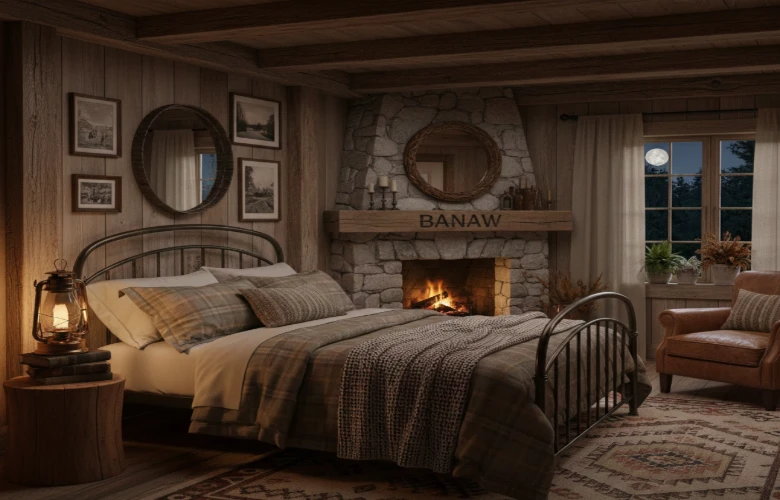
The rustic bedroom should function as a genuine retreat — warm, quiet, and entirely free from the pace of modern life. Every decision in the space should serve that feeling.
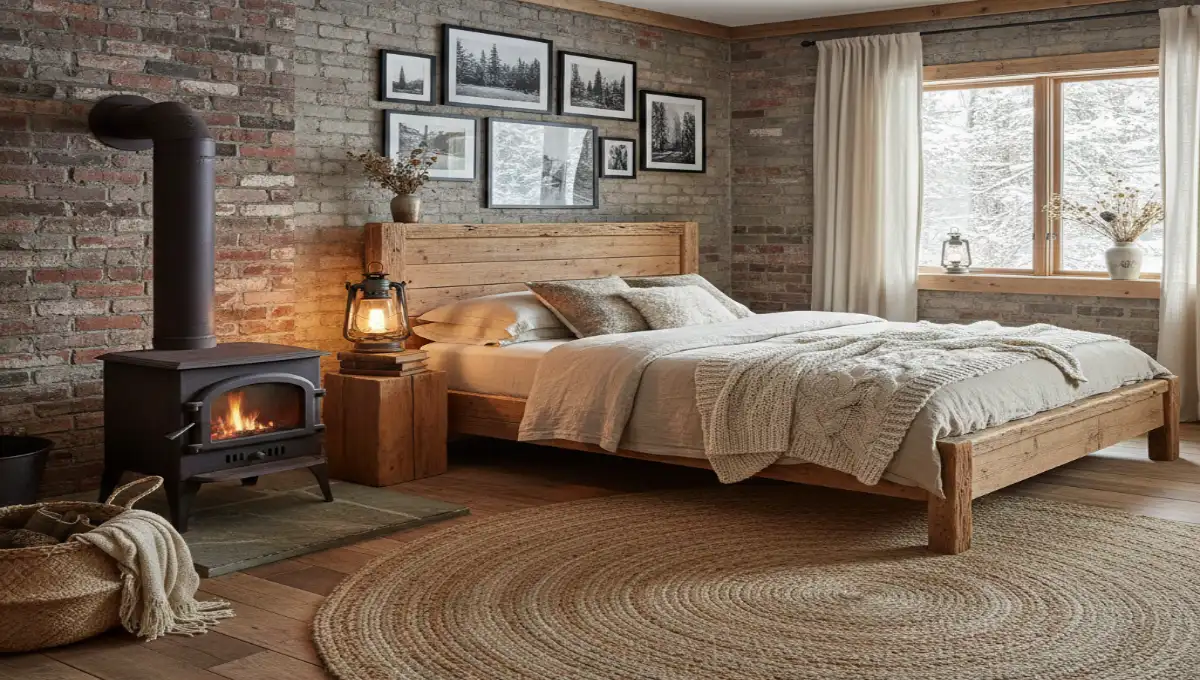
A solid wood bed frame in walnut, dark oak, or reclaimed pine sets the tone immediately. Platform beds with clean, simple lines work beautifully in modern rustic spaces. A wrought iron headboard is a strong alternative for bedrooms leaning toward a more romantic version of the style.
For bedding, natural materials only: linen duvets and pillowcases in warm white or earthy tones, layered with a cotton quilt in a simple pattern, a chunky knit throw at the foot of the bed, and two or three accent pillows in complementary textures. The goal is a bed that looks genuinely comfortable and inviting — not perfectly styled.
An accent wall behind the bed in reclaimed barn wood, shiplap, or limewash creates a strong focal point and adds the texture that a painted wall cannot. If budget is the constraint, a limewash treatment DIY’d over one weekend achieves a remarkable result for minimal cost.
Bathroom
The rustic bathroom balances warm, natural materials with the functional cleanliness the room requires. Getting this balance right is what separates rustic bathrooms that feel spa-like from ones that feel unfinished.
Stone tile on the floor or in the shower is the most impactful single choice. Travertine, slate, and natural limestone all work beautifully. For a more budget-conscious approach, large-format stone-look porcelain delivers a very similar aesthetic at considerably lower cost and with easier maintenance.
A furniture-style vanity — freestanding with legs rather than built-in — is one of the biggest rustic bathroom trends in 2026. Dark wood vanities with furniture-style proportions give the bathroom a sense of permanence and intentionality that standard built-in vanities can’t replicate.
Aged metal fixtures throughout: brushed bronze, unlacquered brass, and aged nickel are the hardware finishes that work best. Avoid polished chrome — it reads modern and cool rather than warm and rustic.
Add natural fiber bath mats, wooden bath accessories, linen hand towels, and one or two small plants. A trailing pothos on a wooden shelf or a small succulent on the windowsill adds life without demanding maintenance.
Rustic Interior Design in an Apartment — Yes, It Works
Most rustic design guides assume you’re working with a house. This is one of the biggest content gaps in the category — because millions of Americans want rustic style in apartments, condos, and smaller urban spaces.
The good news: rustic interior design translates to smaller spaces very effectively with a few adjustments.
Focus on furniture rather than architecture. You can’t add exposed beams or a stone fireplace to a rental apartment. You can add a reclaimed wood dining table, a rattan armchair, warm linen curtains, jute rugs, and wooden shelving. These pieces carry the style effectively without requiring any permanent changes.
Limewash paint is renter-friendly if you repaint before leaving. Many landlords allow it. Check your lease — and if allowed, a single limewashed accent wall transforms the character of a rental apartment significantly.
Layer textiles aggressively. In a smaller space without architectural rustic features, textiles do more work. A large jute rug, chunky throw blankets, linen curtains, and a mix of natural-fiber cushions create the warmth and texture that would otherwise come from wood paneling or stone walls.
Use plants generously. Large leafy plants in terracotta containers — fiddle leaf figs, monsteras, snake plants — add the organic, natural quality that rustic design is built around. They’re also portable, which matters in a rental.
Vertical shelving in natural wood — either freestanding or mounted with removable hardware — allows you to display the handmade objects, ceramic pieces, woven baskets, and books that give rustic spaces their personality.
Rustic Interior Design on a Budget
One of the most useful things any rustic design guide can do is be honest about what things actually cost. Here’s a realistic breakdown.
High-impact, low-cost changes (under $500 total):
- Limewash paint on one accent wall: $50 to $150 in materials, DIY
- New cabinet hardware in aged bronze or black iron: $50 to $200
- A large jute area rug from Amazon, IKEA, or Rugs USA: $80 to $250
- Three to five large plants in terracotta pots: $60 to $150
- Linen curtains in warm white or natural: $60 to $200
Mid-range changes ($500 to $3,000):
- Painting kitchen cabinets professionally: $800 to $2,000
- A solid wood coffee table (reclaimed or new): $300 to $800
- A farmhouse-style bedframe in solid wood: $400 to $1,200
- Replacing light fixtures throughout main living areas: $300 to $800
- A quality wool or kilim area rug: $400 to $1,500
Higher-investment changes ($3,000+):
- Installing decorative ceiling beams: $1,500 to $5,000
- New hardwood or wide-plank LVP flooring: $5 to $15 per sq ft installed
- Replacing kitchen countertops with butcher block or stone: $2,000 to $8,000
- Adding a fireplace (gas insert with surround): $3,000 to $8,000
The most cost-effective rustic transformation available to most homeowners is this sequence: limewash one wall, add a large jute rug, update light fixtures, add plants in terracotta pots, and swap cabinet hardware. Total cost under $600. Total impact: significant.
Where to Shop for Rustic Interior Design Pieces in the USA
For furniture:
- Restoration Hardware (RH) — premium rustic furniture, particularly reclaimed wood pieces
- Pottery Barn — reliable mid-range rustic furniture with consistent quality
- Wayfair — wide selection at varied price points; filter by “rustic” or “farmhouse”
- Facebook Marketplace and Craigslist — the best source for genuinely aged and reclaimed pieces at low cost
For rugs:
- Rugs USA — excellent value, wide rustic selection
- eSaleRugs — good source for vintage-style kilims and Persian-influenced rugs
- IKEA — jute and natural fiber rugs at very affordable prices
For handmade and vintage objects:
- Etsy — the best online source for authentic handcrafted pottery, woven pieces, and artisan objects
- Local antique markets and estate sales — irreplaceable for genuine vintage pieces with real character
- Thrift stores — underrated source for ceramic pieces, wooden objects, and woven baskets
For plants:
- Local nurseries — better quality and selection than big box stores, often comparable prices
- The Home Depot and Lowe’s — convenient, wide selection, reasonable prices for common species
5 Rustic Design Mistakes That Make Rooms Look Wrong
Mistake 1: Matching everything Rustic rooms should feel collected and evolved, not assembled. When every wood tone matches, every cushion coordinates, and every accessory belongs to the same collection, the result looks like a furniture showroom display — the opposite of what rustic design should feel like. Mix wood tones. Use different textures. Buy pieces from different sources.
Mistake 2: Too much dark wood with no contrast A room full of dark wood — dark floors, dark furniture, dark beams, dark accents — becomes heavy and oppressive rather than warm and inviting. Balance dark wood with light walls, natural linen textiles, white ceramic pieces, and plenty of natural light. The contrast is what makes the dark wood look rich rather than overwhelming.
Mistake 3: Themed accessories everywhere Horse shoes, wagon wheels, antlers on every wall, matching plaid on every surface — this tips rustic into costume rather than design. Choose a few meaningful, genuinely beautiful objects and let them stand on their own. Less always achieves more in rustic design.
Mistake 4: Skipping natural light Rustic spaces need daylight to come alive. A rustic room with small windows, heavy curtains, and dim lighting just looks dark and dated. Maximize natural light wherever possible. Use sheer or natural linen curtains that filter light without blocking it. Add mirrors strategically to reflect daylight deeper into the room.
Mistake 5: Buying rustic-look instead of rustic materials Faux wood vinyl, printed-stone tiles that look obviously artificial, and mass-produced items designed to simulate aged character all have one thing in common: they look fake. Rustic design depends on material honesty. A smaller genuine piece — a real reclaimed wood shelf, a real ceramic bowl, a real jute rug — always beats a larger imitation. When budget is the constraint, buy less and buy real.
How Rustic Interior Design Compares to Other Popular Styles
Understanding how rustic design relates to adjacent styles helps you figure out how far to take it — and how to layer it with other elements you love.
Rustic vs. Modern Farmhouse — Modern farmhouse borrows heavily from rustic design but applies it more literally and uniformly. Shiplap everywhere, barn doors, matching black fixtures throughout — farmhouse is more prescriptive and thematic. Rustic design is looser, more eclectic, and more tolerant of mixing different periods and influences.
Rustic vs. Japandi — These two styles share a deep respect for natural materials and honest craft. Wabi sabi design principles and rustic design both find beauty in imperfection, age, and natural character. The difference is restraint — Japandi is considerably more minimal and muted. Rustic is warmer, more layered, and more willing to embrace color and abundance.
Rustic vs. Bohemian — There’s meaningful overlap in the love of handmade objects, natural materials, and layered textiles. But bohemian home styling is globally eclectic, culturally mixed, and considerably more colorful. Rustic is more geographically and materially specific — grounded in a particular set of natural materials rather than drawing from everywhere at once.
Rustic vs. Brutalist — About as opposite as two styles can get. Brutalist interior design celebrates raw concrete, geometric severity, and industrial materials. Rustic celebrates raw wood, organic warmth, and natural imperfection. Both embrace honest, unfinished materials — but toward entirely different emotional ends.
Rustic vs. Modern Classic — Modern classic home design values symmetry, refined materials, and European-influenced elegance. Rustic is warmer, more asymmetrical, and considerably less formal. Both can be sophisticated — but rustic achieves sophistication through authenticity rather than refinement.
Rustic Interior Design Cost in the USA
Budget is usually the first question homeowners ask once they’ve decided on this look. A light rustic refresh — reclaimed wood accents, a stone-look backsplash, warm paint tones, and layered textiles typically runs $1,500 to $5,000 for a single room. A full rustic living room or kitchen remodel, including real wood cabinetry, a stone fireplace surround, and butcher block counters, usually falls between $8,000 and $25,000 depending on the scope of structural work involved.
A homeowner in Asheville, North Carolina converting a standard suburban living room into a modern rustic space often spends around $6,000–$10,000 on wood accent walls, a stone fireplace facade, and new lighting without touching the layout. Reclaimed wood tends to cost more than new lumber cut to look distressed, but it holds resale value better and carries a stronger authentic character that buyers notice.
For a full room-by-room cost comparison across styles, see our interior design cost guide.
Frequently Asked Questions
Q: What is the difference between rustic and farmhouse interior design?
Rustic interior design is a broader style category built around natural, honest materials — wood, stone, fiber, aged metal — used in ways that celebrate their natural character. Modern farmhouse is a more specific, prescriptive subset of rustic design that tends toward particular elements like shiplap, barn doors, and matching black fixtures. All farmhouse design is rustic, but not all rustic design is farmhouse.
Q: Can rustic interior design work in a modern home?
Yes — and this is exactly what the Rustic Modern Revival in 2026 is built around. Natural wood, stone, and textural materials pair beautifully with clean contemporary lines, modern furniture silhouettes, and open floor plans. The contrast between raw, organic materials and clean modern architecture is one of the most compelling things happening in interior design right now.
Q: What colors work best in a rustic interior?
Warm neutrals form the base: creamy white, warm beige, sandy taupe, warm greige, and the full range of brown wood tones. Accent colors stay muted and earthy — terracotta, dusty sage, deep forest green, warm rust, and aged ochre. Avoid cool grays, stark white, and high-contrast combinations, which work against the warmth that defines this style.
Q: How do I make a rental apartment look rustic without permanent changes?
Focus on furniture, textiles, and plants rather than architectural changes. A reclaimed wood dining table, jute rugs, linen curtains, rattan furniture, and large plants in terracotta containers carry rustic style effectively without any permanent modifications. Removable limewash paint — if your lease allows painting — can also transform the character of a rented space significantly.
Q: Is rustic interior design expensive?
It doesn’t have to be. Some of the most effective rustic design elements are among the most affordable available: limewash paint applied DIY, plants in terracotta pots, vintage and thrift store objects, jute rugs, and linen textiles. The investment goes up when you’re adding architectural elements like beams or new flooring — but a genuinely warm, rustic-feeling room is achievable for under $1,000 in most spaces.
Q: What wood tones are most popular in rustic design for 2026?
Medium to dark tones are dominant in 2026 — walnut, aged oak, dark pine, and cherry. These read warmer, more sophisticated, and more contemporary than the lighter honey-pine tones that characterized earlier versions of the style. Reclaimed wood in any tone carries an inherent authenticity that new wood in the same shade can’t replicate.