About 41% of Americans have dental anxiety. Some cancel appointments because of it. Some avoid the dentist entirely for years at a stretch.
Your office design can change that. The way your waiting room feels when a nervous patient walks through the door, the color on your walls, the lighting in your treatment rooms, the sounds that carry from the clinical area into the lobby — all of it shapes how patients experience your practice before you’ve said a single word to them.
Dental office design in 2026 has moved well beyond picking tile colors and choosing chairs. The practices growing fastest across the USA are investing in spaces that actively reduce anxiety, build trust on first impression, support their staff through a demanding workday, and communicate a clear brand identity from the moment someone steps inside.
This guide covers everything a practice owner needs to know — from waiting room layout and treatment area strategy to color psychology, ADA compliance, real construction costs by city, and the design mistakes that quietly push patients away.
Why Dental Office Design Affects Your Revenue
Most dentists think about design as an expense. The ones growing fastest think about it as a revenue driver. The numbers back them up.
A 2024 dental practice consulting survey found that practices completing significant interior renovations reported an average 22% increase in new patient bookings within the first year. The reason isn’t mysterious. Patients in 2026 research practices online before they call. They look at photos. A bright, modern, welcoming space shows up in reviews and on Google listings and on the practice’s website. A dated, institutional-looking office does the opposite.
The retention side matters just as much. Patients who feel genuinely comfortable in a dental environment keep their appointments, accept treatment recommendations at higher rates, and refer family members. A patient who books every six months, accepts one significant treatment recommendation per year, and refers two people over a decade is worth $15,000 to $40,000 to a typical general practice over that period. Good design supports every one of those behaviors.
Staff retention is the other calculation. Replacing a dental hygienist in major markets like New York, Los Angeles, or Chicago costs $15,000 to $30,000 when you factor recruiting fees, interview time, onboarding, and reduced productivity during the transition period. Practices with quality staff spaces, ergonomic treatment room setups, and environments their team is proud to work in consistently outperform competitors on hygienist retention surveys.
The 6 Zones That Define a Well-Designed Dental Office
Every dental practice, regardless of size, contains the same six functional zones. How those zones are laid out, sized, and connected to each other determines the efficiency and patient experience of the entire practice.
Zone 1: Arrival and Waiting
This is the most important design decision in the building. Full stop.
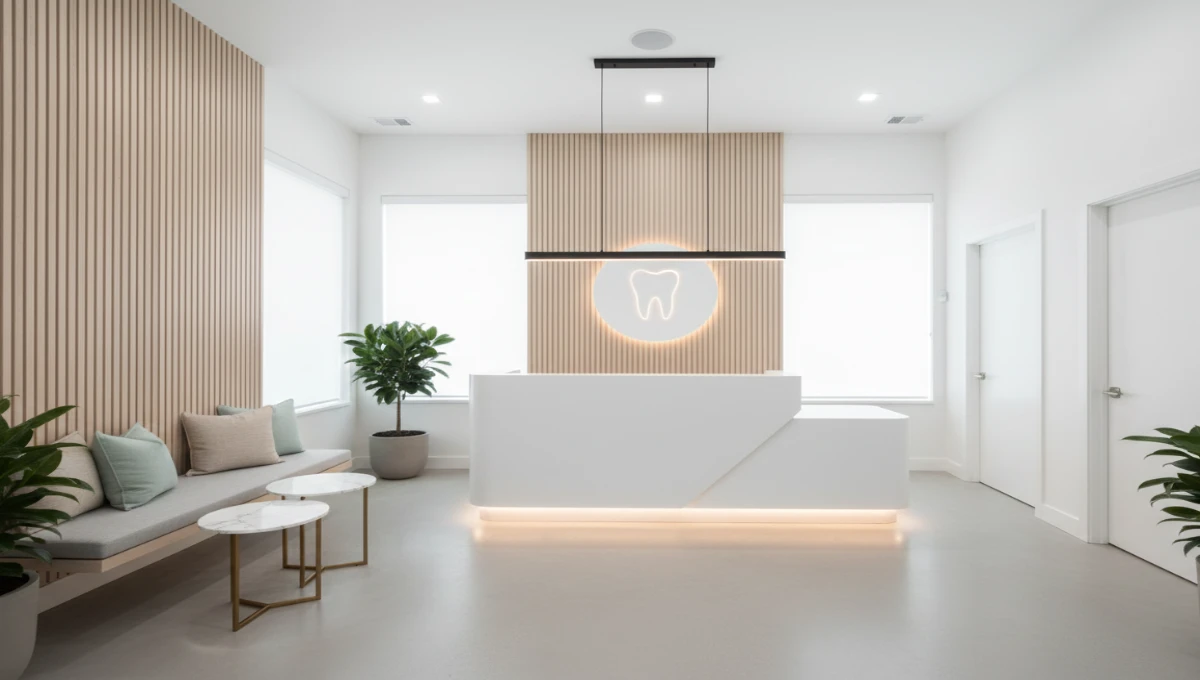
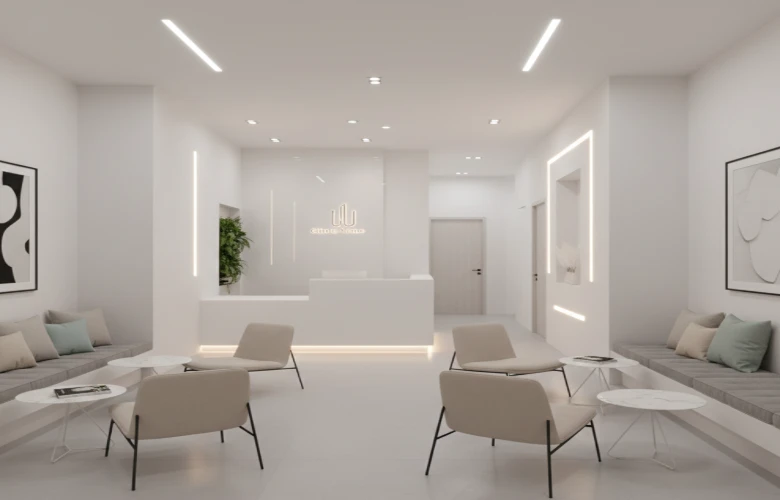
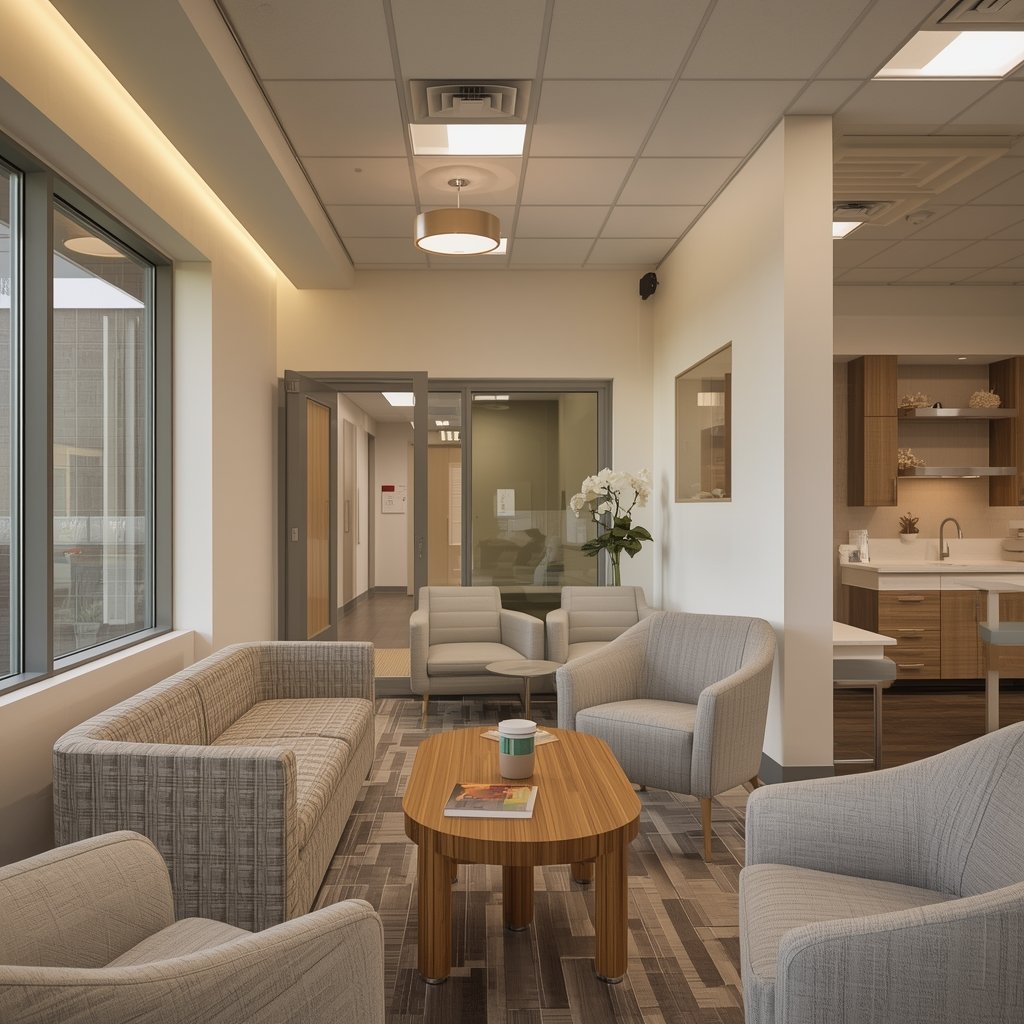
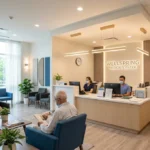
The arrival experience sets the emotional baseline for everything that follows. A nervous patient who walks into a dark, institutional waiting room with hard plastic chairs, old magazines, and fluorescent lighting has their anxiety confirmed before treatment begins. A patient who walks into a warm, naturally lit space with comfortable seating, soft background music, and a clear sightline to a welcoming reception desk arrives in a different psychological state entirely.
Natural light in the waiting area is no longer optional in competitive USA markets. Practices in cities like Austin, Denver, and Nashville are routinely incorporating floor-to-ceiling windows, skylights, and glass partitions specifically to bring daylight into the arrival experience. The research is clear: natural light reduces perceived wait time and measurably lowers patient anxiety scores in healthcare environments.
Seating should feel residential, not institutional. The row-of-chairs-against-a-wall configuration that still dominates most waiting rooms communicates that patients are being processed rather than welcomed. Individual chairs with arms, small groupings arranged around low tables, and varied seating options that give patients some choice in where they sit all create a meaningfully better experience. High-end practices in markets like Beverly Hills and Manhattan have essentially replaced traditional waiting rooms with spaces that feel closer to a boutique hotel lobby.
Sound management deserves more budget than most practices give it. The sound of drilling carrying from treatment rooms into the waiting area is the single most anxiety-inducing feature in dental office design, according to patient experience research. Acoustic ceiling panels, upholstered furniture that absorbs sound, and a background music system running at a consistent moderate volume all address this problem at relatively low cost.
Zone 2: Reception and Check-In
The reception desk is where the first human interaction happens. How that desk is designed shapes the tone of that interaction.
Counter height matters more than most practices realize. A tall reception counter — 42 inches or higher — creates a barrier and a power differential that increases patient anxiety. A lower counter at 34 to 36 inches puts staff and patients at eye level. The conversation literally feels different. In 2026, practices across the country are also adding touchscreen check-in tablets, which reduce wait times at the desk and allow front office staff to focus on relationship-building rather than data entry.
Storage in this zone should be entirely concealed. Visible paper files, cluttered desk surfaces, and exposed administrative equipment undermine the impression of a professional, organized practice faster than almost anything else in the space.
Zone 3: Consultation and Case Presentation
This is where patients make financial and clinical decisions. The design of this space directly affects case acceptance rates, which is something most dentists don’t connect to interior design.
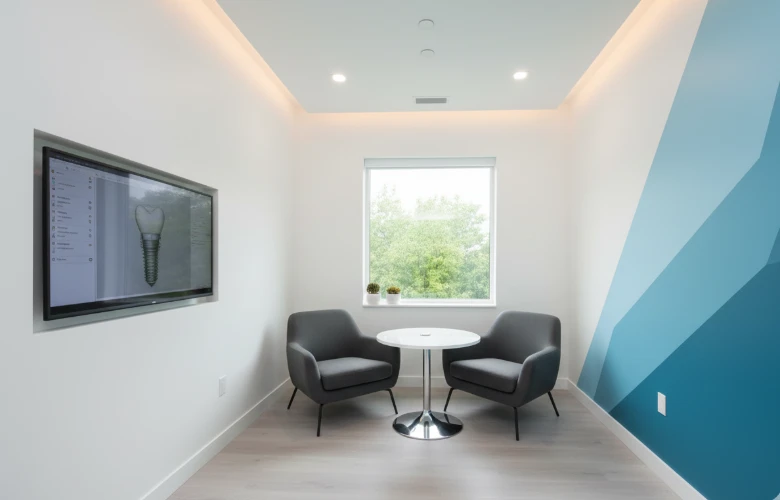
A dedicated consultation room — or even a well-designed consultation corner separated from clinical areas — changes the dynamic of treatment discussions. Patients make better decisions in private, calm environments than in treatment rooms where they’re already in a vulnerable position in the chair.
Seating the doctor and patient beside each other rather than across a desk reduces the authority dynamic and creates a more collaborative conversation. A monitor or tablet for showing imaging, 3D treatment simulations, and cost breakdowns in a clear format makes treatment recommendations more understandable. Practices in competitive urban markets like Chicago and Boston increasingly treat the consultation room as a serious investment rather than an afterthought.
Zone 4: Treatment Areas
Treatment room design is where compliance requirements intersect most directly with patient experience goals. Getting both right at the same time takes planning.
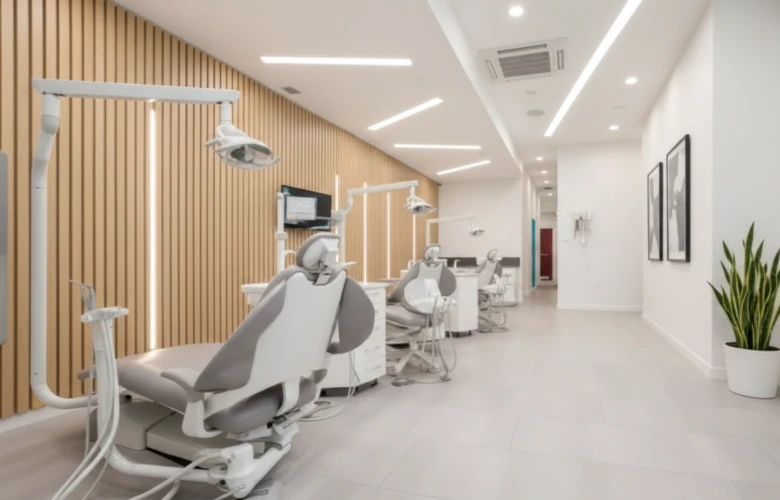
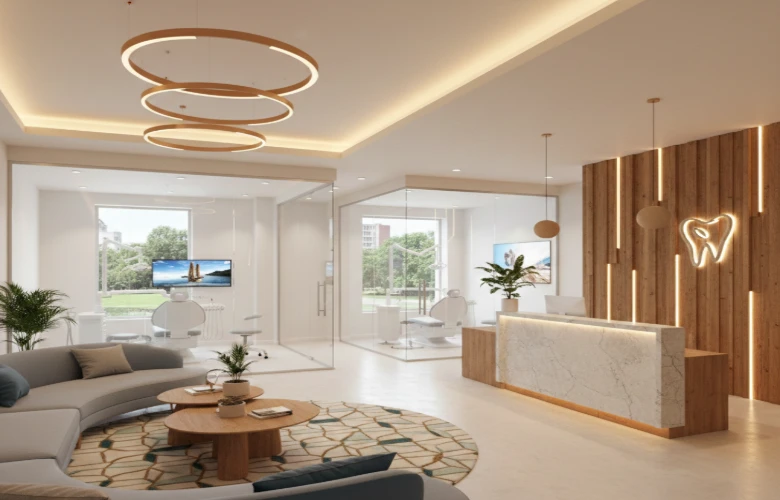
The 2026 trend away from fully enclosed treatment rooms toward semi-open configurations — bays separated by glass partitions that don’t reach the ceiling, or partial walls that maintain visual privacy without full enclosure — serves multiple purposes. Natural light from perimeter windows reaches interior treatment areas. The claustrophobic feeling of fully enclosed rooms is reduced for anxious patients. Staff communication across the clinical area improves. Practices in Southern California, in particular, have adopted this approach rapidly as part of broader biophilic design strategies.
Ceiling-mounted monitors above the treatment chair have become standard in newly built offices in major markets. Patients choose what to watch — or look at — during treatment. Anxiety scores during procedures are consistently lower in practices that use this approach compared to those with blank ceilings.
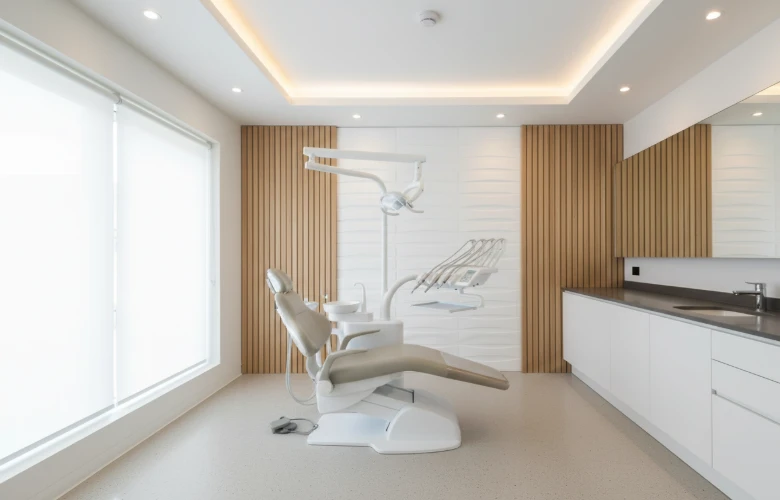
Lighting in treatment areas needs careful planning. Operatory lights are clinically necessary but visually harsh. Supplementary ambient lighting — LED strips behind ceiling panels, warm-toned perimeter lighting at a moderate level — softens the clinical impression significantly. The goal is a room that looks professional and clean without looking like a hospital procedure room.
Luxury vinyl tile flooring in wood-look or stone-look patterns has become the dominant choice across newly designed USA dental offices. It meets infection control requirements, holds up to daily cleaning with clinical-grade disinfectants, and looks substantially warmer and more welcoming than the commercial vinyl floors that dominated earlier office generations.
Zone 5: Sterilization and Clinical Support
A poorly laid out sterilization area creates bottlenecks during busy hours, increases contamination risk, and is one of the most common compliance issues flagged during OSHA inspections in dental practices.
A well-designed sterilization workflow follows a strict dirty-to-clean sequence. Contaminated instruments arrive on one side. They move through the cleaning, packaging, and sterilization process. They exit as sterile instruments on the opposite side. The two flows never cross. This isn’t a design preference. It’s an infection control requirement under OSHA Standard 1910.1030.
In 2026, central sterilization serving the entire practice is increasingly preferred over dispersed sterilization points near individual treatment rooms. It’s more efficient, easier to monitor, produces more consistent outcomes, and is simpler to bring into compliance during inspections.
Cabinet positioning in treatment rooms should support ergonomic access. Overhead storage the provider has to reach behind or above the patient to access creates awkward movements that contribute to the musculoskeletal injury rates that are a serious occupational health concern in dentistry. Proper cabinet positioning relative to the dental chair and the provider’s working position should be part of every treatment room design process.
Zone 6: Staff Spaces
This is the most consistently underinvested zone in dental office design. And that underinvestment has direct consequences.
Dental teams work physically demanding, emotionally intensive, highly focused work for eight or more hours daily. The quality of the spaces where they eat, decompress, store their belongings, and spend time between patients directly affects how they feel about their jobs and how long they stay.
A proper staff lounge — comfortable seating, natural light where achievable, a real kitchen setup with appliances, separate lockers — communicates genuine respect for the team. Staff bathrooms should be entirely separate from patient bathrooms. Staff offices and administrative spaces need acoustic privacy for clinical discussions and HR conversations.
In cities with competitive dental labor markets — San Francisco, New York, Seattle — practices that invest in genuinely quality staff spaces have a measurable recruiting advantage over those that don’t.
Color Psychology in Dental Office Design
Color in a dental office is a clinical decision as much as an aesthetic one. The specific colors surrounding anxious patients affect their physiological stress response in measurable ways. This is established healthcare design research, not interior design preference.
Soft sage green is the most evidence-backed color choice for healthcare waiting areas in current literature. It references the natural world, carries neither the clinical association of cool white nor the institutional association of beige, and consistently produces the lowest reported anxiety scores among patients in comparative studies. It’s the single most common accent color choice in newly designed USA dental offices right now.
Warm whites perform significantly better than cool whites in dental environments. Cool white walls under fluorescent or high-CCT LED lighting create a visual environment associated with hospitals. That association is exactly what most dental patients arrive carrying already. Switching to warm whites under 3000K to 3500K lighting changes the emotional read of a space dramatically. Benjamin Moore White Dove and Sherwin-Williams Alabaster are the most widely specified warm white paint colors in dental office renovations currently.
Soft blues and muted aquas are the second most effective anxiety-reducing color family in healthcare design research. They work especially well in pediatric dental offices, where managing anxiety is even more critical than in adult general practices.
What to avoid: stark bright white, high-contrast color combinations, and bold saturated colors in patient-facing spaces. These increase visual stimulation. That’s the opposite of what a dental patient needs.
Lighting: The Highest-Impact, Most Under-Budgeted Design Decision
Most dental offices get this wrong. And it’s one of the most expensive mistakes to correct after the fact.
Color temperature is the starting point. The majority of older dental practices use cool fluorescent or LED lighting in the 5000K to 6500K range. That blue-white light reads as clinical, institutional, and harsh. Replacing these with 3000K to 3500K warm white sources throughout patient-facing areas is one of the highest-ROI single changes an existing practice can make. The same room looks fundamentally different under warm light. The cost is typically $3,000 to $8,000 for a practice the size of most general dentistry offices. The before-and-after is dramatic.
Layered lighting creates depth and warmth that single-source overhead lighting cannot. A combination of recessed ambient lighting at moderate brightness, pendant fixtures above the reception desk and in the waiting area, and accent lighting at walls and cabinetry produces a hospitality-quality environment. This is now standard in newly designed practices in premium markets.
Natural light should be prioritized in any renovation or new build. If existing windows are small, enlarging them, adding skylights, or installing solar tubes are all worth considering during a renovation. The biophilic effect of natural light on patient anxiety is supported by consistent research across healthcare environments. In California, LEED and GreenDOC certified practices are increasingly specifying daylighting systems as a sustainability measure that happens to also improve patient experience significantly.
2026 Dental Office Design Trends in the USA
Spa-influenced waiting areas have moved from luxury to expectation in competitive markets. Aromatherapy diffusers, beverage stations with herbal teas and infused water, heated blankets in treatment rooms, noise-canceling headphones offered during procedures — these touches cost relatively little individually but create a meaningfully differentiated patient experience. Practices in markets like Scottsdale, Miami, and the Bay Area have been offering these for several years. They’re now spreading into suburban and mid-market practices.
Biophilic design is mainstream. Living plant walls in reception areas, natural wood and stone surfaces, large windows framing outdoor views, and water features in waiting rooms have moved from boutique trend to competitive necessity. The research supporting biophilic design for anxiety reduction is strong enough that it appears in current American Institute of Architects healthcare design guidelines.
Technology integration shapes patient impressions. Digital check-in kiosks, ceiling entertainment systems in treatment rooms, intraoral camera views shared with patients during examination, and treatment planning software with patient-facing interfaces all signal a modern, competent practice. Patients under 40 judge clinical quality partly through the lens of technological sophistication, and the physical integration of technology into the office environment is part of that signal.
Flexibility is being designed in from the start. New dental offices across Texas, Florida, and the Mountain West — markets with significant practice growth — are being built with modular treatment bay configurations, infrastructure for future technology upgrades, and layouts that can add operatories without major structural changes.
Pediatric Dental Office Design: Different Rules Apply
Pediatric dental practices operate by different design logic. The patient population has entirely different anxiety patterns, different thresholds for clinical environments, and different responses to distraction and engagement strategies.
Color in pediatric spaces can be bolder and more stimulating than in adult practices. Children respond positively to color and visual interest, and the anxiety management strategy relies more on engagement and distraction than on calming through restraint. Ocean themes, outer space themes, jungle environments, and nature-inspired murals all work well depending on the practice’s brand identity.
The waiting area in a pediatric practice should function more like a children’s museum than a traditional medical waiting room. Interactive activity walls, tablet stations, building block areas, and themed play spaces reduce perceived wait time and create a positive first association with the dental environment before treatment begins. Practices in family-oriented suburban markets — think the suburbs of Chicago, Dallas, or Atlanta — that invest seriously in this experience see genuinely measurable improvements in new patient numbers driven by parent word of mouth.
Ceiling art and murals above the treatment chair give children something to focus on during procedures. Themed treatment rooms — undersea adventure, rocket ship, treehouse — create an engaging environment that manages anxiety through immersion rather than through calming aesthetics.
Parent seating positioned for clear sightlines to the child during treatment matters in pediatric offices in a way it doesn’t in adult practices. A parent who can maintain eye contact with their child is less anxious, which reduces the child’s anxiety in turn. This dynamic is established in pediatric healthcare design research and should inform treatment room configuration from the planning stage.
ADA Compliance Requirements for Dental Offices
ADA compliance in a dental office is more detailed and specific than in standard commercial spaces. Healthcare facilities have additional requirements that general interior designers frequently miss. Missing them during design means expensive corrections later, either during construction when changes are caught, or during inspections after opening when they’re not.
Door widths throughout the practice need a minimum 32-inch clear width when open, with 36 inches preferred. Treatment room doors need to accommodate wheelchair users fully.
The reception counter must include at least one section lowered to a maximum of 36 inches for wheelchair users. This is a requirement that conflicts with many dentists’ preference for higher counters, which is exactly why it needs to be in the original design rather than retrofitted.
Restroom requirements include specific turning radius clearance, grab bar specifications and mounting heights, accessible fixture heights, and accessible hardware throughout. At least one fully accessible restroom is required in any dental office.
At least one treatment room must be designed to accommodate patients who cannot transfer from a wheelchair to the dental chair. This means adequate floor space for wheelchair positioning, appropriate equipment placement, and unobstructed access routes.
Accessible parking, accessible entrance routes, ramp specifications, and entrance hardware all fall under ADA requirements that begin before the patient enters the building.
Working with a designer who understands healthcare compliance requirements thoroughly is one of the most important hiring decisions in a dental office project. Compliance corrections during or after construction cost three to five times more than getting them right in the original design documents.
Real Dental Office Design Costs by USA Market in 2026
Most design guides avoid specific numbers. Here’s what practices are actually paying.
Design fees for a dental office project run $15,000 to $75,000 depending on the designer’s experience level and the scope of the project. Designers who specialize in healthcare or dental office work typically charge more than general commercial designers. They also prevent the kind of compliance and workflow errors that cost significantly more to correct.
New build-out construction runs $150 to $350 per square foot in most USA markets, not including dental equipment. In high-cost markets like New York, San Francisco, and Washington DC, that range extends to $300 to $500 per square foot. A 2,500 square foot practice in a mid-market city like Columbus, Nashville, or Charlotte costs $375,000 to $625,000 to build completely. The same practice in Manhattan easily runs $750,000 to $1.2 million.
Renovation costs vary widely by scope. A cosmetic refresh — new paint, flooring, lighting, and waiting area furniture — in an existing practice typically runs $30,000 to $80,000 in most markets. A full clinical renovation including treatment room reconfiguration, new cabinetry throughout, new flooring, and updated reception runs $150,000 to $400,000 for a typical general practice.
The ROI calculation holds across markets. Practices that invest in well-executed dental office design typically recover that investment within two to three years through improved patient metrics. Understanding what professional designers charge for commercial healthcare projects helps practice owners evaluate proposals against realistic market benchmarks before committing.
Common Mistakes That Cost Dental Practices Real Money
Prioritizing aesthetics over workflow is the most expensive and most common mistake. A waiting room that photographs beautifully but has no clear sightline from seating to the reception desk, or treatment rooms that look impressive but don’t accommodate equipment positions ergonomically, affects daily operations for years. Workflow analysis has to come before aesthetic decisions in dental office design. Always.
Under-budgeting acoustics is a consistent pattern. Sound management rarely gets the budget it deserves, despite being one of the highest-impact patient experience factors. Acoustic ceiling tiles, upholstered furniture, proper door seals on treatment rooms, and a background music system together typically cost $5,000 to $15,000 for a typical practice. The return in reduced patient anxiety and improved review scores is substantial.
Choosing residential-grade finishes to save money creates higher long-term costs. Dental offices are cleaned daily with clinical-grade disinfectants. Residential paint finishes degrade rapidly. Flooring that isn’t rated for commercial and healthcare use shows wear within months. Furniture upholstery that isn’t specified for healthcare environments fails quickly. The replacement cost and operational disruption of mid-practice-life replacements consistently exceed the initial savings.
Building without growth capacity is a mistake that shows up three to five years after opening. A practice built to exactly current size with no infrastructure for additional operatories or technology upgrades becomes a constraint on growth that requires expensive reconstruction to address. Adding one future-ready conduit run and designing one flexible bay configuration costs almost nothing during initial construction. Adding it later is a significant project.
Ignoring the staff experience is the mistake most closely connected to retention outcomes. A practice designed entirely around patient impression with no genuine investment in staff spaces will face higher turnover, lower morale, and the associated costs both organizations. Staff areas aren’t where patients go. But they’re where the people who run your practice spend a significant portion of their working lives.
How to Work With a Designer on a Dental Office Project
Not every interior designer is equipped for a dental office project. The compliance requirements, the workflow-specific spatial needs, and the technical infrastructure coordination involved require experience that general residential or commercial designers typically don’t have.
When evaluating designers, ask to see completed dental office projects specifically. Call the dentists who commissioned those projects and ask direct questions: did the designer understand infection control requirements? Were there compliance issues that required correction? Did the final space support clinical workflow the way it was promised? How were problems handled during construction?
Before your first meeting, prepare a written description of your practice’s patient demographics, your brand values, your specific workflow challenges, and your five-to-ten-year growth plans. The more specific you can be about what isn’t working in your current space and what you need the new space to achieve, the more effectively any designer can work with that information.
If you’re also planning other commercial healthcare spaces, understanding the broader landscape of medical office interior design helps you identify designers who work across healthcare environments and may bring relevant cross-specialty experience to a dental project.
Dental Office Interior Design Benefits
Dental office interior design really does more than just make a space look nice it changes how people feel about being there. Most patients walk in a bit nervous so the environment matters more than we think.
When a clinic feels clean, calm, and thoughtfully arranged, it helps people relax almost instantly.
Things like soft lighting gentle colors and a comfortable waiting area can take the edge off before treatment even begins.
It also makes life easier for the dental team. When everything is set up in a practical way work flows better and saves time during busy hours.
Across many U.S. clinics today design is used to create trust and a better overall experience. It’s a small investment that can leave a strong lasting impression on patients.
FAQ Section Dental clinic interior
What is the way to design interior of an office?
Begin with workflow, zoning, and comfort needs. Productivity and clarity should be encouraged in the design of the office.
What should I design my dental clinic like?
Begin with workflow, zoning, and comfort needs. Productivity and clarity should be encouraged in the design of the office.
What are the 7 guidelines of interior design?
The fundamental basics of interior design are space, line, form, light, color, texture, and pattern.
What does the 3 4 5 rule mean in interior design?
It recommends the combination of three colours, four textures and five ornaments to have visual harmony.
What is luxury dental office design?
In the design of luxury dental offices, high-end materials, high-end lighting, and spa-like interior design are utilized to make the experience of luxury patients high-end. It enhances the trust, comfort, and value of high-quality brand to patients
Why choose modern dental office design?
The modern dental office design is centered on clean space organization, intelligent technologies, and effective space utilization. It enhances productivity and minimizes patient anxiety. This results in improved productivity and patient satisfaction.
Why do patients care about dental office design?
Because a calm welcoming space helps them feel safer and less anxious during visits.
Final Thoughts
An intelligent plan of designing a dental office may entirely change the experience of a patient and personnel in a clinic. Regardless of whether you are going with modern layouts, the luxury aspect, or the solution of small spaces, the appropriate interior design strategy creates trust, comfort, and long-term success. Using the principles of smart office interior design and keeping in touch with the latest trends, dental clinics in the USA will be able to develop in a comfortable and professional way.
Arch Joy is a licensed interior designer with over 10 years of hands-on experience transforming residential and commercial spaces across the USA, Canada, UAE, and Europe.
With a background in architectural design and space planning, Arch specializes in modern, functional interiors — from open-plan living rooms to compact urban apartments and luxury home makeovers.
Every article on this site is written or reviewed by Arch Joy to ensure the advice is accurate, actionable, and grounded in real project experience.
B.Arch – Architectural DesignBased in USA | Serving Global Clients10+ Years Professional Experience