Last Updated on 8 months ago by
Enter any clinic and you would immediately know whether it is a welcoming place or a stressful one. It is not that feeling that comes by chance. It is an outcome of considerate medical office interior design . A well planned healthcare environment fosters trust, lessens anxiety, enhances the working process, and even leads to patient retention.
In the modern world, patients demand more than treatment. They need comfort, privacy, cleanliness and relaxing ambience. This is why the design of the modern medical offices is no longer limited to white walls and fluorescent lights. It has to do with the establishment of a conducive atmosphere that will accommodate the patients and the staff too.
We should dissect the work of great medical office design.
What Is Medical Office Interior Design?
Medical office interior design is the planning and design of health-care facilities, including clinics, private practices and dental practice as well as specialty treatment facilities. It combines:
- Functionality
- Patient comfort
- Safety and compliance
- Branding and aesthetics
- Workflow efficiency
In contrast to residential or retail design, healthcare interior design has to obey the rigid guidelines such as ADA accessibility and infection control guidelines. It should, at the same time, be warm, not colder or scary.
Good medical office designs strike the right balance between clinical requirements and human comfort.
The Issue of Medical Office Design
Why Medical Office Design Matters More Than Ever
Healthcare environments are emotive environments. Before patients even walk in, they might be nervous, sick or stressed. Smart design comes in handy there.
An effective medical office design is able to:
- Reduce patient anxiety
- Improve staff productivity
- Accelerate business productivity.
- Strengthen your brand image
- Increase patient satisfaction levels.
Research indicates that the use of calming colours, natural light and structured designs can reduce stress. That’s powerful.
It is not a simple process of placing furniture in the office of a doctor. You are influencing the experience of the patient.
Design Layout of medical offices: The Keystone to success.
The first and most vital movement prior to the selection of colors or furniture is to develop a medical office design layout.
Layout affects:
- Patient flow
- Staff movement
- Privacy
- Safety
- Efficiency
An intelligent design will divide the general spaces with the clinical to ensure that all things are accessible.
Key Zones in a Medical Office
- Medical office reception
- Waiting area
- Exam rooms
- Consultation rooms
- Staff workspaces
- Storage and supply areas
- Restrooms
The zones are to lead one into another. Patients are not supposed to be confused on where to go.
There must be visual indications, open corridors, as well as rational layouts of rooms.
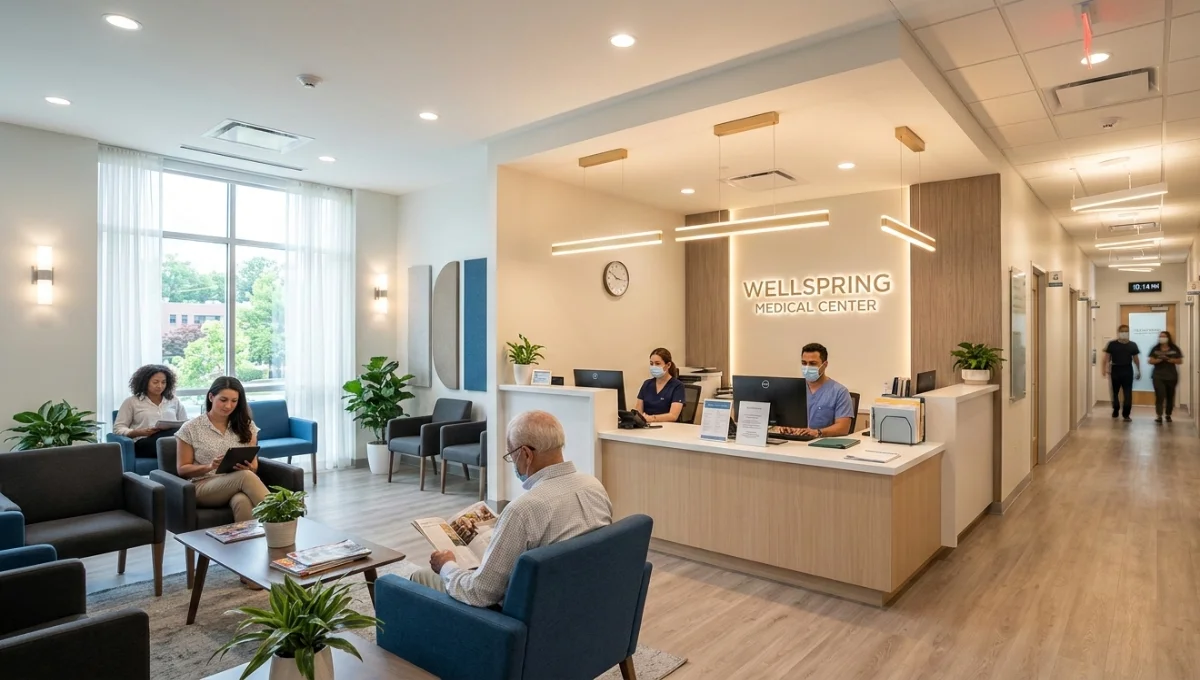
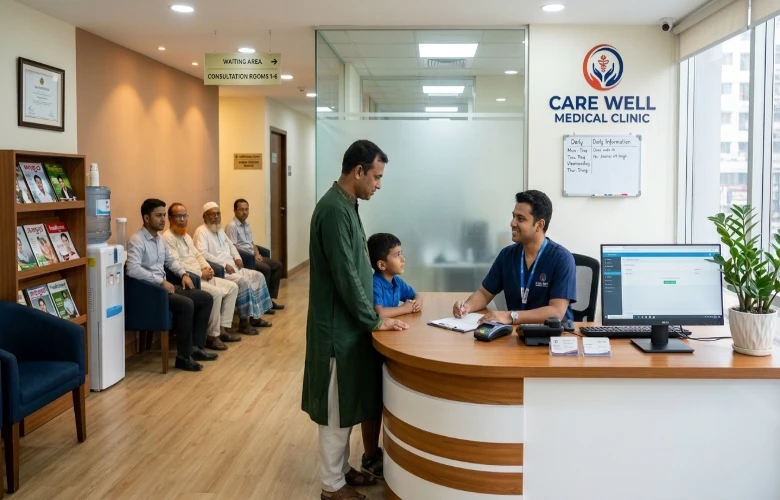
Medical Office Reception: First Impressions Count
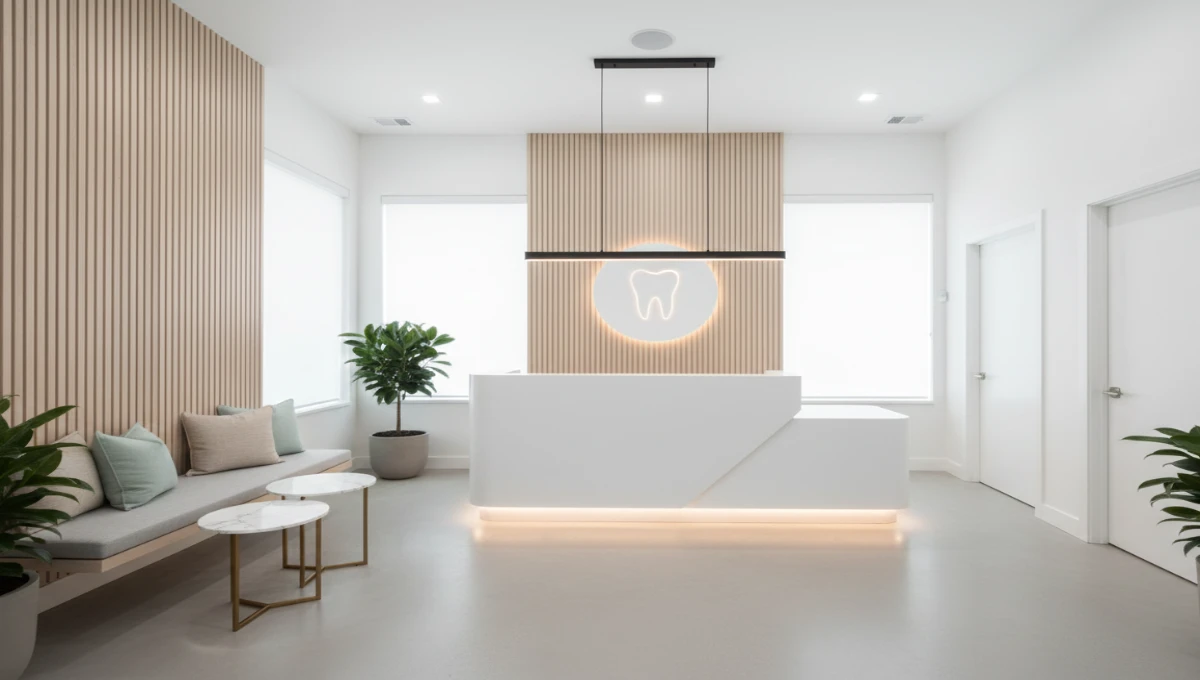
The reception area of the medical office predetermines the whole visit.
This space should feel:
- Organized
- Friendly
- Private
- Comfortable
Reception Area Design Tips
Install a warmest reception desk which has privacy panels.
Seat comfortable with adequate space.
Provide soft lights instead of glaring lights.
Add natural components such as wood or vegetation texture.
Make staff visibility easy.
Users are also concerned with privacy particularly at the check-in stage. Patients are not supposed to feel that other people can overhear their personal details.
A competently structured reception area generates an instant trust.
Small Medical Office Interior: Intelligent Space Planning
Not all of the clinics are large-footprint. A small medical office interior must have innovative solutions to make the interior look as big as possible without being crowded.
- Space-Saving Ideas
- Store using inbuilt storage cabinets.
- Select furnitures with multiple functions.
- Replacing swing doors with sliding doors.
- Use palettes of colors light and neutral.
- Expand rooms with the help of mirrors.
Minimalism is good in smaller clinics. Clutters add a level of stress and make an area smaller.
In case of a doctor office planned on a limited square area, each inch should have its function.
Modern Medical office decor fashion in the USA
The trends in the design of healthcare are moving to the sphere of warmth and comfort. The modern office decor of today in the world of medicine is aimed at the creation of the cozy atmosphere.
Here are popular trends in 2026:
Biophilic Design
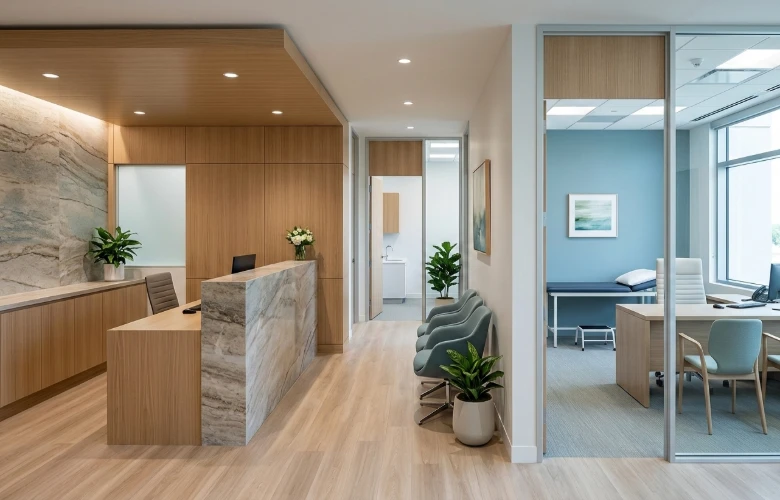
Introduction of natural wood, stone texture and plants brings nature to the inside. This helps reduce stress.
Soft Neutral Colors
The most typical colors that are used to design a medical office include warm whites, soft blues, sage green, and light gray.
Indirect Lighting
Harsh fluorescent lights are substituted by LED panel and soft wall lighting.
Digital Integration
Contactless check-in systems and electronic displays enhance the flow of patients.
Sustainable Materials
Medical office design is going towards low-VOC paints and energy efficient systems.
Patients pay attention to such details.
Comfort and Efficiency in a Doctor Office Design
There is a need to design a doctor office in such a way that it takes both the patients and the staff into consideration.
For Patients:
- Comfortable seating
- Calm color palette
- Clear signage
- Quiet environment
For Staff:
- Ergonomic chairs
- Efficient storage
- Easy access to supplies
- Organized workflow paths
Productivity is gained when employees work fewer hours and locate tools quicker. That enhances patient experience as well.
Design of Doctors Office in various speciality
Each specialty has its own needs.
General Practice Clinics
Minimalist, unadulterated and unobtrusive design and storage.
Pediatric Offices
Bold and non-groggy colors. Play centers within the waiting bay.
Dental Office Design
Dental Office Design is unique in planning. Positioning of equipment, sterilization areas, and seat arrangement of patients are important. Patients are made to relax by use of anxiety reducing lights and ceiling images.
Dermatology Clinics/Cosmetic Clinics.
Additional spa-type decoration in doctor offices. The use of soft lighting and luxurious finishes gives it a high end feel.
The design of medical offices should have specific ideas of interior design that depend on the specialty.
Medical Office Decoration: The Right way to do it.
A medical office should not be decorated randomly. Excessive decoration may be unprofessional. Too little can feel cold.
Here’s how to balance it:
- Use calming artwork
- Insert framed certifications at will.
- Include greenery for warmth
- Waiting areas Use textured fabrics.
- Select strong and fashionable furniture.
Medical office spaces should be decorated, and it is not a big deal but subtle comfort.
The Best Materials to use in a Medical Office Interior Design
It is essential in terms of durability and hygiene.
- Flooring Options
- Luxury vinyl tile (LVT)
- Rubber flooring
- Medical-grade sheet vinyl
- These are slippery and easy to clean.
- Wall Finishes
- Washable paint
- Antimicrobial coatings
- Durable wall panels
- Furniture Materials
- Stain-resistant fabrics
- Medical-grade upholstery
- Scratch-resistant surfaces
- Durable materials are also cost effective in the long run.
Medical Office Design Psychology.
The layout, lighting and colors influence the feelings of patients.
- Blue tones = calmness
- Green tones = healing
- Warm lighting = comfort
- Natural texture = relaxation.
Stressful condition may increase blood pressure. A calm one can lower it.
It is the strength of intelligent interior design of medical offices.
Medical Office Interior Design: Planning, Budget & Advanced Strategy
It is significant to design a beautiful clinic. However, it is important to develop a working one. Here we are going to pay attention to developed planning, budgeting, optimization of a working process, lighting, furniture and typical mistakes in designing medical offices.
Since design is not merely a question of appearance – it is performance.
Designing a doctor office step-by-step guide.
When designing a doctor office, this is the systematic process to follow in case you are designing an office when starting all over or renovating.
Step 1: Select Your Type of Practice.
- Various specialties need various layouts.
- Flexible exam rooms are required in family medicine.
- Plumbing and equipment planning is needed in Dental Office Design.
- Pediatric waiting areas require family friendly waiting areas.
- Specific clinics might require procedure rooms.
- The way your medical office is designed is greatly dependent on your services.
Step 2: Analyze Patient Flow
Consider the patient experience:
- Entry
- Check-in in medical office reception.
- Waiting area
- Exam room
- Checkout
- Every phase ought to be stress free.
Do not walk over patients and staff members who carry equipment. Efficiency is improved and confusion minimized by smart workflow.
Step 3: Privacy and Compliance Planning.
The healthcare facilities should adhere to:
- Accessibility standards ADA.
- HIPAA privacy rules
- Regulations on infection control.
- Sound insulation should be done to the exam rooms. The reception desks must safeguard confidential conversations. Wheelchairs should be able to enter the hallways.
- The medical office design should never ignore the legal requirements.
Step 4: Select Materials of Basing.
Beauty is not sufficient when it comes to the decorating of the spaces in medical offices.
Materials should be:
- Easy to clean
- Stain resistant
- Antimicrobial
- Long-lasting
- Modern day medical office designs use luxury vinyl tile flooring, commercial grade paint, and medical upholstery.
Step 5: Pay attention to Staff Ergonomics.
An effective office design of doctors helps in staff well-being.
Long shifts require:
- Adjustable chairs
- Sit-stand desks
- Proper lighting
- Anti-fatigue flooring mats
Ergonomic planning will decrease burnout and enhance output.
Medical Office Interior Design Budget Planning
Let’s talk numbers.
The interior design of medical offices in the United States will depend on:
- Location
- Square footage
- Specialty type
- Renovation vs new build
- Equipment needs
Medical office interior design Breakdown of costs (estimated in USA)
Area Average Cost Range
| Place | Cost |
| Reception Area | $8,000 – $25,000 |
| Exam Room | $5,000 – $15,000 |
| Small Medical Office Interior | (1,000-2,000 sq ft) $20,000 -$75,000 |
| Dental Office Design | $50,000 – $200,000+ |
Plumbing, electrical and medical equipment are costs that are more expensive.
However, intelligent planning will save on long-term cost. The expense of using durable materials in the process of production ensures that the firm eliminates future repair expenses.
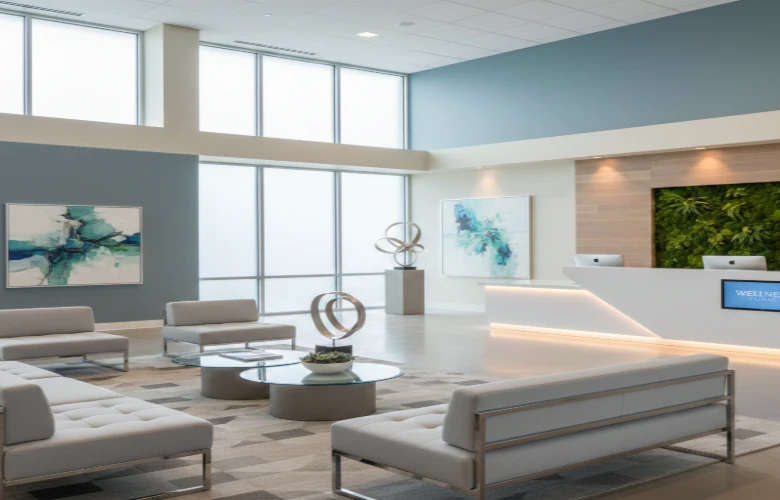
The Question of Making a Medical Waiting Room Comforting and Calming
The anxiety is accumulated in the waiting room. Then it will have to be secure and inviting.
In decorating a medical office waiting area, pay attention to:
Comfortable Seating
Select comfortable seating chairs that are well spaced. Avoid overcrowding.
Soft Color Palette
Light blues, green, and warm neutrals facilitate relaxation.
Natural Light
The big windows or indirect lights use of LED are more relaxing compared to fluorescent lights.
Noise Control
Echo is minimized by acoustic ceiling panels and soft surfaces.
Family-Friendly Zones
Add a small play corner in case you treat children.
Even simple alterations will create a significant change in the design of medical offices.
Medical Office Interiors Lighting Solutions
Lighting influences mood, productivity and medical accuracy.
Top Lighting Strategies
LED Panel Lighting
Energy saving and flicker free.
Task Lighting
Necessary in exam rooms and procedure rooms.
Indirect Ambient Lighting
Produces a less clinical, more relaxed feel.
Motion Sensor Lighting
Energy conservation in bathrooms and storage facilities.
Contemporary medical office design does not use bright fluorescent lighting.
Light systems are not decoration it is performance design.
Top Doctor Office Ergonomic furnishings
Furniture has a direct influence on patient comfort and staff efficiency.
- Waiting Room Furniture
- Durable commercial chairs
- Easy-clean upholstery
- Elderly patient armrests.
- Exam Room Furniture
- Adjustable exam tables
- Wall-mounted cabinets
- Flexibility Rolling the stools.
- Reception Furniture
- Ergonomic reception chairs
- Sit-stand desks
- Organized filing systems
Furniture in the office of a doctor must be in line with the medical requirements as well as the decoration style.
Medical Office Interior Designs: Common Errors
Even the beautiful clinics will not work in case some mistakes in design are considered.
Here are common problems:
Poor Workflow Planning
When employees have to walk long distances all the time, then productivity is decreased.
Ignoring Storage Needs
The medical supplies should be stored in order. Clutter increases stress.
Overcrowded Waiting Rooms
An excess of chairs makes the spaces crowded.
Choosing Cheap Materials
Flooring with low costs wears easily.
Weak Branding
An unmemorable appearance makes your practice not memorable.
Effective medical office interior design is one that balances tactics and style.
Sustainable Medical Office Design
Healthcare design is increasingly becoming sustainable.
Many clinics now use:
- The use of efficient HVAC systems.
- LED lighting
- Low-VOC paint
- Recycled materials
- Water-saving fixtures
The sustainability design lowers cost of operation in the long run.
It also enhances air quality – which is good to the patients and the staff.
Living Decorating Medical Office Spaces without being too overboard
The interiors of medical offices should be clean and professional to decorate.
Avoid:
- Overly bold colors
- Excessive wall decor
- Busy wallpaper
- Strong scents
Instead, use:
- Framed artwork
- Subtle accent walls
- Indoor plants
- Soft textiles
Decoration of doctor offices should not be distracting but rather should assist in calmness.
Sophisticated Designs in Expanding Practices.
When growth is anticipated, make it flexible.
Consider:
- Modular exam rooms
- Multi-purpose consultation rooms.
- Expandable reception areas
- Future equipment planning
- An intelligent medical office design layout is easily expanded.
- Thinking ahead saves thousands in the future.
Why Design Pro Medical Office Matters
There are those physicians who attempt to be designers. Professional designers realize: although possible, it is known:
- Healthcare regulations
- Space optimization
- Lighting science
- Material durability
- Workflow planning
The result? Improved patient experience and operations.
It is an investment (rather than a cost) to medical office interior design.
Medical Office Interior Design: Final Expert Insights & FAQ
It is the end of the day, and great medical office interior design is a people matter. It has got to do with the attitude of the patients through the door. It is concerning the efficiency of your working team. And it has to do with building long-term relationships with your brand.
An intelligent design of a medical office will enhance the workflow, add to the compliance, help patients feel more comfortable, and enhance your professional image. It is the difference between a small medical office interior and a large specialty clinic.
Decoration is not the only thing to consider when designing a doctor office. Consider the movement, privacy, lighting, comfort and longevity. Consider the way your space makes a person feel when he or she is in a stressful situation.
The emotional attachment is potent.
The design of modern medical offices is shifting towards relaxed atmosphere, natural lighting, comfortable furniture and versatile design. Whether it is a new Dental Office Design, a medical office reception upgrade, or just a decoration of a medical office waiting area, today intelligent decisions will pay off in the long run.
Remember:
- An intelligent medical office design layout enhances productivity.
- Long-lasting materials minimize the costs, which are long term.
- Anxiety is reduced by calm decoration of doctor offices.
- Lighting is important to enhance mood and medical precision.
- Patient comfort enhances patient satisfaction.
- Your clinic can be changed even with minor improvements.
- Certainly, now we are going to answer common questions.
Frequently Asked Questions (FAQ)
Top-rated lighting solutions for medical office interiors?
Medical office interior design lighting must include, the LED panel lighting, task light in examination rooms and indirect lighting in the waiting rooms. Circadian lighting systems are also used in many modern clinics to recreate natural daylight. These alternatives help to diminish the burden on the eyes, enhance the mood, and establish a business-like environment.
Best ergonomic furniture brands for medical office interior design?
The best ergonomic furniture to design the doctor office would typically be focused on medical quality seats and examination tables. Find businesses that supply adjustable exam tables, wait area chairs that are commercial grade, and stand-up desks to use by employees.
The furniture used should be specifically made to fit the medical office design, and this should be always selected to ensure that it is durable and compliant.
How to make a medical waiting room comfortable and calming?
To relax a waiting room, one can pay attention to the soft color schemes such as blue and green, comfortable furniture with appropriate distance, natural light, and silence in acoustics. The inclusion of indoor plants and relaxing art works also helps. In the decoration of the waiting areas in medical offices, prevent clutter and incensed lighting.
How to choose durable flooring materials for medical office design?
Select moisture resistant, antimicrobial, and slip resistant products including luxury vinyl tile (LVT), rubber flooring, or medical grade sheet vinyl. These are simple to clean and durable and thus suited to high traffic office designs in a medical office.
Final Thoughts
Design is not merely the appearance of a space it is the functionality.
An effective medical office interior design plan provides the environment that facilitates the healing process, enhances productivity, and establishes confidence. Planning is everything, whether it is to create a small clinic, remodel a medical office reception, or create a complete Dental Office Design.
When today, you invest in smart design, you will reap its benefits tomorrow, both on your patients and your team.