Last Updated on 5 months ago by
If your home feels draining instead of restoring, chaotic instead of calm, or just somehow “off” without any obvious reason — feng shui interior design might give you the clearest explanation why. And more importantly, exactly what to do about it.
Feng shui is one of those practices dismissed as superstition by people who’ve never tried it, and described as life-changing by people who have. The truth is practical and surprisingly straightforward. This ancient Chinese system of arranging living spaces to support the flow of positive energy — called Chi or Qi — overlaps significantly with what modern environmental psychology already confirms: clutter raises stress, poor lighting affects mood, furniture placement influences behavior, and balance improves focus and well-being.
You don’t need to believe in anything mystical to benefit from feng shui interior design. You just need to understand the core principles and apply them thoughtfully to your own home.
This guide covers everything — the four core principles, the five elements, the Bagua map, room-by-room practical tips, 2026 lucky colors, common mistakes people make, and how to use feng shui even if you’re renting and can’t make structural changes.
What Is Feng Shui Interior Design?
Feng shui (pronounced “fung shway”) translates from Chinese as “wind and water” — two forces historically associated with the flow of life energy across the landscape. The practice dates back approximately 6,000 years, originally used to determine the most auspicious placement of buildings and burial sites, and later applied to the arrangement of interior living spaces.
At its core, feng shui interior design is about optimizing the flow of Chi — the vital life energy that moves through every environment — by thoughtfully arranging furniture, managing clutter, choosing appropriate colors and materials, and creating spaces that feel balanced and welcoming. When Chi flows freely, people in that space feel calmer, more focused, and more supported in daily life. When Chi is blocked or stagnant — by clutter, poor furniture placement, or dark unloved corners — even a visually attractive space can feel heavy and draining.
One clarification worth making upfront: feng shui is not about filling your home with lucky charms or Chinese ornaments. That is one of the most persistent misconceptions about the practice. Done well, feng shui principles are practical, universally applicable, and compatible with virtually any interior design aesthetic — whether your personal style leans toward clean modern lines, cozy rustic warmth, or anything else entirely.
The Four Core Principles of Feng Shui
1. Chi — The Flow of Life Energy
Chi is the vital energy that moves through all living things and environments. In feng shui interior design, the goal is to keep Chi flowing smoothly and gently throughout your home — like a slow-moving stream rather than a rushing torrent or a stagnant pond.
Chi that moves too fast creates restless, unstable energy. This happens in long straight corridors, rooms where the front door lines up directly with a back door or large window, or spaces where furniture forces energy into tight, rushing channels. Chi that is blocked or stagnant — trapped by clutter, accumulated in dark corners, or cut off by poorly placed furniture — creates heavy, draining energy that affects mood, motivation, sleep quality, and relationships.
Every feng shui decision — where you place your bed, which colors you choose, how you organize your entryway — ultimately serves this one goal: keeping Chi moving in a way that nourishes the people who live there.
2. The Commanding Position
This is the single most practical and immediately applicable principle in all of feng shui, and it works regardless of whether you believe in energy flow at all.
The commanding position refers to the placement of the most important piece of furniture in any room — the bed in the bedroom, the desk in the home office, the sofa in the living room, and the stove in the kitchen. To be in the commanding position, a piece of furniture should meet three criteria:
- You can see the door from where you sit or lie
- You are not directly in line with the door
- You have a solid wall behind you rather than a window or open space
This placement creates a subconscious sense of safety and control that your nervous system registers immediately. Modern environmental psychology confirms what feng shui has taught for millennia: people feel and perform better when they can see who enters a room. The commanding position delivers exactly that sense of security, without requiring any structural changes to your home.
If your bed or desk physically cannot be moved into the commanding position, place a mirror where you can see the door’s reflection from your usual position. The energetic effect is considered equivalent.
3. The Five Elements
Feng shui uses five natural elements — Wood, Fire, Earth, Metal, and Water — as a framework for understanding and balancing the energy in any space. Each element carries specific qualities and is represented by particular colors, shapes, and materials.
Wood represents growth, vitality, creativity, and expansion. It’s expressed through plants, wooden furniture, bamboo, and green or teal colors. Tall, columnar shapes reinforce the wood element. The wood element is ideal in spaces associated with growth and new beginnings.
Fire represents passion, inspiration, visibility, and fame. It’s expressed through lighting, candles, natural sunlight, and warm colors — red, orange, bright yellow, pink, and deep purple. Triangular and pointed shapes carry fire energy. The fire element activates spaces where recognition and motivation matter most.
Earth represents stability, grounding, nourishment, and self-care. It’s expressed through ceramics, stone, clay objects, and earthy tones — yellow, beige, terracotta, sandy brown. Square and flat shapes reinforce earth energy. The earth element is most valuable in spaces dedicated to health and relationships.
Metal represents clarity, precision, logic, and efficiency. It’s expressed through metal frames, sculptures, round mirrors, and white, silver, or gray colors. Round and oval shapes carry metal energy. The metal element sharpens focus and supports creative thinking.
Water represents flow, abundance, wisdom, and career energy. It’s expressed through mirrors, glass, actual water features, and dark colors — black, deep navy, dark charcoal gray. Wavy and formless shapes reinforce water energy. The water element is most powerful in areas associated with career and life path.
The goal is not to have equal amounts of all five elements in every room. Rather, it’s to have a balanced overall representation across your home, with specific elements emphasized where their qualities are most needed.
4. The Bagua Map
The Bagua (meaning “eight areas”) is the feng shui energy map of your home — a grid divided into nine sections, each corresponding to a specific aspect of life, an element, associated colors, and a compass direction.
| Bagua Area | Life Aspect | Element | Colors |
|---|---|---|---|
| North | Career & Life Path | Water | Black, deep blue |
| Northeast | Knowledge & Wisdom | Earth | Blue, green |
| East | Family & New Beginnings | Wood | Green, teal |
| Southeast | Wealth & Abundance | Wood | Purple, green, gold |
| South | Fame & Reputation | Fire | Red |
| Southwest | Love & Relationships | Earth | Pink, red, white |
| West | Children & Creativity | Metal | White, gray |
| Northwest | Helpful People & Travel | Metal | White, gray, black |
| Center | Health & Overall Well-Being | Earth | Yellow, earthy tones |
To use the Bagua map, overlay it on your home’s floor plan with the front door at the bottom. The areas of the map then correspond to physical sections of your home. Want to strengthen career energy? Focus attention on the north area — clear the clutter, add water element pieces, and use deep blue or black accents. Working on relationships? The southwest corner is where to direct your energy.
You don’t need to apply this obsessively. Even a loose awareness of which physical areas of your home correspond to which life areas helps you make more intentional, purposeful design decisions.
Feng Shui Interior Design Room by Room
Bedroom: Your Single Most Important Feng Shui Space
In feng shui interior design, the bedroom governs rest, recovery, and intimate relationships. It is the room where you spend roughly a third of your life, and its energy directly affects your sleep quality, emotional well-being, and the health of your closest relationships. Getting the bedroom right should be your first and highest priority.
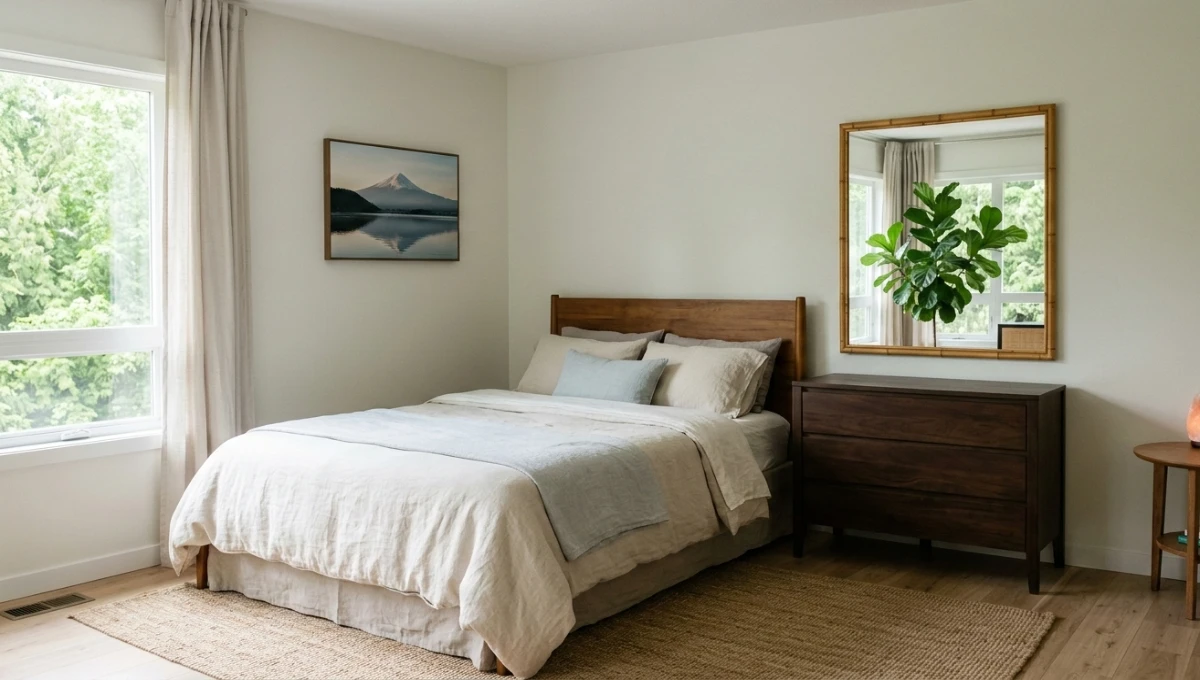
Bed placement is the foundation of everything in this room. Position your bed so you can clearly see the bedroom door while lying down, without being directly in line with the door opening. Your headboard should rest against a solid wall — not a window. A window behind the head creates instability and vulnerability, which disrupts sleep and creates a persistent undercurrent of unease. Having the foot of the bed pointing directly at the door — sometimes called the “coffin position” — is considered one of the most problematic placements in feng shui and worth correcting even if doing so requires significant rearranging.
Electronics bring active, stimulating yang energy into a space that should be primarily yin — calm, restorative, and quiet. The feng shui recommendation to keep phones, laptops, and televisions out of the bedroom is supported by substantial sleep research entirely independent of feng shui principles. If removing screens from the bedroom entirely is unrealistic, at minimum keep them away from the bed itself and switch them off well before sleep.
Matching nightstands on both sides of the bed represent energetic balance and equal partnership. In a relationship, having a nightstand only on one side creates an imbalance that is said to affect the relationship’s dynamic. Even a small stool on the less-used side corrects this imbalance meaningfully.
Colors in the bedroom should lean toward yin energy — soft, muted, and calming. Warm skin tones such as warm beige, soft terracotta, and warm cream are ideal. Muted blues and soft greens work beautifully. Avoid highly saturated colors, particularly bold reds or bright yellows, which carry too much yang energy for restful sleep.
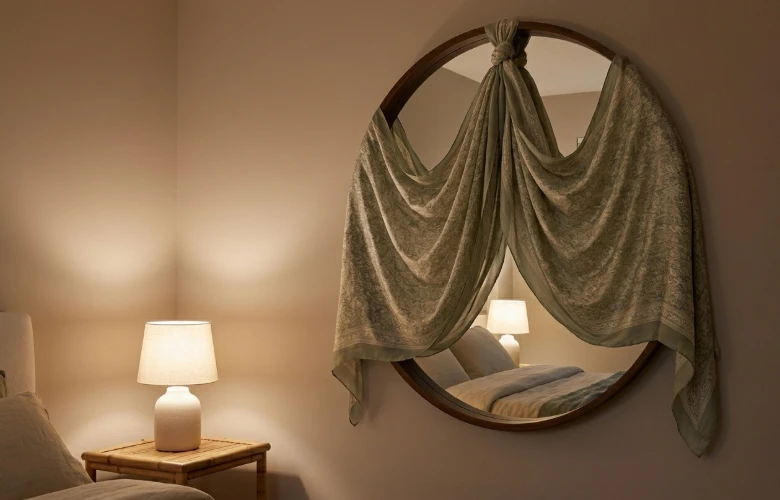
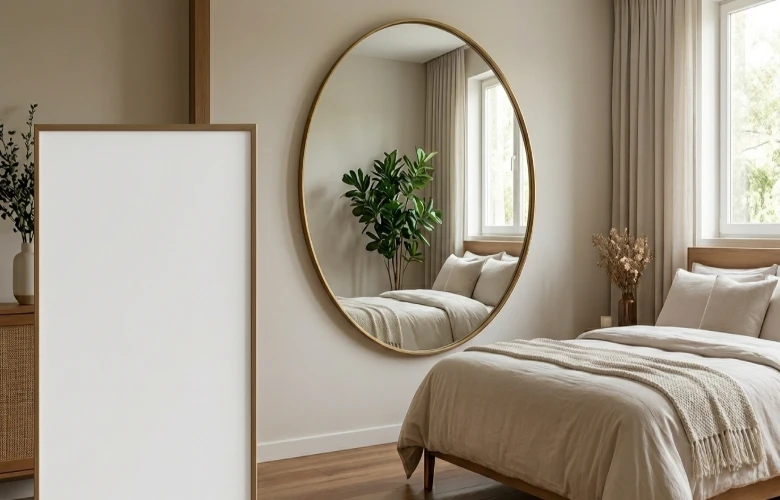
Mirrors facing the bed directly are consistently flagged in feng shui as problematic — they create restless energy and are said to amplify whatever emotion is present in the room. Mirrors on closet doors or positioned where they don’t reflect the sleeping area are generally considered fine.
Plants in the bedroom are nuanced. Small, gentle plants are perfectly acceptable. Very large, actively growing plants produce enough yang energy to be potentially disruptive in a rest space. If you love bedroom plants — and many people do — keep them smaller and positioned away from the bed itself.
Living Room: Where Positive Energy Gathers
The living room is where Chi collects and where family and guests connect. The energy in this space should feel welcoming, comfortable, and balanced — active enough to encourage conversation, calm enough to support genuine relaxation.
Sofa placement follows the commanding position principle. The main sofa should face or have a clear sightline to the entrance, with a solid wall behind it. Never position seating so people sit with their backs to the door — this creates subconscious unease that colors the entire experience of the space, even when nothing obviously seems wrong.
Leave at least 30 inches of clear walking space around major furniture pieces. Chi needs room to move. A living room where you’re constantly navigating around furniture has blocked chi flow — and feels uncomfortable and crowded as a direct result.
Avoid sharp corners pointing toward seating areas. Coffee table corners, angled shelving, or pointed architectural features directed at a sofa or chair create what feng shui calls “poison arrows” — concentrated, disruptive energy aimed at the people who sit there. Round or oval coffee tables are ideal for living rooms. If you have a sharp-cornered table, place a small plant or object at the corner to soften the energy.
The wealth corner — the far left corner of the room as seen from the front door — is one of the most important activatable areas in the living room. Keep it uncluttered, well-lit, and alive. A healthy plant in this corner, a small water feature, or objects in purple and deep green tones all activate its energy positively. Clutter, dead plants, or broken items in this corner are considered directly detrimental to the financial energy of the home.
Natural light is one of the most powerful tools in feng shui home design. Dark, poorly lit rooms create stagnant chi that manifests as low mood, fatigue, and a general sense of heaviness throughout the day. Open blinds and curtains during daylight hours. Clean windows regularly — in feng shui, windows are the eyes of a home, and dirty or covered windows block the clarity and light that invite fresh, positive energy.
Kitchen: The Heart of Abundance and Nourishment
The kitchen represents health, nourishment, and the family’s capacity to create abundance. The stove is the most energetically significant object in the kitchen — it symbolizes the family’s prosperity and well-being.
Stove placement follows the commanding position rule. The cook should be able to see the kitchen doorway while standing at the stove. If the stove faces the wall with the cook’s back to the door — as is common in most kitchen layouts — place a mirror behind the stove or above the range hood so the doorway is visible in reflection. This simple, inexpensive adjustment is one of the most recommended feng shui corrections for kitchens.
Keep all burners in working order and use them in rotation rather than relying on the same one or two repeatedly. In feng shui, the number of working burners represents opportunities and the capacity for abundance. A broken burner that goes unrepaired is considered an active block on that energy.
Clutter on countertops is one of the most common kitchen feng shui problems. A clear, organized kitchen with minimal counter clutter allows Chi to move freely and creates a space that genuinely supports cooking with pleasure and intention. Store appliances you don’t use daily out of sight. Keep only what you use regularly on the counter.
Color in the kitchen should support the yang energy that cooking and meal preparation require — warm, bright, and activating. Yellows, warm whites, and terracotta tones work beautifully. Red accents — particularly near the stove — reinforce fire element energy and are considered highly auspicious in feng shui kitchen design.
Home Office: Sharpening Focus and Supporting Career Energy
The home office corresponds to the career area of the Bagua and benefits from a combination of water and metal elements — clarity, precision, and the steady flow of opportunity.
Desk placement is the commanding position applied to work. Position your desk so you face the room with a view of the door, ideally with a solid wall behind you. This placement creates the psychological conditions for focus, confidence, and decisive thinking. Working with your back to the door consistently creates a subconscious alertness that drains cognitive energy — even when you’re not consciously aware of it.
Lighting should be bright and clear — this is a yang space where active, focused energy is appropriate. Natural light from a window to the side (not directly in front of or behind the monitor) is ideal. Overhead lighting that eliminates dark corners prevents stagnant chi from collecting in the space where you need to be most mentally sharp.
Clear your desk at the end of each workday. Clutter on a desk is not just a productivity problem — in feng shui, accumulated paper, broken items, and unfinished tasks create energetic weight that makes clear thinking and creative flow more difficult. Starting each workday at a clear, organized desk makes a genuinely measurable difference in how you approach the work.
Plants on the desk — particularly small, rounded-leaf varieties — support wood element energy and bring growth, vitality, and fresh chi into the workspace. A small pothos, a jade plant, or a ZZ plant on a desk corner adds life and positive energy without creating clutter.
Bathroom: Containing the Drain on Energy
Bathrooms require specific attention in feng shui because they are associated with the water element — and water, in feng shui, carries the energy of wealth and opportunity. The concern is that the bathroom’s drainage systems create a continuous outflow of energy that needs to be consciously managed.
Always keep the toilet lid closed when not in use. This is the single most common and most frequently repeated feng shui bathroom rule — and it has a simple logic: open toilet lids create a literal and symbolic drain on positive energy.
Keep the bathroom door closed. If the bathroom is visible from the bedroom, keep the door closed at all times. A bathroom door left open, particularly one visible from the bed, is considered a significant feng shui problem for both rest and relationships.
Fix leaks immediately. A dripping faucet or running toilet is not just wasteful — in feng shui, it represents a literal drain on wealth energy. The practical and energetic reasons to fix leaks promptly are entirely aligned.
Use mirrors strategically. Mirrors in the bathroom amplify the water element. A clean, well-maintained mirror above the sink reflects light and energy upward rather than allowing it to drain. Make sure bathroom mirrors are spotlessly clean — a dirty or cracked mirror is considered one of the worst feng shui items to have in any room.
Add plants and warm colors. A small plant — particularly one that thrives in humidity, like a pothos or peace lily — adds wood element energy that channels and uplifts the water energy of the bathroom rather than letting it drain away. Warm towels in earthy tones, wooden accessories, and warm lighting all help balance the heavy water energy of this room.
Entryway: The Mouth of Chi
In feng shui interior design, the front door is called the “Mouth of Chi” — it is where energy, opportunities, and abundance enter your home. If your entrance is blocked, cluttered, or unwelcoming, energy struggles to reach the rest of the home.
Keep the entryway clear and welcoming. Remove shoes, coats, bags, and accumulated items from the entryway floor. A clear, organized entrance allows Chi to enter freely and move through the home with ease.
Make sure the front door opens fully. A door that catches on accumulated items behind it — or one that only opens partially because of stored boxes or coats — restricts Chi flow significantly. The door should open completely and smoothly every time.
Add a rug, a plant, and good lighting. These three elements together create an energetically welcoming entrance. A rug grounds the space, a healthy plant adds living energy, and good lighting ensures the area is bright and inviting rather than dark and stagnant.
Your house number and door color matter in feng shui. South-facing doors benefit from red or orange tones, which welcome fire element energy. North-facing doors benefit from dark blue or black, supporting water element energy. East and southeast-facing doors do well with green or brown, reinforcing wood element growth.
Feng Shui Colors for 2026
Each year in feng shui is associated with specific lucky colors based on the Chinese zodiac and the five element cycles. For 2026, the luckiest colors align with the fire element — vivid red, vermilion, and warm orange — balanced by water, earth, and wood element tones: sky blue, buttercup yellow, and meadow green.
Incorporating these colors into your home through accents — throw pillows, artwork, fresh flowers, or decorative objects — is a simple, low-commitment way to align with the year’s energy without repainting entire rooms.
Feng Shui Interior Design for Renters
One of the biggest gaps in most feng shui guides is the assumption that readers own their homes and can make structural changes. Most people are renters — and feng shui works beautifully in a rental with zero permanent modifications.
Furniture placement is entirely within your control as a renter. Moving your bed, desk, and sofa into commanding positions costs nothing and requires no permission.
Mirrors can be hung with removable strips and removed when you leave. Mirrors are one of the most powerful feng shui tools — they reflect light, expand space, and redirect Chi — and they require no permanent installation.
Rugs define zones, ground spaces, and add element energy through color and material. A well-chosen rug in the right Bagua area is a completely renter-friendly feng shui adjustment.
Plants are perhaps the most powerful feng shui tool available to renters. They bring wood element energy, improve air quality, add living Chi to any space, and go with you when you move. A few well-placed, healthy plants transform the energy of a rented space considerably.
Decluttering and organizing cost nothing and require no permission. And in feng shui, the quality of your decluttering effort has more impact on the energy of your home than any decorative purchase you could make.
Signs Your Home Has Bad Feng Shui — And What to Fix First
Most people reading about feng shui already sense something is off in their space. Here are the most common signs of poor chi flow — and the first thing to fix in each case.
You feel exhausted as soon as you come home. Fix first: declutter the entryway and make sure the front door opens completely.
You can’t sleep well no matter how tired you are. Fix first: check your bed position — can you see the door? Is there a window directly behind your head? Is there a mirror facing the bed?
Your home office feels unproductive and unfocused. Fix first: move the desk so you face the room with a view of the door. Clear the desk surface completely.
Arguments and tension seem to happen more at home than anywhere else. Fix first: check the bedroom — mismatched nightstands, a mirror facing the bed, or a bathroom door left open are the most common relationship feng shui problems.
Money feels tight no matter how much comes in. Fix first: repair any leaks, fix anything broken, close the toilet lid, and activate the southeast wealth corner of your home with a healthy plant and clean, well-lit surroundings.
Feng Shui vs. Other Interior Design Philosophies
Feng shui shares meaningful ground with several other design philosophies popular right now — and understanding the relationships helps you layer these approaches effectively.
Feng shui and Japandi are natural allies. Japandi — the blend of Japanese and Scandinavian design — emphasizes simplicity, natural materials, and intentional negative space. All of these align directly with feng shui’s emphasis on clear Chi flow, natural elements, and avoiding clutter. If you’re drawn to a wabi sabi aesthetic, you’re already thinking in ways that support good feng shui.
Feng shui and bohemian design have some tension. The layered, maximalist quality of bohemian spaces can create chi-blocking clutter if not managed carefully. But the bohemian love of plants, natural materials, and warm lighting is deeply feng shui-compatible. The key is keeping pathways clear and making sure the layering feels intentional rather than accumulated.
Feng shui and minimalism are broadly compatible, though pure minimalism sometimes creates spaces that feel too empty and cold — what feng shui would describe as deficient Chi rather than balanced Chi. The goal is not emptiness but flow — enough furniture and objects to feel alive and welcoming, arranged to allow Chi to move freely between them.
Feng shui and rustic design share a deep respect for natural materials — wood, stone, clay, and fiber all carry strong earth and wood element energy. A well-designed rustic interior with clear pathways, good natural light, and meaningful objects is often very good feng shui by default.
Common Feng Shui Mistakes to Avoid
Focusing on objects instead of layout. Most people want to know which lucky object to buy. But feng shui is primarily about space — how furniture is arranged, how energy flows, how clutter is managed. A perfectly placed mirror does more than a shelf full of lucky charms in a poorly arranged room.
Decluttering selectively. Clearing the visible surfaces while leaving closets, storage areas, and under-bed spaces packed with unused items is one of the most common feng shui mistakes. Energy stagnates in hidden clutter just as much as visible clutter.
Ignoring broken items. Broken objects — a lamp that doesn’t work, a chair with a cracked leg, a mirror with a chip — carry stagnant, incomplete energy. Fixing or removing broken items is consistently one of the highest-leverage feng shui actions you can take.
Over-mirroring. Mirrors are powerful feng shui tools, but too many in the same space amplify energy to an uncomfortable degree. One well-placed mirror per room is generally ideal. Multiple mirrors facing each other create energy loops that can feel disorienting.
Treating feng shui as a one-time project. Feng shui is a living practice. Seasonal decluttering, rotating plants, adjusting with the seasons, and staying attentive to how your space feels over time are all part of maintaining good chi flow long-term.
How to Start With Feng Shui Interior Design Today
You don’t need to redesign your entire home at once. Start with these five actions — in this order — and observe how your space and your experience of it begins to shift.
1. Clear the entryway completely. Remove everything from the floor, make sure the door opens fully, add a rug and a plant if you don’t have them.
2. Fix the bed position. Can you see the door? Is there a solid wall behind your head? Is there a mirror facing you while you sleep? Correct whatever needs correcting.
3. Declutter one room completely. Not tidy — actually declutter. Remove everything that is broken, unused, or associated with negative memories. Start with the bedroom or living room.
4. Address any leaks or broken items throughout the home. Make a list and fix them within the week.
5. Add a healthy plant to each main room. Living plants are one of the most accessible and powerful feng shui tools available. Start with easy-care varieties — pothos, snake plants, ZZ plants — and keep them genuinely healthy.
Frequently Asked Questions
Q: What is the most important feng shui rule for the bedroom?
Bed placement is the single most impactful bedroom feng shui factor. Position your bed so you can see the door without being directly in line with it, with a solid wall behind the headboard. This creates the sense of safety and security that supports deep, restful sleep.
Q: Does feng shui really work?
Many feng shui principles align directly with established findings in environmental psychology, neuroscience, and behavioral design — clutter raises cortisol levels, lighting affects mood and energy, layout influences behavior and productivity. Whether or not you accept the Chi energy framework, the practical design principles produce measurable results for most people who apply them consistently.
Q: Can I practice feng shui in a rental apartment?
Absolutely. The most impactful feng shui changes — furniture placement, decluttering, adding plants, using mirrors, and managing lighting — require no permanent modifications and no landlord permission. Feng shui is primarily about how you arrange and maintain your space, not about structural changes.
Q: What are the feng shui lucky colors for 2026?
The luckiest colors for 2026 align with the fire element: vivid red, vermilion, and warm orange. Balancing colors from water, earth, and wood elements include sky blue, buttercup yellow, and meadow green. Incorporating these through accents and soft furnishings — rather than full room repaints — is the most flexible approach.
Q: How is feng shui different from interior design?
Conventional interior design focuses primarily on aesthetics, function, and comfort. Feng shui interior design adds a layer of intentionality around energy flow, spatial arrangement, and the relationship between a space and the well-being of the people who inhabit it. The two approaches are highly complementary — the best spaces usually incorporate both.
Q: What is the Bagua map and do I need to use it?
The Bagua is a feng shui energy map that divides your home into nine areas, each corresponding to a specific life aspect. It’s a useful framework for making intentional design decisions — knowing that the southeast area of your home corresponds to wealth and abundance, for example, helps you prioritize how you treat that space. You don’t need to use it obsessively, but even a basic awareness of it adds a useful layer of intention to how you design and maintain your home.