Last Updated on 6 months ago by
Somewhere between a traditional log cabin and a sleek contemporary home, there’s a design sweet spot that millions of Americans are chasing right now. Modern cabin interior design captures everything people love about cabin living, the warmth, the connection to nature, the feeling of genuine escape, while leaving behind everything that makes old-school cabin interiors feel dark, dated, and uncomfortable.
Searches for modern cabin interior design have increased significantly in 2026 across the USA, driven by a post-pandemic shift toward second homes, vacation properties, and year-round mountain living. Whether you own a cabin in the Colorado Rockies, the Smoky Mountains of Tennessee, the Cascades of Washington, or on the shores of Lake Tahoe, this guide walks you through every design decision you need to make it work beautifully.
What Modern Cabin Interior Design Actually Means
The term gets conflated with several different aesthetics. Worth being clear about what it actually describes.
Modern cabin interior design blends the warmth and natural character of traditional cabin aesthetics with contemporary design principles: clean lines, open floor plans, minimal ornamentation, and furniture that prioritizes function alongside beauty. It keeps what works about cabin design, natural wood, stone, connection to the landscape, and edits out what doesn’t: excessive darkness, heavy ornamentation, mismatched decor accumulated over decades, and the general sense that the space stopped evolving sometime in the 1990s.
The result is a cabin that feels genuinely cozy and connected to its natural setting while also feeling intentional, well-designed, and comfortable in a contemporary sense. Not a museum of rustic objects. Not a minimalist glass box pretending to be a cabin. Something in between, done right.
Modern Cabin Interior Design vs. Traditional Log Cabin Design
Understanding the difference helps clarify what direction you’re actually going.
| Feature | Traditional Log Cabin | Modern Cabin Interior Design |
|---|---|---|
| Wood treatment | Heavy, dark, raw logs throughout | Lighter wood tones, selective use, clean finishes |
| Color palette | Dark browns, deep greens, heavy patterns | Warm neutrals, soft whites, muted earth tones |
| Furniture | Heavy, oversized, matching sets | Clean-lined, appropriately scaled, collected feel |
| Lighting | Low, atmospheric, limited sources | Layered, warm-toned, natural light maximized |
| Layout | Enclosed rooms, low ceilings | Open concept, high ceilings where possible |
| Overall feel | Cozy but sometimes dark and heavy | Warm, bright, intentional, and contemporary |
Neither approach is wrong. But they serve different purposes and create genuinely different experiences. Modern cabin interior design is winning in the USA market right now because it works in a wider range of cabin types, suits year-round living better, and photographs significantly more appealingly for short-term rental platforms like Airbnb and VRBO.
The Core Elements of Modern Cabin Interior Design
Natural Wood, Used Thoughtfully
Wood is the foundation of every cabin interior design, modern or traditional. The difference in the modern approach is which wood, in what form, and how much.
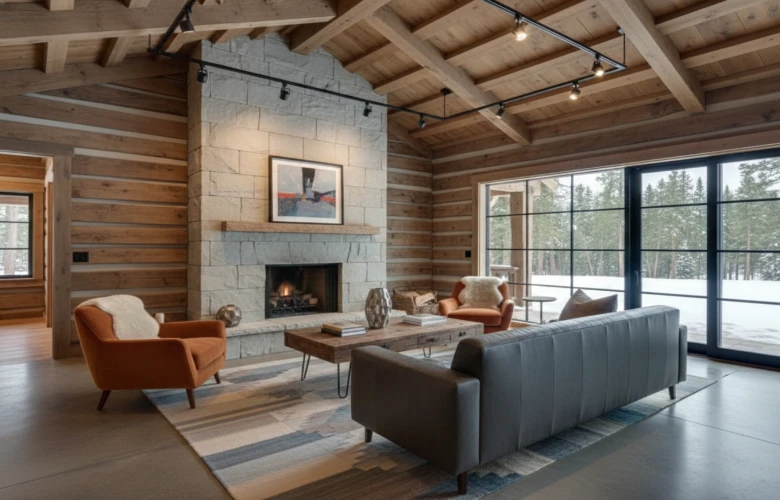
In a modern cabin, wood appears selectively rather than everywhere simultaneously. Exposed ceiling beams in a living room with clean white plaster walls. A live-edge dining table in a kitchen with flat-front painted cabinetry. Wide-plank white oak flooring throughout the main level while walls stay neutral. These selective applications let the wood breathe and command attention rather than becoming visual noise.
Wood tone matters significantly. In 2026, the preference in modern cabin interior design runs toward lighter, warmer tones: white oak, natural pine, light walnut, and blonde wood species rather than the heavy dark staining that characterized traditional cabin interiors. Lighter wood tones make spaces feel larger, brighter, and more contemporary without losing the warmth that makes cabin living appealing.
Finish matters as much as species. Matte and satin oil finishes look more contemporary and natural than high-gloss polyurethane. They also show the wood’s grain and character more honestly. A matte-finished white oak floor looks like a modern cabin. A high-gloss dark-stained floor looks like a 1985 ski lodge.
Stone and Fireplace as Anchor
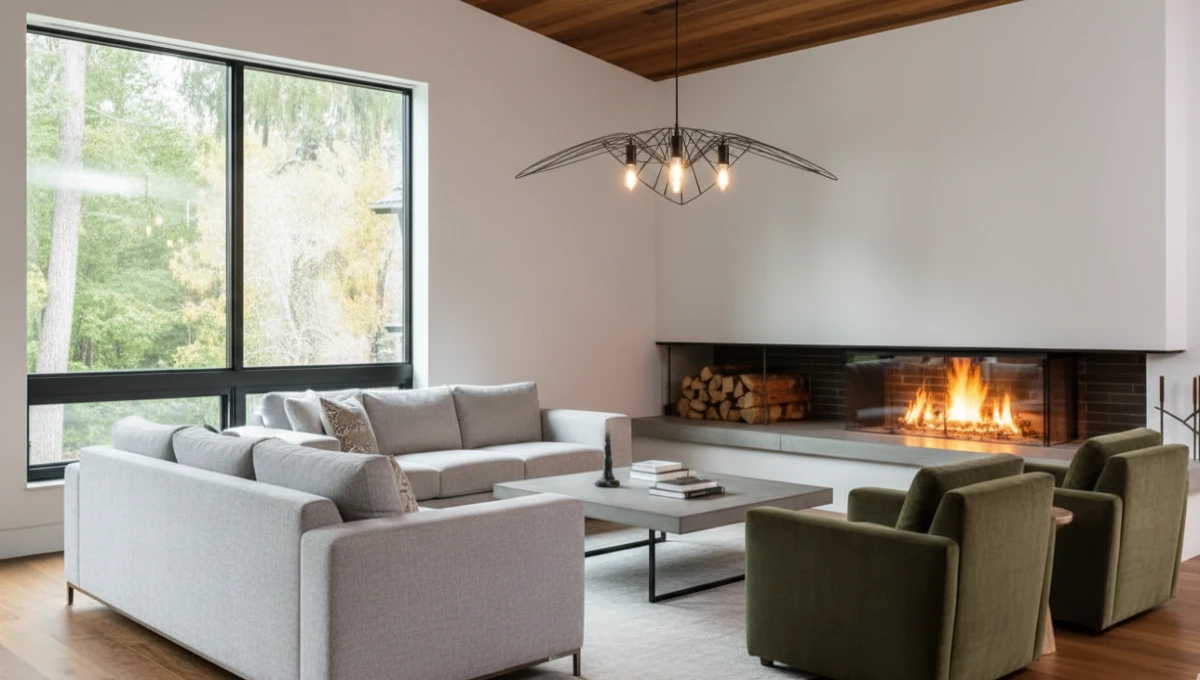
A fireplace is not optional in a modern cabin interior. It is the emotional center of the space, the object everything else organizes around, and the single most important design decision in the main living area.
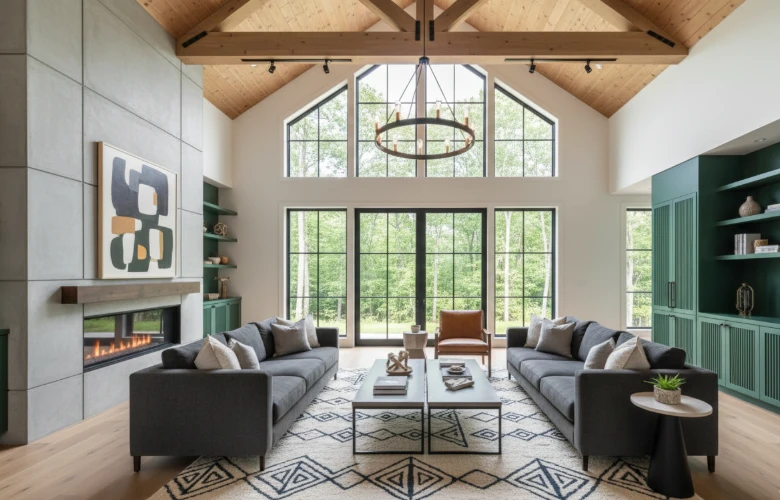
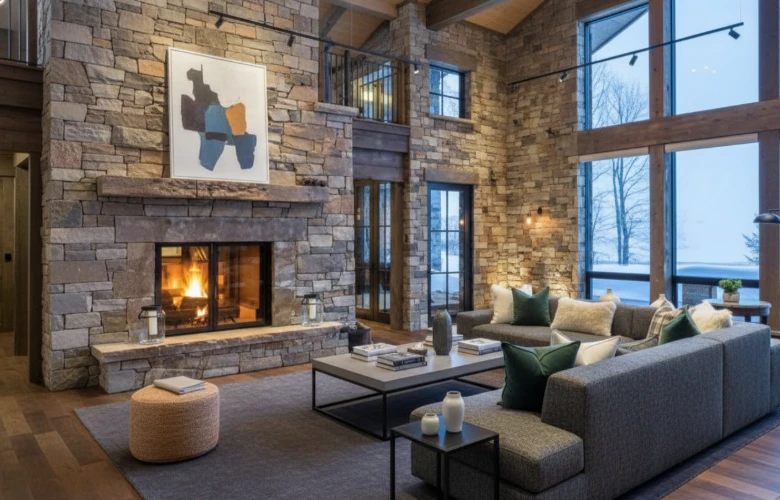
In modern cabin interiors, stone fireplaces run floor to ceiling with clean, minimal mantels or no mantel at all. The stone is left rough and natural rather than precisely cut and polished. Field stone, stacked slate, rough travertine, and dry-stacked quartzite all carry the right quality of natural character. The surround stays simple so the stone does the work.
Gas fireplaces with stone surrounds are increasingly common in modern cabins, particularly in vacation properties where the operational simplicity is valuable. Linear gas fireplace inserts with a floor-to-ceiling stone surround create a contemporary look while delivering the warmth and ambiance that defines cabin living.
Large Windows and Natural Light
This is where modern cabin interior design makes its biggest architectural departure from traditional cabin design. Old-school cabins were often dark, with small windows that provided minimal connection to the landscape outside. Modern cabins do the opposite.
Floor-to-ceiling windows, large sliding glass doors that open to decks and outdoor living areas, and strategic placement of glazing to capture specific views are all central to contemporary cabin design. The mountains, forest, lake, or meadow outside are not a backdrop. They are an active part of the interior experience, visible and present from every main living area.
In practical terms, this means working with your cabin’s orientation from the beginning of any renovation. In Colorado mountain cabins, south-facing windows maximize passive solar gain through winter. In Pacific Northwest forest cabins, skylights and clerestory windows bring light in from above when the tree canopy limits direct window views. In Lake Tahoe properties, west-facing glass captures sunset views over the water.
Natural light in a cabin does something artificial lighting cannot replicate: it connects the interior to the time of day, the season, and the weather outside. A modern cabin interior in January looks different from the same interior in July. That variation is part of what makes cabin living feel genuinely connected to the natural world.
Warm Neutral Color Palette
The modern cabin color palette is intentionally restrained. Not because restraint is fashionable, but because the natural materials, the views, and the landscape outside provide all the visual complexity a cabin interior needs. The palette’s job is to set a calm, warm foundation and step back.
Warm whites and warm off-whites are the dominant wall colors in modern cabin interiors: Benjamin Moore White Dove OC-17, Sherwin-Williams Alabaster SW 7008, and Farrow and Ball All White No. 2218 are among the most widely used. These colors reflect natural light without the cool, clinical quality of pure white.
Warm beiges and warm taupes on secondary surfaces: Sherwin-Williams Accessible Beige SW 1040, Benjamin Moore Pale Oak OC-20, and Behr Antique White PPU7-12 all work well as transitional tones in spaces between main living areas.
Accent colors pull from the natural landscape directly. Forest green, deep navy, warm terracotta, dusty sage, and rich chocolate brown all reference what’s visible through the windows. These enter through textiles, specifically throw blankets, accent pillows, and area rugs, rather than through wall paint or major furniture pieces.
Layered Textiles for Warmth and Comfort
No element transforms a cabin interior from attractive to genuinely cozy faster than textiles. In a modern cabin, textiles do the heavy lifting that excessive rustic decoration does in traditional cabins, and they do it more effectively because they’re tactile rather than purely visual.
Every seating surface should have something soft associated with it. A chunky knit throw on the sofa arm. Linen or wool cushions in coordinated earth tones. A large area rug in natural jute, a vintage-style kilim, or a Moroccan-inspired pattern in warm colors under the main seating arrangement.
Sheepskin throws on chairs near the fireplace. A wool blanket at the foot of every bed. Linen curtains that pool slightly at the floor. Woven baskets used as side tables or storage. All of these add the texture and warmth that the style’s clean lines and neutral walls don’t provide on their own.
Biophilic Elements and Indoor-Outdoor Connection
Modern cabin interior design in 2026 takes biophilic design seriously as both an aesthetic and a wellness strategy. The whole point of cabin living, for most people, is a more direct connection to the natural world. Good biophilic design makes that connection feel present and active rather than just implied by the location.
Plants throughout the interior bring living nature inside. Large specimens in simple containers: a fiddle leaf fig in the living room corner, a cluster of ferns in the bathroom, herbs in the kitchen windowsill. The specific plants matter less than the presence of living green things throughout the space.
Natural materials beyond wood and stone reinforce the connection: jute rugs, linen textiles, rattan furniture pieces, woven grass baskets, river stones used as decorative objects, driftwood displayed on shelves. These materials age and change over time in ways that manufactured alternatives do not, which is exactly right for a cabin environment.
Outdoor living areas that connect directly to the interior amplify the biophilic effect significantly. A covered deck or screened porch with the same design language as the interior, similar materials, compatible furniture, and a shared visual connection through large glass doors makes the interior feel like part of a larger whole rather than a separate enclosed space.
Modern Cabin Interior Design Room by Room
Living Room
The living room is the heart of a modern cabin interior. Every other space in the cabin serves the living room’s primary function: gathering, warming by the fire, looking at the view, being together in a way that everyday suburban life rarely allows.
The fireplace or wood stove anchors everything. Position the main sofa to face it with a clear sightline. A large coffee table or ottoman in natural wood or a combination of wood and stone sits between the sofa and the fire. An area rug defines the seating area and softens the floor.
Furniture scale matters enormously in cabin living rooms. Deep, wide sofas with comfortable cushions that you actually sink into work better than sleek, shallow-seat contemporary pieces that look good but feel formal. A cabin sofa should make you want to stay for hours. Natural linen, performance velvet in warm tones, and wool upholstery all feel appropriate. Leather ages beautifully in cabin environments.
Shelving built into walls around or beside the fireplace provides display space for the objects that give a cabin its personality: a small collection of local pottery, a few meaningful books, a basket or two, a plant. Keep displays edited. More negative space makes the objects that are present more interesting.
Kitchen
The modern cabin kitchen balances the warmth expected in a cabin with the functionality required in a space where people actually cook. Vacation cabins in particular see intensive kitchen use, which influences every material decision.
Natural wood cabinet fronts in a lighter species, flat-front painted cabinetry in warm white or sage green, or a combination of both work well in modern cabin kitchens. Open shelving on one wall creates the display opportunity that suits cabin aesthetics, while closed cabinetry keeps the organized appearance that makes cooking in the space efficient.
Stone countertops in honed finishes: honed granite, honed quartzite, or concrete all feel more at home in a cabin than polished marble or engineered quartz with a high sheen. The matte surface reads as more natural and connects to the cabin’s material palette more honestly.
A farmhouse-style sink in fireclay or cast iron is almost universal in well-designed modern cabin kitchens. The deep basin is practical for cabin cooking and the design language is immediately right for the setting. Kohler, Rohl, and BLANCO all make farmhouse sink options at varying price points.
Hardware in unlacquered brass or aged bronze develops patina naturally over time, which is a genuine design asset in a cabin environment. Matte black hardware is a clean, contemporary alternative that works well in cabins with a slightly more modern lean.
Bedroom
The modern cabin bedroom has one primary goal: the best possible sleep, supported by an environment that feels genuinely restful and connected to the natural setting.
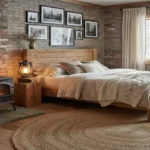
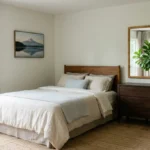
Linen bedding in warm white or soft natural tones is the right choice for almost every cabin bedroom. It wrinkles in ways that feel intentional rather than unkempt, gets softer with every wash, and breathes well through warm summer nights and cool autumn evenings. Layer with a cotton quilt in a simple plaid or solid natural tone, add a wool or chunky knit throw at the foot, and finish with two or three accent pillows that reference the cabin’s accent color palette.
A platform bed in solid wood with a simple profile keeps the bedroom feeling grounded and contemporary. Avoid headboards with excessive detail or ornate carving, which read as traditional rather than modern. A simple upholstered headboard in a natural linen or textured fabric, or a clean wooden slab headboard in the same species as the floor, both work well.
Blackout curtains behind sheer linen panels serve the practical need for darkness during mountain summer mornings when sunrise comes early while maintaining the visual warmth of natural linen in the room during daylight hours.
Bathroom
The modern cabin bathroom is where the style’s commitment to natural materials creates some of its most beautiful results.
Stone tile is the foundation: travertine, slate, or rough limestone in a honed finish on the floor and in the shower. Running the floor tile into the shower base without a threshold creates a seamless, spa-like continuity that reads as genuinely luxurious regardless of the cabin’s overall budget.
A freestanding soaking tub positioned to capture a window view is the most aspirational element in a modern cabin bathroom, particularly in properties in scenic locations. In the right cabin, a soaking tub with a direct view of the surrounding forest or mountain landscape creates an experience that no hotel can replicate. Americh, Victoria and Albert, and Kohler all produce freestanding tub options at various price points.
Unlacquered brass or aged bronze fixtures throughout the bathroom develop natural patina over months and years of use. In a cabin bathroom, this aging is a design asset rather than a maintenance concern. The fixtures get more beautiful over time, not less.
Modern Cabin Interior Design Styles Worth Considering
Modern cabin interior design is not a single rigid aesthetic. Several distinct approaches fall under the umbrella:
Scandinavian Cabin: Pale woods, white walls, minimal decoration, natural textiles. Light and airy rather than dark and cozy. Works particularly well in smaller cabin footprints where lightness is essential.
Mountain Modern: More architectural, with higher ceilings, larger glazing, and a stronger emphasis on the building’s relationship to the landscape. Often features concrete or steel alongside natural wood. Popular in Colorado, Wyoming, and Montana properties.
Rustic Luxe: Combines traditional cabin materials like rough stone and aged wood with high-end furnishings, fine textiles, and sophisticated lighting. The most popular approach for high-value vacation rental properties.
Hygge Cabin: Heavily influenced by Scandinavian hygge philosophy, with an emphasis on warmth, candlelight, textural softness, and the creation of genuine coziness. Multiple throws, many candles, soft lighting everywhere.
Modern Cabin Interior Design Cost Breakdown
| Project Scope | Estimated Cost | What It Includes |
|---|---|---|
| Cosmetic refresh | $5,000 to $20,000 | New paint, lighting, textiles, accessories, minor furniture additions |
| Mid-range renovation | $25,000 to $75,000 | New flooring, kitchen updates, bathroom refresh, significant furniture investment |
| Full interior renovation | $75,000 to $200,000 | New cabinetry, countertops, flooring, bathroom tile, all new furniture |
| New build interior design | $150,000 to $500,000+ | Complete design services, all furniture, all materials, art and accessories |
Location significantly affects costs. Renovation work in resort markets like Aspen, Vail, Park City, and Lake Tahoe runs 40 to 80% higher than national averages due to limited contractor availability and high labor rates in those markets. Properties in the Smoky Mountains of Tennessee, the Ozarks of Arkansas, or the Catskills of New York typically fall closer to the national average.
Working with a professional on a cabin renovation project makes sense when the project involves significant material decisions or when the property is a short-term rental investment. Understanding what interior designers charge helps set realistic expectations before the first meeting.
Sustainable Modern Cabin Interior Design
Sustainability has moved from preference to expectation in the American cabin market, driven partly by values and partly by practical considerations around energy costs in remote locations.
Reclaimed wood sourced from local sawmills, demolished barns, or timber salvage operations reduces the environmental impact of major wood elements while producing finishes with more character than new-cut lumber. Many cabin markets have active local salvage communities, particularly in the Pacific Northwest, Vermont, and the Mountain West.
Low-VOC and zero-VOC paints are standard practice in modern cabin interiors among design-conscious clients. In enclosed mountain properties with limited winter ventilation, the indoor air quality benefits are significant.
Energy-efficient appliances, LED lighting throughout, and smart thermostat systems reduce the ongoing operational cost of a cabin that may sit unoccupied for extended periods. Properly insulated windows and well-sealed building envelopes make the difference between a cabin that’s expensive to heat and one that’s genuinely efficient.
Local and regional material sourcing reduces transportation impact and supports the economy of the communities surrounding cabin destinations. Many of the most interesting material choices in modern cabin interiors, specifically local stone, regional timber species, and work from area artisans, are also the most environmentally responsible.
Where to Shop for Modern Cabin Interior Design in the USA
For furniture:
- Restoration Hardware for large pieces with the right scale and material quality
- Pottery Barn for mid-range cabin-appropriate furniture with consistent quality
- McGee and Co. for contemporary pieces that work in modern cabin settings
- Facebook Marketplace and local antique markets for vintage pieces with genuine character
For rugs:
- Rugs USA for affordable natural fiber and Moroccan-inspired options
- Loloi for higher-quality options in the $300 to $1,500 range
- Serena and Lily for premium natural fiber rugs at the higher end
For lighting:
- Rejuvenation for hardwired fixtures with the right cabin aesthetic
- Schoolhouse Electric for simple, quality pendants and wall sconces
- Cedar and Moss for handmade rattan and natural material pendants
For bedding and textiles:
- Parachute for linen bedding that works perfectly in cabin settings
- Coyuchi for organic cotton and linen options
- IKEA for affordable natural fiber throws and simple linen basics
Common Modern Cabin Interior Design Mistakes
Making it too dark. The most common mistake, particularly in log cabin renovations. Dark stained wood, low ceilings, small windows, and heavy dark furniture create a space that feels oppressive rather than cozy. Lighter wood tones, white or warm white walls, maximized natural light, and appropriately scaled furniture address this directly.
Over-theming with cabin accessories. Antler chandeliers in every room, bear and moose motifs on every surface, and excessive rustic decoration tips the space into themed territory. Modern cabin interior design uses one or two strong natural references rather than a complete catalog of wilderness imagery.
Ignoring acoustic comfort. Cabins with hard floors, stone fireplaces, and minimal soft furnishings can be acoustically harsh. Area rugs, upholstered furniture, textile wall hangings, and soft ceiling treatments all improve acoustic comfort in ways that make extended time in the space much more pleasant.
Buying furniture sized for a suburban house. Standard furniture dimensions are often wrong for cabin proportions. Measure every space before purchasing, and be willing to go smaller or larger than standard dimensions to suit the specific cabin.
Neglecting the approach and entry. The first impression of a cabin is made outside, before anyone enters. A well-designed entry, appropriate exterior lighting, and a covered threshold that transitions gracefully between outside and inside all contribute to the arrival experience that sets the tone for everything that follows.
FAQ Modern Cabin Interior Design
What is modern cabin interior design?
The current interior design of the cabins combines the rustic cabin design with the modern design layout, furniture and functionality.
How to decorate the interior of a log cabin?
Balance the logs by using neutral color, modern furniture and minimal decor.
What is the best color for a log cabin interior?
Light wood, soft grays and warm whites are most appropriate.
How much does it cost to build a 2000 sq ft log cabin?
The cost of interior building in the US varies between 120,000 and 180,000.
What makes modern cabin interior design?
Contemporary cabin interior design combines natural and comfortable cabin details with minimalist designs, neutral hues, and modern furniture to achieve a clean although warm home.
TL;DR
Contemporary cabin interior design integrates warmth, simplicity and modern comfort in living in the cabin that is timeless in the US.
Conclusion
The modern interior design of a cabin combines the feeling of comfort, simplicity and close contact with nature. A cabin may be fashionable and comfortable at the same time by bringing natural materials, clean designs, and practical furnishings on board. Such minor design elements as improved lighting, neutral colors, and clever storage may contribute significantly to the perception of the space. It is also by following the right interior design trend that will assist in developing a cabin comfortable, practical and fun to stay in either on everyday living or weekend arrangements.
Design lovers who enjoy natural elements may also like Modern Mexican Interior Design for its earthy tones.