Last Updated on 6 months ago by
If there’s one bedroom style that feels genuinely personal and lived-in — rather than staged or catalog-perfect — it’s bohemian. A Bohemian Interior Design Bedroom isn’t about following strict rules or matching everything perfectly. It’s about layering textures, mixing patterns, bringing in natural materials, and creating a space that feels warm, expressive, and completely your own.
The good news is that bohemian interior design is one of the most forgiving styles you can work with. There’s no single right way to do it. Whether you lean toward earthy neutrals with pops of terracotta, or you prefer rich jewel tones layered over a white base, the style adapts beautifully to your taste and budget.
This guide covers everything you need to know about creating a bohemian bedroom in 2026 — from the core design principles to room-by-room tips and common mistakes to avoid.
What Is Bohemian Interior Design?
The word “bohemian” traces back to 19th-century Paris, where artists, musicians, and free spirits who rejected mainstream culture settled in certain neighborhoods and created homes filled with art, textiles, and objects from their travels. That same spirit defines the style today.
Bohemian interior design — often called boho or boho chic — is defined by its eclectic, free-spirited nature. It celebrates creativity, cultural diversity, and personal expression above all else. Unlike minimalist or modern design, there are no rigid rules. Patterns don’t need to match. Furniture doesn’t need to be from the same era. Every piece should tell a story or bring you genuine joy.
In a bedroom specifically, boho design creates a sanctuary that feels cozy, intimate, and full of personality. It’s maximalist in spirit but intentional in execution — the difference between a thoughtfully layered space and one that simply feels cluttered comes down to color harmony, texture balance, and restraint in a few key areas.
The Core Elements of a Bohemian Bedroom
Before you start shopping or rearranging, it helps to understand the building blocks of the style. Every great boho bedroom draws from these core elements in some combination.
Layered Textiles
Textiles are the heart of bohemian design. Rugs layered over rugs, throws draped over the bed, an assortment of throw pillows in different sizes and patterns — this layering creates the warmth and depth that defines the style.
For the bed, start with a neutral base — white, cream, or warm beige linen — and layer from there. Add a patterned quilt or duvet, a few decorative pillows in complementary colors, and a chunky knit throw draped across the foot of the bed. The goal is a bed that looks inviting and lived-in, not rigid or perfectly pressed.
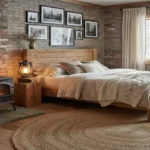
For the floor, a large area rug in a Moroccan, kilim, or Persian-inspired pattern anchors the room. If you want to go full boho, layer a smaller rug on top — a jute or natural fiber rug under a colorful patterned one works beautifully and adds visual depth.
Natural Materials
Bohemian design draws heavily from nature. Rattan, wicker, jute, bamboo, reclaimed wood, and natural stone all have a place in a boho bedroom. These materials bring warmth and organic texture that synthetic alternatives simply can’t replicate.
A rattan or wicker headboard is one of the most impactful single pieces you can add to a boho bedroom. It’s affordable, widely available, and immediately sets the tone for the whole space. Pair it with wooden nightstands — mismatched ones are completely fine in boho design — and a jute rug for a grounded, earthy foundation.
Macramé is another signature element. A large macramé wall hanging above the bed serves as a focal point and adds handmade texture that no printed piece can match. Smaller macramé plant hangers work beautifully in corners or near windows, especially when paired with trailing plants.
Rich, Layered Color
Color in a bohemian bedroom falls into two camps — and both are valid depending on your personal taste.
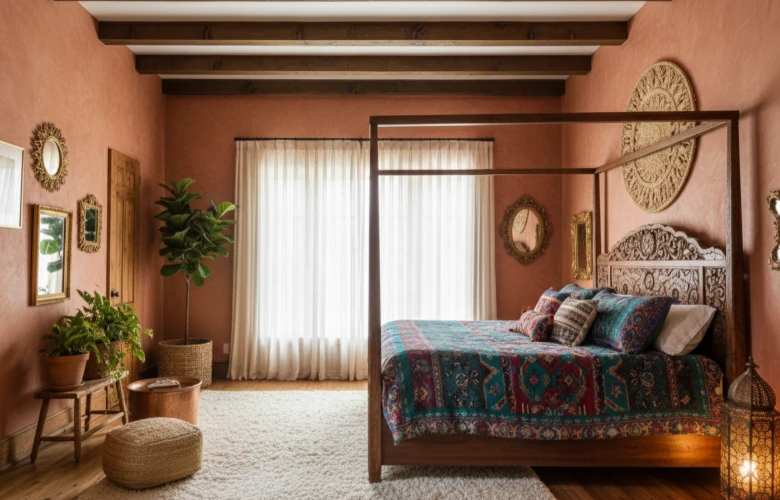
The first approach uses warm neutrals as a base — cream, warm white, sand, warm taupe — and layers in earthy accent colors like terracotta, ochre, rust, olive green, and dusty pink. This creates a softer, more organic boho look that feels calm and grounded rather than overwhelming.
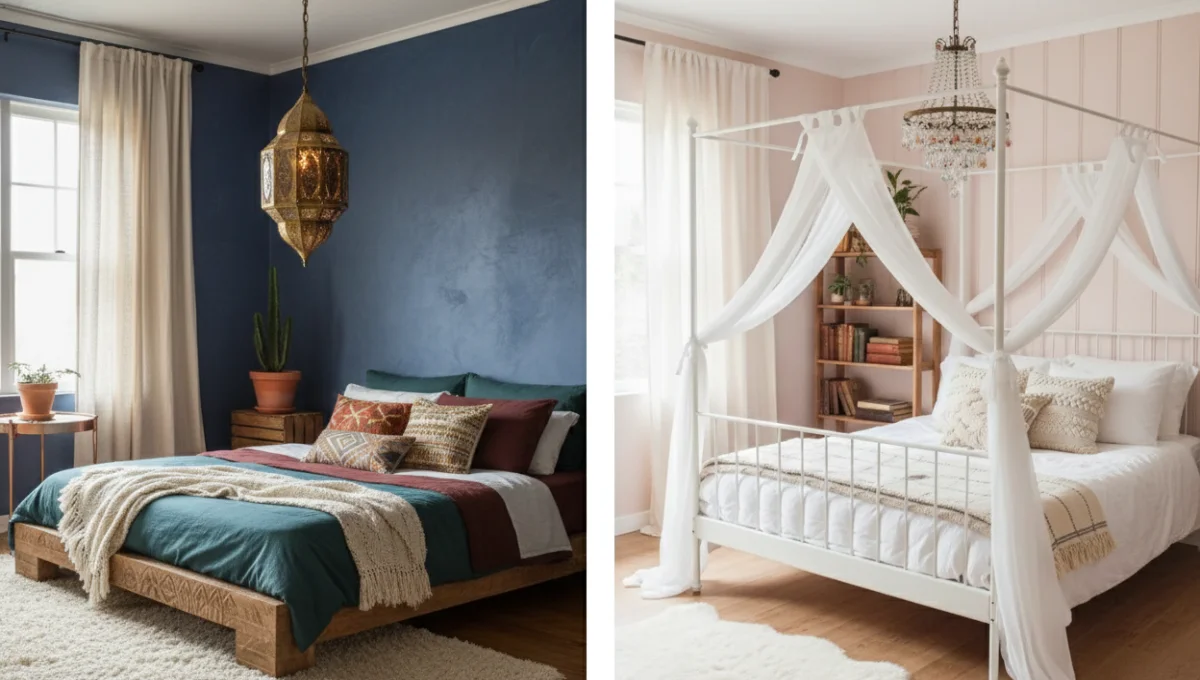
The second approach leans into jewel tones — deep ruby red, sapphire blue, amethyst purple, emerald green — layered over a darker or richer base. This gives the bedroom a more dramatic, maximalist feel that’s especially beautiful in rooms with good natural light.
Either way, the key is color harmony. Choose a palette of three to five colors and keep them consistent across textiles, art, and accents. Boho design can handle a lot of pattern and texture as long as the colors work together.
Plants and Greenery
Living plants are non-negotiable in a truly boho bedroom. They bring life, color, and warmth in a way that no decor piece can replicate — and they improve air quality at the same time.
Large leafy plants like fiddle leaf figs, monsteras, and snake plants work beautifully in bedroom corners. Trailing plants like pothos and heartleaf philodendrons look stunning on shelves or in macramé hangers. Succulents and cacti on windowsills add a desert-inspired touch that works well in earthy, terracotta-toned rooms.
If you don’t have a green thumb, high-quality faux plants have improved dramatically in recent years. A realistic faux monstera or trailing pothos gives you the same visual effect with zero maintenance.
Eclectic, Curated Accessories
A boho bedroom tells a story through its accessories. Travel souvenirs, vintage finds, handmade crafts, family heirlooms, crystals, candleholders, stacked books, woven baskets — these details are what make a bohemian space feel genuinely personal rather than assembled from a single store.
The key word is curated. More is generally welcome in boho design, but thoughtless clutter is different from intentional layering. Group smaller objects together in clusters on shelves or nightstands rather than scattering them individually. Use trays and baskets to organize without sterilizing.
How to Design a Bohemian Bedroom Step by Step
Step 1: Start With the Walls
The walls set the foundation for everything else. In a boho bedroom, you have several directions to go:
Warm neutral walls — soft white, warm cream, warm greige — give you maximum flexibility to layer colorful textiles and art without the room feeling overwhelming. This is the most versatile starting point for boho design.
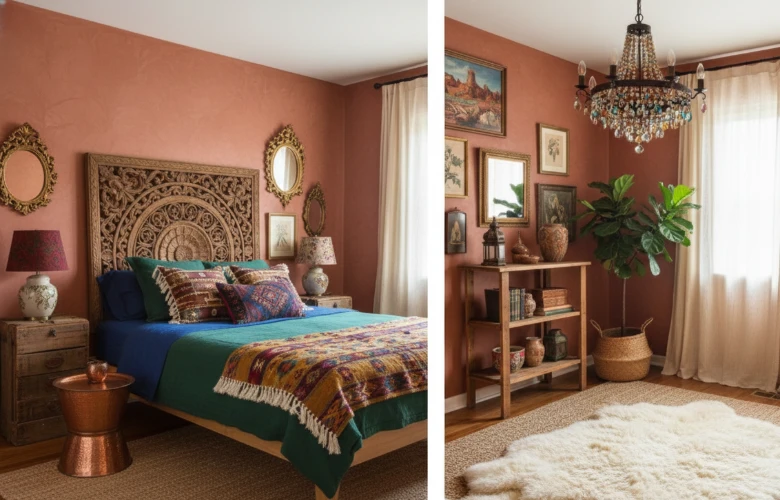
A single deep accent wall — dusty terracotta, sage green, dusty mauve, or deep teal behind the bed — adds drama and warmth without committing the whole room to a bold color. Pair it with neutral bedding and let the wall do the heavy lifting.
Wallpaper or a painted mural — botanical prints, abstract patterns, or a hand-painted floral wall are all very much at home in a bohemian bedroom. Removable wallpaper is a great option if you’re renting or want flexibility to change it later.
Macramé and tapestries — if you prefer neutral walls, large woven wall hangings and fabric tapestries add the same visual warmth and texture as wallpaper, but they’re portable and changeable.
Step 2: Choose Your Bed as the Focal Point
The bed is the most important piece of furniture in the bedroom, and in a boho space it should feel like a sanctuary within a sanctuary.
Rattan or wicker headboards are the most popular choice for boho bedrooms right now. They’re warm, natural, and work with virtually every color palette.
Wooden headboards with a carved or rustic finish add character and work well in earthier, more grounded boho rooms.
Canopy frames — especially when draped with sheer fabric or fairy lights — bring a romantic, dreamy quality that’s quintessentially bohemian. A simple four-poster frame with flowing linen panels creates an instant sense of enclosure and magic.
Upholstered headboards in velvet — particularly in dusty jewel tones like wine, forest green, or dusty blue — add a boho-chic richness when paired with layered textiles and natural materials.
Layer the bedding with intention. Start with a clean white or cream base layer, add a textured quilt or patterned duvet, pile on throw pillows in various sizes and complementary patterns, and finish with a chunky knit or woven throw draped casually at the foot. The layered bed is one of the most-searched elements of boho bedroom design for good reason — it looks genuinely inviting and takes very little effort to maintain.
Step 3: Layer Your Rugs and Flooring
If your bedroom has hardwood, tile, or vinyl flooring, rugs are essential — both for warmth and for visual grounding.
Start with a large area rug that extends at least two feet beyond each side of the bed. A Moroccan Beni Ourain rug, a vintage-style Persian rug, or a kilim in warm, earthy tones all work beautifully. Natural fiber rugs — jute, sisal, seagrass — are a more affordable base layer and add excellent texture.
For maximum boho effect, layer a smaller, more colorful patterned rug on top of the larger neutral one. This is one of the signature moves of bohemian bedroom design and it’s much more achievable than it looks.
Step 4: Get the Lighting Right
Lighting in a boho bedroom should feel warm, layered, and atmospheric — not bright and functional.
String lights or fairy lights draped along the headboard, around a canopy frame, or along the ceiling create instant warmth and a soft, magical glow that’s very on-brand for bohemian design. They’re also one of the most affordable ways to transform the feel of a bedroom.
Rattan or wicker pendant lights — whether hung from the ceiling or used as bedside table lamps — reinforce the natural material theme and look beautiful in amber or warm white bulbs.
Moroccan-style lanterns on the floor or nightstand add a warm, patterned glow when lit and serve as sculptural decor objects when they’re not.
Floor lamps with fabric shades in earthy tones add height and reading light without the harshness of overhead fixtures. Always use warm-toned bulbs — cool white light kills the boho atmosphere.
Avoid relying solely on overhead lighting. Layer string lights, table lamps, and floor lamps to create depth and warmth at different heights throughout the room.
Step 5: Add Art and Meaningful Accessories
This is where your boho bedroom becomes truly personal. The art and accessories you choose should reflect your own story — where you’ve traveled, what you love, what inspires you.
A gallery wall above the bed or on a side wall is a classic boho move. Mix framed prints with unframed art, small mirrors, pressed botanicals, and three-dimensional objects like small sculptures or woven pieces. Irregular arrangements feel more authentically bohemian than perfectly symmetrical grids.
Crystals and stones — amethyst clusters, rose quartz points, selenite wands — have become staple accessories in boho bedrooms. Whether or not you’re drawn to their metaphysical properties, they’re beautiful natural objects that add texture and visual interest on shelves and nightstands.
Vintage and secondhand finds are deeply in keeping with the boho spirit. A ceramic vase from a thrift store, a vintage mirror with an ornate frame, a stack of worn art books — these pieces add character and history that new furniture simply can’t provide.
Bohemian Bedroom Ideas by Color Palette
Earthy Boho — Terracotta, Ochre, Sage
This palette feels grounded, warm, and deeply current in 2026. Start with warm white or warm cream walls. Layer in terracotta textiles — a throw pillow, a ceramic pot, a woven rug with rust tones. Add ochre accents through a knit blanket or a curtain panel, and bring in sage green through plants or a single painted piece of furniture. This palette feels calm and cohesive while still being unmistakably bohemian.
Desert Boho — Camel, Blush, Natural Wood
Inspired by the warm, sun-bleached tones of the American Southwest. Think camel-colored linen bedding, blush throw pillows, natural rattan furniture, and a jute rug. Layer in dried botanicals — pampas grass, dried palm leaves, eucalyptus — for texture and warmth. A terracotta pot with a large cactus or sculptural succulent completes the look.
Jewel Tone Boho — Deep Ruby, Sapphire, Amethyst
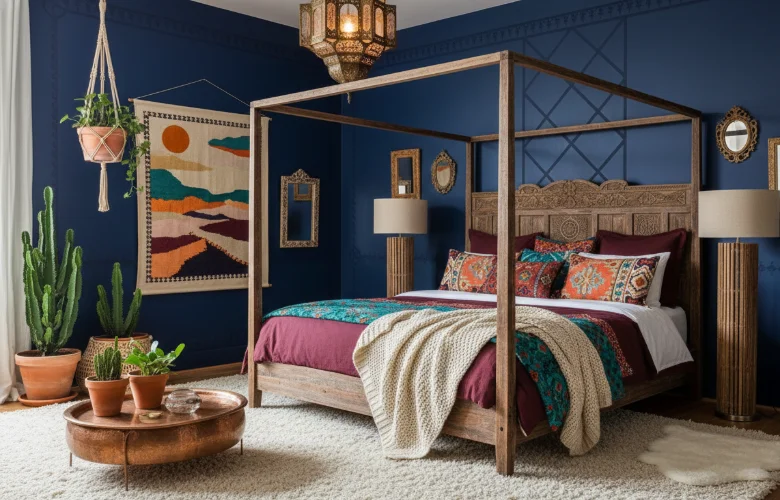
For those who love rich, saturated color. A deep teal or dusty navy accent wall behind the bed sets the tone. Layer in ruby red throw pillows, an amethyst or jewel-toned quilt, and gold metallic accents in frames and lamps. Balance the richness with plenty of natural materials — a jute rug, rattan furniture, wooden accents — to keep it feeling warm rather than heavy.
Neutral Boho — Cream, Sand, Natural Linen
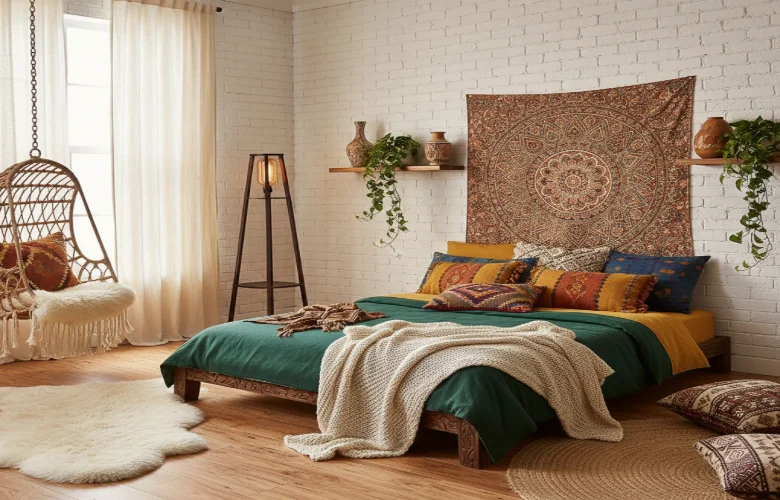
The quietest version of the style, and one of the most popular right now. White or warm cream walls, natural linen bedding, jute rugs, rattan furniture, and macramé in natural cotton. Plants provide the only real color, with a few terracotta pots adding subtle warmth. This palette feels serene and intentional — still unmistakably boho but with a more minimal, modern edge.
Boho Bedroom Furniture: What to Look For
In a bohemian bedroom, furniture doesn’t need to match. Mixing different woods, materials, eras, and styles is actually encouraged — as long as the pieces feel harmonious together in color and scale.
Rattan and wicker are the most signature boho materials for bedroom furniture. Rattan chairs, wicker baskets used as nightstands, a rattan mirror frame, a wicker pendant light — these pieces immediately establish the bohemian aesthetic.
Reclaimed and vintage wood adds warmth and character. A solid wood dresser with visible grain and some wear, a wooden stool used as a side table, a carved wooden headboard — these pieces feel collected over time rather than bought all at once.
Low-profile furniture fits the boho aesthetic well. Platform beds, floor cushions, and low wooden or rattan coffee tables give the room a relaxed, grounded quality that’s very much in keeping with the free-spirited philosophy of the style.
Mismatched nightstands are not just acceptable in boho design — they’re preferred. A rattan nightstand on one side, a wooden crate or stool on the other, a vintage bedside table repainted in a muted color — the intentional mismatch adds personality and avoids the showroom-floor look.
Bohemian Bedroom on a Budget: How to Get the Look Without Spending a Lot
One of the best things about boho design is that it genuinely rewards thrifting, DIY, and working with what you already have. You don’t need to spend a lot to create a beautiful bohemian bedroom.
Start with thrift stores and estate sales. Vintage furniture pieces, ceramic vases, old mirrors, wooden frames, and woven baskets are all common thrift store finds that fit perfectly in a boho room. Sanding, painting, or re-staining a thrift store piece is often all it takes to make it feel intentional and beautiful.
Make your own macramé. Macramé is genuinely easy to learn and the materials cost very little. A simple wall hanging or plant hanger can be made for under $15 in supplies and a few hours of learning. There are dozens of beginner tutorials on YouTube.
Layer textiles you already have. Before you buy anything new, pull out every throw blanket, pillow, and rug in your home and see what you can layer together. You might be surprised how much boho warmth you can create with what you already own.
Shop IKEA strategically. IKEA’s rattan and wicker pieces, neutral linen bedding, and simple wooden furniture translate beautifully into boho spaces. A $20 rattan mirror, a $15 jute rug, and a $30 macramé wall hanging from IKEA or Amazon can completely change the feel of a bedroom.
Use plants. A few $10 to $20 plants from a local nursery add more warmth and visual life to a boho bedroom than most decor pieces you could buy at that price point. Start with easy-care plants like pothos, snake plants, or ZZ plants if you’re new to indoor gardening.
Bohemian Design vs. Other Interior Design Styles
Boho design has some natural overlap with other popular styles, but there are meaningful differences worth understanding.
Boho vs. Maximalism — Both styles embrace more-is-more, but maximalism tends to be more formal and deliberate in its abundance. Boho is more casual, organic, and personal in its layering.
Boho vs. Rustic — Both use natural materials extensively, but rustic interior design focuses more on raw, unfinished materials and a distinctly country or cabin aesthetic. Boho is more global in its influences and more colorful in its palette.
Boho vs. Modern Wabi Sabi — These two styles share a love of natural materials and imperfection, but modern wabi sabi interior design is considerably more restrained and minimal. Wabi sabi embraces quiet simplicity and neutral tones. Boho embraces layering, pattern, and vibrant color.
Boho vs. Modern Mexican — There’s genuine overlap here, particularly around color, handmade craftsmanship, and cultural richness. Modern Mexican interior design tends to be more architectural in its use of color and pattern, with stronger connections to specific craft traditions.
Boho vs. Feng Shui — Feng shui interior design is a system for arranging spaces to promote positive energy flow. Boho and feng shui can coexist beautifully — both value natural materials, plants, and warm lighting — though feng shui’s guidelines around clutter and furniture placement require more discipline than the typically free-spirited boho approach.
Common Bohemian Bedroom Mistakes to Avoid
Too much of everything with no color anchor. The biggest mistake in boho design is layering so many colors, patterns, and textures that the room feels chaotic rather than cozy. Always establish a core color palette of three to five tones and let everything else work within it.
Buying everything at once from the same store. A boho bedroom should feel collected and personal, not assembled. Buy pieces gradually, mix sources — thrift stores, big box retailers, local markets, online vintage shops — and let the room evolve over time.
Neglecting negative space. Even in a maximalist style, some breathing room is important. Don’t fill every wall, every shelf, and every surface. Leave some walls bare, some surfaces clear, some corners open. The contrast between filled and open areas makes the layered elements feel more intentional.
Ignoring scale. A small bedroom can handle boho layering beautifully, but every individual piece still needs to be appropriately scaled for the space. A massive sectional sofa or an oversized statement piece that takes over the room doesn’t work regardless of style.
Over-matching. Trying to make everything coordinate perfectly defeats the purpose of bohemian design. Some pieces should complement each other. Others can contrast. The goal is harmony, not uniformity.
Frequently Asked Questions
Q: What are the key elements of bohemian interior design in a bedroom?
The core elements of a boho bedroom are layered textiles, natural materials like rattan and jute, rich or earthy colors, living plants, warm layered lighting, and personal accessories that reflect your story. The style has no strict rules — the goal is a space that feels warm, expressive, and genuinely personal.
Q: Can a small bedroom work with bohemian design?
Yes, absolutely. Boho design works beautifully in small bedrooms because it relies on textiles, plants, and wall art rather than large furniture pieces. In a small bedroom, focus on a statement headboard, layered bedding, a good rug, and a few plants rather than trying to fit in too much furniture. Keep the color palette cohesive and leave some breathing room on surfaces.
Q: What colors work best in a bohemian bedroom?
Earthy tones — terracotta, ochre, rust, sage green, warm cream — are the most popular boho palette in 2026. Deep jewel tones — ruby, sapphire, amethyst — work beautifully for a more dramatic, saturated look. Neutral boho using cream, sand, and natural linen is also hugely popular for those who prefer a quieter version of the style. All three approaches are authentically bohemian.
Q: How do I make my bedroom look bohemian on a budget?
Start with paint — a warm white or terracotta accent wall costs very little and makes a significant impact. Add a layered rug, a macramé wall hanging, a rattan mirror, and a few plants. Thrift stores are excellent sources for boho-friendly furniture and accessories. Layer textiles you already own before buying anything new.