Last Updated on 7 months ago by
Growing old does not mean being comfortable or unstylishit is to think smarter. That is where the interior design of senior living is significant. You can be planning about yourself, a parent or a client in the U.S and the objective is quite straight-forward; make a home where it is safe, comfortable and easy to live in on a daily basis.
A large number of American houses do not consider aging as a factor when they are constructed. Poor lighting, stairs and slipper floors may easily turn into hazards. However, when properly designed, any room may become a space that is not only elderly-accessible but looks beautiful as well.
Then, what about designing a home that will help people feel independent and at the same time modern and welcoming? We can start a step-by-step analysis.
What Is Senior Living Interior Design?
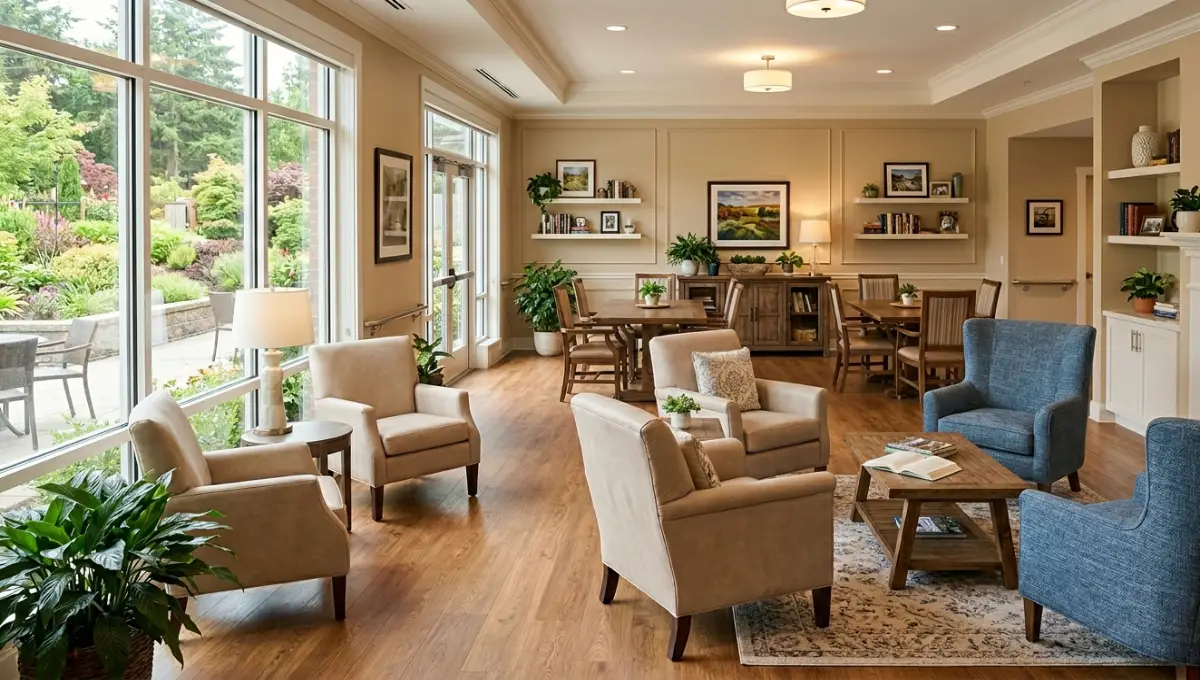
The interior design of senior living is aimed at designing facilities that address the physical and emotional needs of elderly people. It is placed with safety, accessibility, and comfort with the addition of clean and stylish appearance.
This sort of design can be associated with:
- Aging in place design
- Accessible home interiors
- Home designs that are friendly to the elderly.
In the US, the number of individuals opting to remain at their homes during old age is on the rise. This has been referred to as aging in place and this phenomenon has made more significant the aspect of senior friendly design.
It is not only to avoid accidents- but also to make everyday life better.
The Major Principles of Senior Living Interior Design.
Senior Living Interior Design Safety First
Any home that is friendly to seniors is based on safety. One of the greatest dangers of older adults in the U.S. is falls, thus the need to eliminate them.
Any change in design, even simple, can help a lot:
- Fit non-slip floors in the bathroom and kitchen.
- Place grab bars around toilets and shower areas.
- Step stair and hallway handrails.
- Take away loose carpets and mess.
These qualities are included in what is commonly referred to as fall prevention design and they will be needed to minimize the risk.
Accessibility & Mobility
The design must be in such a way that it is easy to move around- even when that person is on a walker or wheelchair.
This is how you can make things more accessible:
- Wide doorways (a minimum of 36 inches) are used.
- Create open floor plans
- Keep out of the way of corners and impediments.
- Choose low-height furniture
This strategy adheres to the universal design, which involves the fact that the space is accessible to all ages and abilities.
Senior Living Interior Design Comfort & Ergonomics
Safety is not as important as comfort. The elderly must be in a position to sit and stand, as well as move comfortably.
Focus on:
- Properly balanced seat height and arm chairs.
- Beds are easy to get in and out of.
- Storage made at accessible heights.
They are samples of ergonomic chairs that are made to decongest the physical body.
Top Color palette in Elderly-safe Spaces
Color is not merely a matter of style, it influences visibility and mood as well.
The vision of people alters as they grow old. This is why it is necessary to use the appropriate colors.
Tips for Choosing Colors
- Apply contrasting colours (e.g. dark floor on light walls).
- Do not use too bright or harsh tones.
- Select relaxing colors such as soft blue, beige or warm gray.
Contrast assists elderly individuals to distinctly recognize edges, furniture and steps. This comes particularly in fall prevention.
Senior Living Interior Design Lighting
Lighting is among the neglected aspects in home design- yet to the seniors, it is a necessity.
Lack of appropriate lighting may cause accidents and eye strain.
Best Lighting Practices
- Apply multiple layers of lighting (ambient, task and accent).
- Replace the dull bulbs with bright LEDs.
- Install motion-lights in corridors and bathrooms.
- Lighting under-cabinets in kitchens.
Such solutions are also commonly known as low vision lighting design, which assists the elderly to have a clear vision at any given time.
Chair and sofa designs to use with the elderly.
Not every furniture is friendly to the seniors. The correct decisions will be able to enhance safety as well as comfort.
What to Look For
Round-edged furniture to prevent injury.
Stable, non-slip chairs
Better-adjustable recliners.
Multi-functional furniture (such as storage beds)
Furniture should not be too low or too soft, as it is difficult to rise.
Daily life can be facilitated using adaptive furniture among seniors.
Bathroom Design for Seniors
Bathroom is a very unsafe place in any house. However, it can be safe and comfortable with the appropriate design.
Key Features
- Replacement of bath tubs with walk-in showers.
- Non-slip tiles
- Grab bars in the toilet and shower area.
- Shower benches for sitting
The inclusion of these features can help the risk of falls to decrease significantly.
Kitchen Design for Seniors
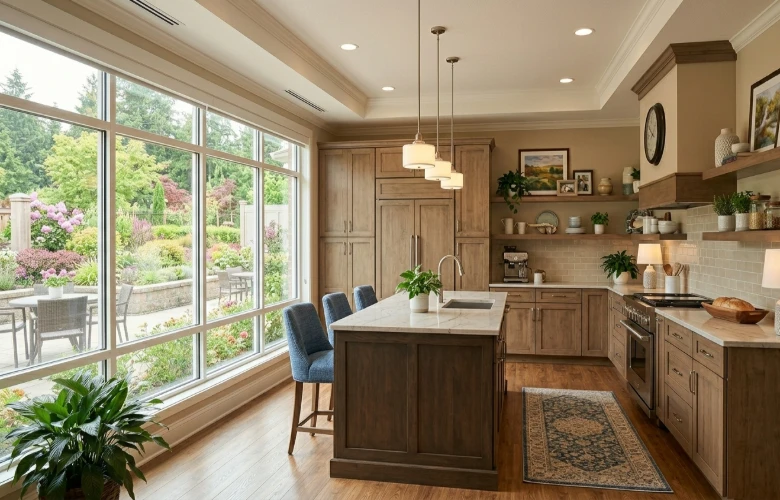
The kitchen must be convenient and not one that requires bending, stretching and overreaching.
- Geriatric friendly kitchen concepts.
- Install lower countertops
- Use pull-out shelves
- Choose easy-grip handles
- Install sufficient lighting above workplaces.
These modifications render the process of cooking safer and enjoyable.
Common Mistakes to Avoid
Despite the good intentions, a lot of individuals commit design errors which may lead to future problems.
- Avoid These Errors
- Furnishing the space too much.
- Applying smooth flooring materials.
- Ignoring proper lighting
- Preference of style to functionality.
A lovely house is wonderful–but first of all there needs to be safety.
The importance of Senior Living interior design
Consider the following: a minor design modification now can save a severe injury in the future.
Millions of older Americans are opting to remain at home longer in the U.S. They can do it with the appropriate interior design in a safe and comfortable environment.
It is not just design, but life quality.
Mini Summary (TL;DR)
The field of senior living interior design is oriented on safety, comfort and accessibility.
Install non-slip floors, adequate lighting and ergonomic chairs.
Bright colors and intelligent designs enhance clarity.
Bathrooms and kitchens have to be given special care.
Big difference can be made by small changes.
Smart seniors.
Senior Living Interior Design Smart Home Technology
Technology is altering the way the elderly spend their days at home. Smart home amenities to serve the elderly are no longer a luxury but a growing necessity to ensure safety and independence today.
Best Smart Solutions to think about.
Voice-controlled assistants (such as Alexa or Google Assistant)
Easy control smart thermostats.
Security video doorbells.
Emergency alert systems
To illustrate, a California senior can switch off lights, close their doors, or seek assistance, at the comfort of their own voice. This simplifies life and minimizes the aspect of physical labour.
These devices are part of assistive technology used by elderly people which helps them live independently.
Senior Friendly Flooring.
Flooring has a massive role to play in injury prevention. There is a lot of use of materials that may be hazardous to the elderly in many U.S. homes.
- Best Flooring Choices
- Type of Flooring Seniors Advantages.
- Vinyl flooring Anti-slip, comfortable to walk on.
- Cork flooring Shock absorbing and comfortable.
- Low-pile carpet Lessens the effects of falls.
- High grip and safety Rubber flooring.
What to Avoid
Glossy tiles
Polished marble
Thick rugs without grip
Safe home design includes choosing the appropriate flooring in the homes of seniors.
Room-by-Room Design Strategy
When you subdivide a home by room, it makes it easier to design it in a way that is helpful to the seniors.
Living Room
Keep pathways clear
Use firm, supportive seating
Include good light around reading spots.
Bedroom
Select a bed of the right height.
Insert night lights to see.
Have necessities on hand.
Hallways
Install handrails
Use bright lighting
Remove clutter
This is done in such a way that all areas within the house accommodate mobility-friendly interior design.
Cost outlay: Senior Living Interior design (USA)
Some believe that high-end facilities are costly to design as senior-friendly: however, it can be achieved progressively.
Here is a realistic outline of costs in the U.S.:
Upgrade Type Estimated Cost
- Grab bars installation $100 – $500
- Walk-in shower $2,000 – $8,000
- Smart home devices $200 – $2,000
- Flooring upgrade $3 – $10 per sq ft
- Lighting improvements $150 – $1,500
Advantages and disadvantages of Senior Living Interior Design
Pros
Enhances safety and lessens the risk of falls.
Assists in living.
Grows U.S. market home value.
Improves comfort and comfort of everyday life.
Cons
Initial setup cost
Needs to be planned and customized.
There are upgrades which might require the assistance of a professional.
Nevertheless, there are usually long-term benefits that justify the costs–particularly in matters of health and safety.
A Guide to Making a Home Senior Friendly.
Reading this as you go:
Step 1: Assess Needs
Mobility level
Vision and hearing ability
Daily habits
Step 2: Declutter the Space
Take away superfluous furniture.
Clear walking paths
Step 3: Improve Lighting
Add brighter bulbs
Install motion sensors
Step 4: Improve Safety Features.
Install grab bars
Use non-slip flooring
Step 5: Add Smart Technology
Voice assistants
Emergency systems
This step can be used to design a complete aging-in-place home.
Real-Life Example (USA)
Let’s take a simple example:
There was a retired couple in Texas who wanted to remain in their house after retirement. Their house had:
Slippery tiles
Poor lighting
A traditional bathtub
After redesigning:
They had laid in a floor of vinyl.
Added LED lighting
Turned the bathtub into a walk-in shower.
The result? A more comfortable and safer place to live without compromising style.
This demonstrates how minor interior design modifications to seniors can make a big difference.
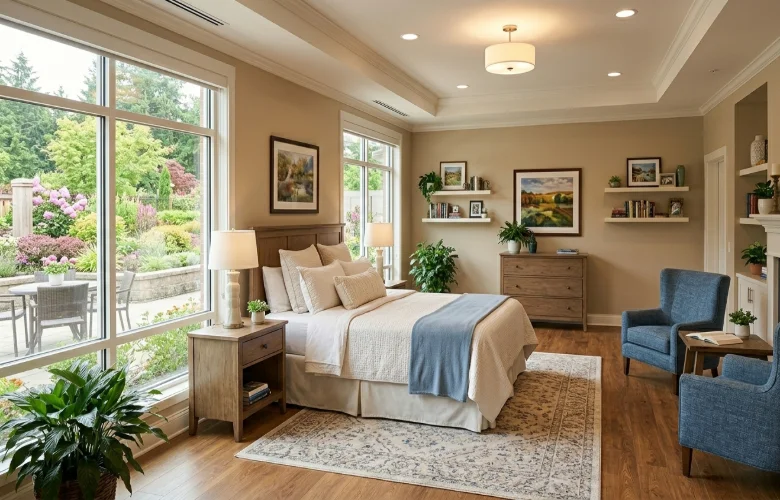
Designing Before and After Tips
Want to go one step further? The following tips are sophisticated and can be used to enhance safety and style:
- Make use of contrasting edges of stairs to make them more visible.
- Install soft-drawers to avoid injury.
- Select lever-type door handles, rather than knobs.
- Include seats in lengthy corridors.
They are commonly employed in professional interior design projects in the senior housing sector throughout the U.S.
Frequently Asked Questions (FAQs)
What is the greatest thing about interior design in senior living?
The first consideration is safety, and the main aspect is fall prevention based on flooring, lighting and layout.
What can older adults do to make their homes safer without having to do any significant renovation?
Adding grab bars, making lighting better, or just reducing clutter can be a great help.
Which flooring material should be used by the elderly?
Vinyl, cork and low-pile carpet are slip-resistant.
Are seniors helped by the smart home technology?
No, I assist with everyday activities, security, and rescue.
What is the cost of home design that is senior-friendly in the U.S.?
Prices are different, yet small upgrades might begin as low as a few hundred dollars and increase, based on the project.
What is aging in place design?
It is creating a home to ensure that the elderly live safely and independently as they age.
Does senior living design need to be modern?
Absolutely. The designs of today are safe and have posh and modern interiors.