Last Updated on 6 months ago by
If you’ve always had a passion for transforming spaces and making rooms feel more alive, a career in interior design might be exactly the right path for you. The good news is that the industry has opened up significantly over the past decade. You no longer need a four-year degree from a prestigious design school to build a successful career — though that path is still very much available if you want it.
This guide walks you through everything you need to know about how to become an interior designer in 2026 — from education options and licensing requirements to building your portfolio and landing your first clients.
What Does an Interior Designer Actually Do?
Before diving into the how, it helps to be clear on the what. Interior designers do a lot more than pick paint colors and arrange furniture.
A professional interior designer works with clients to create spaces that are functional, safe, and beautiful. That means understanding how people use a space, planning layouts that work in real life, selecting materials and finishes, coordinating with contractors and architects, managing budgets, and overseeing projects from concept to completion.
Interior designers work on everything from private homes and apartments to offices, hotels, restaurants, healthcare facilities, and retail spaces. Many specialize in a particular area — residential design, commercial interiors, hospitality, or healthcare — which helps them build deeper expertise and attract the right clients.
It’s also important to understand the difference between an interior designer and an interior decorator. An interior decorator focuses purely on aesthetics — furniture, color, accessories, and styling within an existing space. An interior designer goes deeper, with training in space planning, building codes, structural considerations, and technical drawing. In many USA states, using the title “licensed interior designer” requires passing a formal exam and meeting specific education and experience requirements.
Step 1: Understand the Education Paths Available to You
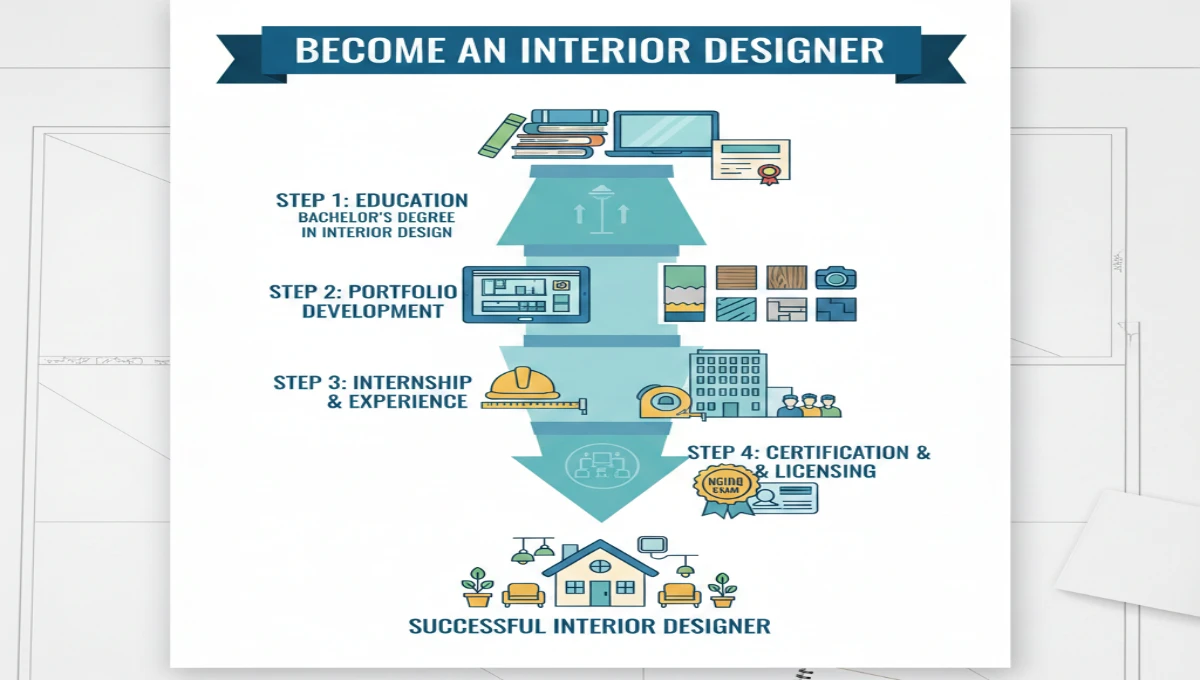
There is no single required path to becoming an interior designer. The route you choose depends on your goals, your timeline, and how you learn best.
Four-Year Bachelor’s Degree
The most traditional path is a bachelor’s degree in interior design or interior architecture from an accredited university. Programs accredited by the Council for Interior Design Accreditation (CIDA) are the most recognized in the industry and are required for sitting the NCIDQ exam — the main professional licensing exam in the USA.
A bachelor’s degree program typically covers design principles, space planning, color theory, building codes, materials science, computer-aided design (CAD), lighting design, and the history of architecture and design. Studio-based classes where you work on real or simulated projects are especially valuable — they help you build both skill and portfolio work at the same time.
Well-known programs include those at SCAD (Savannah College of Art and Design), Pratt Institute, Rhode Island School of Design, and the New York School of Interior Design. Many state universities also offer strong, more affordable programs that are fully CIDA accredited.
Two-Year Associate Degree
If you’re not ready to commit to four years or want a more affordable entry point, an associate degree in interior design from a community college or design school is a legitimate path. Some associate programs are also CIDA accredited, which means the credits may count toward the NCIDQ exam requirements.
An associate degree gives you a solid foundation in design fundamentals and can be completed in two years. Many graduates go on to transfer those credits into a bachelor’s program later, or start working in entry-level design positions and build experience from there.
Online Courses and Certificate Programs
For career changers or people who want to learn without committing to a degree program, online education has become a genuinely solid option. Platforms like Coursera, Udemy, and the New York Institute of Art and Design (NYIAD) offer interior design programs that can be completed in months rather than years.
These programs won’t qualify you to sit for the NCIDQ exam, but they can give you a strong foundation in design principles, help you build initial portfolio work, and open doors to entry-level and freelance work — especially in residential design, where licensing requirements are less strict than in commercial work.
Step 2: Get Licensed — Understanding the NCIDQ Exam
The NCIDQ (National Council for Interior Design Qualification) exam is the professional standard for licensed interior designers in the USA and Canada. Passing it allows you to use the title of licensed or registered interior designer, which is required in many states for certain types of commercial and public space design work.
To qualify for the NCIDQ exam, you need:
- A CIDA-accredited bachelor’s or associate degree in interior design, AND
- A minimum of two years of full-time, supervised work experience in the field
Once you meet those requirements, you can register and sit for the exam. The NCIDQ tests your knowledge of building codes, construction standards, contract administration, space planning, design application, and project coordination.
Not every designer needs to be NCIDQ certified. For residential design work specifically, many states have no licensing requirement at all. But having the credential adds credibility, expands the types of projects you can legally work on in some states, and signals to clients that you’ve met a recognized professional standard.
Step 3: Develop the Skills That Actually Get You Hired
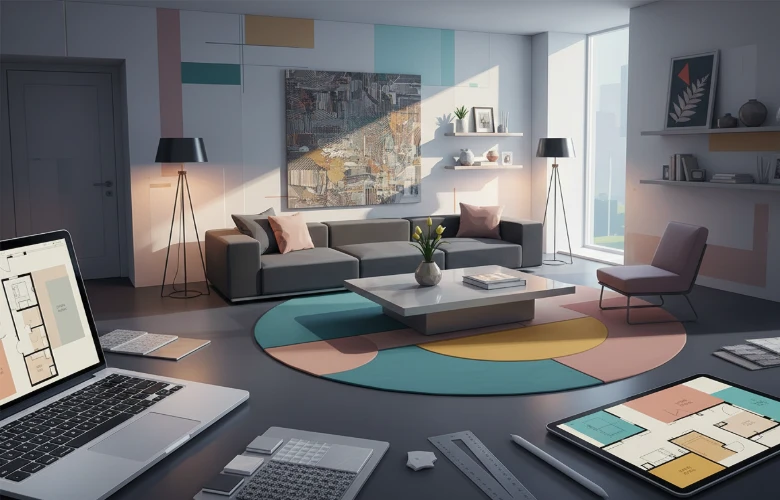
Education gives you the foundation, but the skills you bring to the table day-to-day are what determine how successful you’ll be as a working designer. Here’s what matters most in 2026.
Design Software Proficiency
This is non-negotiable for anyone entering the field today. The most in-demand tools are:
AutoCAD — The industry standard for 2D technical drawings and floor plans. Most commercial design firms require AutoCAD proficiency.
SketchUp — Widely used for 3D modeling and visual presentations, especially in residential and smaller commercial projects. More accessible for beginners than Revit.
Revit — Used for larger commercial and institutional projects. More complex than SketchUp, but increasingly required in larger firms.
Adobe Creative Suite — Photoshop, Illustrator, and InDesign are commonly used for mood boards, client presentations, and marketing materials.
RoomSketcher and Canva — More accessible tools that many residential designers use effectively for space planning and mood boards without the learning curve of AutoCAD or Revit.
You don’t need to master all of these at once. Start with SketchUp and Canva, which are free or low-cost and cover most residential design needs. Then add AutoCAD as your career develops.
Space Planning and Layout
Understanding how people actually move through and use spaces is at the core of what interior designers do. Good space planning considers traffic flow, furniture scale, natural light, sight lines, and how the function of the room affects every design decision.
This skill develops with practice. The more floor plans you work with — even hypothetical ones — the more intuitive it becomes.
Knowledge of Building Codes and Materials
For commercial and institutional work, knowing local building codes, accessibility standards (ADA compliance in the USA), and fire regulations is essential. For residential work, understanding material properties — how different flooring types perform, which paints work in high-humidity environments, how light interacts with different finishes — makes you a more confident and effective designer.
Client Communication and Project Management
Many successful designers will tell you that the ability to listen well and manage a project from start to finish matters as much as design ability. You’re working with clients who have strong opinions, budgets that need to be respected, contractors who need clear direction, and timelines that need to be met.
Strong communication, clear documentation, and organized project management keep everything running smoothly — and keep clients coming back and referring you to others.
Step 4: Build Your Portfolio — This Is What Gets You Work
Your portfolio is the single most important thing you have as an interior designer. It’s more important than your degree, your certifications, and your resume. When a potential client or employer looks at your work, they want to see your eye, your process, and your ability to solve real problems in real spaces.
Start With What You Have
You don’t need paid client work to start a portfolio. Here’s how to build one from scratch:
Style a room in your home. Rearrange furniture, add or remove pieces, create a cohesive color palette, and document the before and after with good photography. Even a simple bedroom or living room transformation shows real skill when the result is compelling.
Create concept boards for imaginary projects. Choose a hypothetical client — say, a young professional moving into a studio apartment — and design their space completely. Build a floor plan, create a mood board, select furniture and finishes, and present it as if it were a real project.
Offer free or reduced-rate work to friends or family. Redesigning a friend’s bedroom, home office, or living room gives you a real project with a real client, real constraints, and real results to photograph.
Volunteer for community spaces. Churches, community centers, nonprofits, and small local businesses often need design help and can’t afford professional rates. Offer your time in exchange for a proper portfolio project.
Each portfolio piece should include a brief description of the project goals, your design concept, the challenges you solved, and clear photos of the finished result. If it’s a concept project, include your mood board, floor plan, and material selections.
Photography Matters More Than You Think
Even an excellent design looks mediocre in bad photos. Invest time in learning basic interior photography — good lighting, the right angles, and post-processing make a significant difference. If you’re working on a paid project, consider hiring a photographer to document it. The investment pays off in the quality of your portfolio.
Step 5: Choose Your Career Path and Specialization
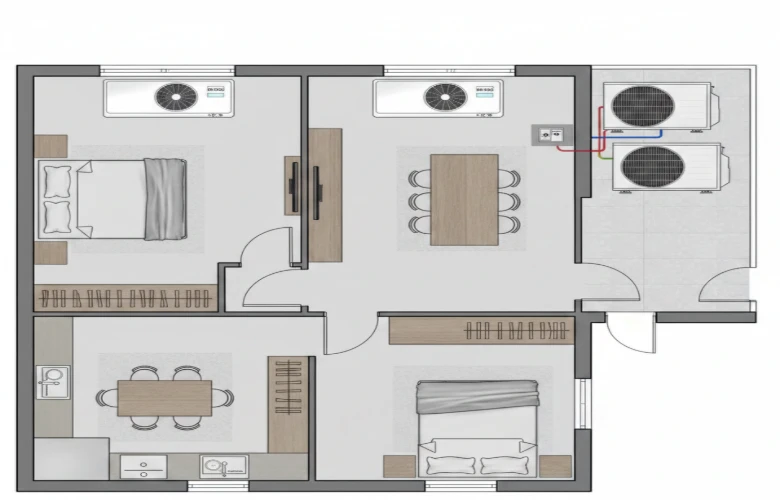
Interior design offers a wide variety of career directions. Choosing a specialization helps you stand out, attract the right clients, and build deeper expertise faster than trying to do everything.
Residential Interior Design
Designing homes, apartments, and condos for private clients. This is the most common starting point for new designers and the area with the most flexibility around licensing requirements. Residential designers work on everything from single rooms to complete home renovations.
If you’re starting out in residential design, developing expertise in a specific style — rustic interior design, modern classic interior design, or feng shui interior design principles, for example — gives you a clear identity that makes marketing yourself significantly easier.
Commercial Interior Design
Designing offices, retail spaces, restaurants, and hotels. Commercial design typically requires NCIDQ certification and a stronger knowledge of building codes, ADA compliance, and contractor coordination. It also tends to pay more than residential work.
Healthcare Interior Design
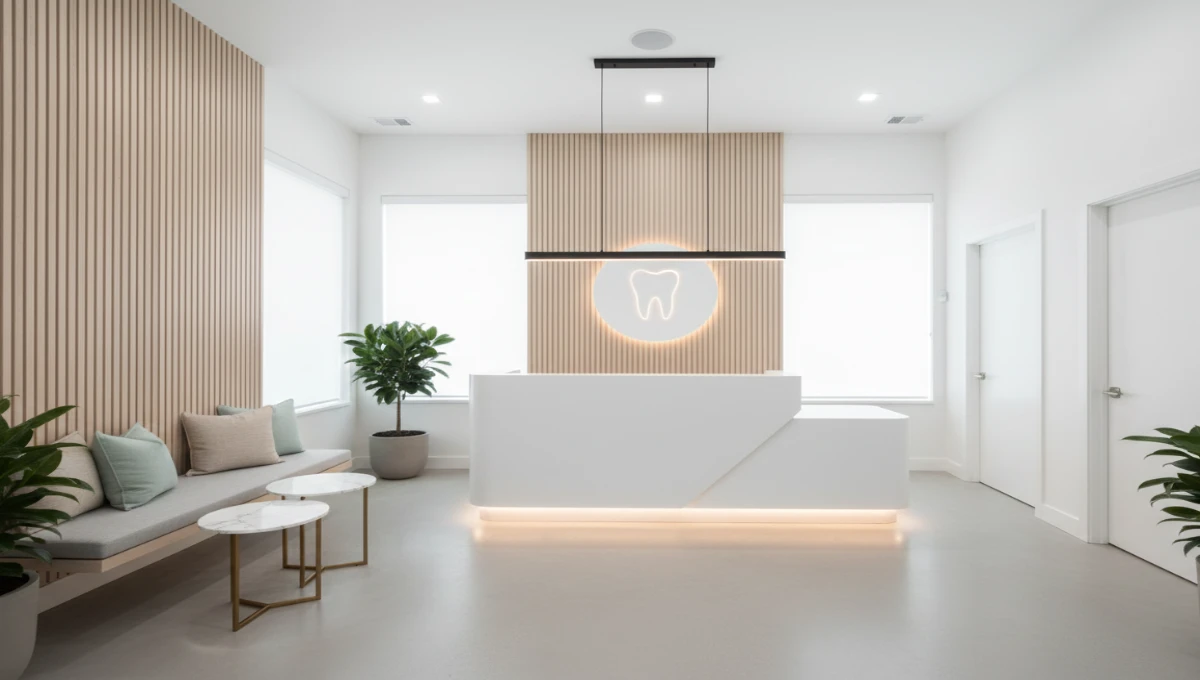
One of the fastest-growing specializations. Designing medical offices, dental offices, hospitals, and clinics requires specific knowledge of infection control, patient flow, ADA compliance, and healthcare regulations. If you’re interested in this direction, our guide to dental office design gives you a sense of what this specialty involves at the project level.
Hospitality Design
Hotels, resorts, spas, and restaurants. Hospitality design combines aesthetics with deep functionality — spaces need to look beautiful, handle high traffic, be easy to maintain, and create a specific guest experience. This is a competitive but rewarding specialization.
Virtual and Online Interior Design
A growing segment of the industry, especially post-2020. Virtual designers work with clients entirely remotely — gathering information through photos, videos, and questionnaires, then delivering design plans, mood boards, and shopping lists digitally. This model has lower overhead and can serve clients anywhere in the country, making it an attractive path for designers who want flexibility or are just starting out.
Step 6: Get Experience — How to Break Into the Industry
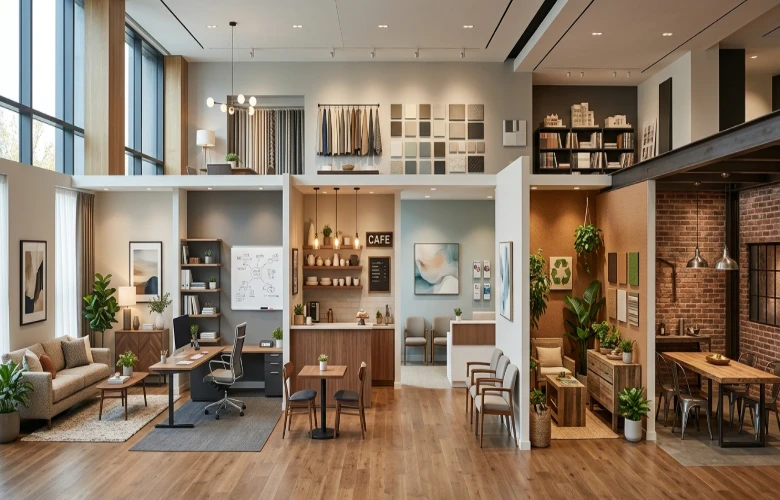
Education and portfolio are important, but real-world experience is how you actually build confidence and credibility as a designer.
Internships
If you’re still in school, an internship at a design firm is the most valuable experience you can get. It lets you see how professional designers manage client relationships, handle projects, navigate contractor relationships, and run a business. Many firms hire their interns after graduation.
Entry-Level Positions
Look for positions like junior designer, design assistant, or showroom consultant at furniture retailers and design studios. These roles expose you to the full project lifecycle, client interaction, and the day-to-day realities of the industry — even if the work itself starts at a more administrative level.
Freelance and Side Projects
Taking on small freelance projects — even at reduced rates — while you’re in school or working another job builds your portfolio, sharpens your skills, and gets you used to managing client relationships. Every real project teaches you something a classroom can’t.
Networking
The interior design industry runs heavily on referrals and relationships. Attend local ASID (American Society of Interior Designers) chapter events. Follow designers whose work you admire on Instagram and Houzz. Join online communities on Reddit and Facebook. Build genuine relationships with contractors, architects, and furniture vendors — these connections often lead to referral work and collaborative opportunities.
How Much Do Interior Designers Make in 2026?
According to the U.S. Bureau of Labor Statistics, the median annual wage for interior designers in the USA was $63,490 as of May 2024, with the field projected to grow 3% through 2034.
That number varies significantly by experience, location, and specialization:
| Experience Level | Typical Annual Salary |
|---|---|
| Entry-level (0-2 years) | $38,000 — $52,000 |
| Mid-level (3-7 years) | $55,000 — $80,000 |
| Senior / experienced (8+ years) | $80,000 — $130,000+ |
| Independent / own firm | Varies widely — $50,000 to $300,000+ |
Designers in major metros like New York, Los Angeles, and San Francisco typically earn more than the national average. Those who run their own firms and build a strong client base have no ceiling on their earnings — but also take on the full risk and responsibility of running a business.
Understanding how much interior designers charge their clients gives you useful context for setting your own rates as you start to take on work — and helps you understand the business model you’re entering.
Can You Become an Interior Designer Without a Degree in 2026?
Yes — and more people are doing it than ever. The industry has genuinely shifted, particularly in residential design where formal licensing is not required in most USA states.
Online certifications, strong portfolios, and real client work now carry serious weight with residential clients. Platforms like NYIAD, Coursera, and Udemy offer design programs that give you a solid foundation without a four-year commitment.
That said, if your goal is to work in commercial design, healthcare spaces, or any public building where licensing is legally required, a formal CIDA-accredited degree and NCIDQ certification are the path you need to take.
For residential design and freelance work, a strong portfolio and demonstrated skill can get you very far — especially if you’re clear about your niche and the style of work you do best.
How to become a interior designer Faq
Q: How long does it take to become a licensed interior designer in the USA?
With a four-year CIDA-accredited degree and two years of supervised work experience, you can qualify to sit for the NCIDQ exam in approximately six years. Through an accredited two-year associate degree plus work experience, some designers qualify in four years. Timeline also varies by state, as licensing requirements differ across the USA.
Q: Do I need a license to work as an interior designer?
It depends on the type of work and your state. Most states do not require a license for residential interior design. For commercial projects, institutional spaces, or public buildings, licensing requirements vary by state — some require NCIDQ certification, others have different state-specific exams. Always check the requirements in your specific state before marketing yourself as a licensed designer.
Q: What skills do you need to become a successful interior designer?
Beyond creativity, the most in-demand skills are space planning, design software proficiency (AutoCAD, SketchUp, or similar), knowledge of building codes, strong client communication, and budget management. Most successful designers say that listening skills and project management ability are just as important as artistic talent.
Q: Is interior design a good career in 2026?
Yes, for the right person. The field is growing steadily, the variety of work is significant, and experienced designers with strong portfolios can earn very well — especially those who run their own practices. The most successful designers combine genuine design talent with strong business and communication skills.