Hiring an interior designer is one of those decisions where most people genuinely have no idea what to expect. Prices vary enormously — and for good reason. A one-room consultation costs nothing close to a full-home renovation project. A designer in rural Ohio charges very differently from one in Manhattan.
This guide breaks down exactly what interior designers charge in 2026, how their pricing models work, what drives costs up or down, and how to get the most value from your investment no matter what your budget looks like.
What Does an Interior Designer Cost on Average?
The average cost to hire an interior designer in the USA ranges from $2,057 to $15,216, with most residential projects averaging around $8,528 according to 2026 Angi data. Hourly rates typically fall between $100 and $500 per hour depending on experience and location.
That’s a wide range — and it’s intentional. Interior design pricing is genuinely project-specific.
These figures cover design fees only. Furniture, materials, and contractor costs are separate and almost always represent the largest portion of your total project spend.
How Interior Designers Charge The 5 Pricing Models
Before you hire anyone, you need to understand how they bill. Interior designers use five main pricing structures, and the one your designer uses affects your total cost significantly.
1. Hourly Rate
The most common model for consultations and smaller projects. Rates typically run $75 to $500 per hour depending on the designer’s experience, reputation, and city. Junior designers and those in smaller markets charge on the lower end. Senior designers and those in major cities like New York or Los Angeles charge at the higher end.
Hourly billing works well when your project is limited in scope — a single room, a layout consultation, or help choosing a color palette. For larger projects, hourly billing can feel unpredictable because costs accumulate as the project evolves.
2. Flat Fee
A fixed, all-inclusive price for a specific scope of work. This is the most transparent model for clients because you know the total cost upfront. Flat fees are common for full-room redesigns and whole-home projects where the scope is clearly defined from the start.
Flat fees for a single room typically range from $1,500 to $5,000. Whole-home flat fees can range from $10,000 to $30,000 or more depending on the size of the home and the level of service included.
3. Per Room
Some designers charge a set fee per room, which makes budgeting straightforward. Average per-room rates run $1,000 to $12,000 depending on room size, complexity, and whether furniture sourcing is included. This model is popular for homeowners who want to renovate one room at a time without committing to a full-home contract.
4. Per Square Foot
More common in commercial projects and large residential spaces. Rates typically range from $5 to $40+ per square foot for residential work and higher for commercial properties. This model is useful for large projects where a consistent rate simplifies overall budgeting.
5. Percentage of Project Cost
Used primarily for large luxury projects and new constructions. The designer charges 10% to 30% of the total project cost including furniture, materials, and contractor fees. This model aligns the designer’s incentive with the overall project quality, but it means the more you spend on materials and furniture, the higher the design fee.
What’s Included in a Designer’s Fee and What Isn’t
This is where a lot of homeowners get caught off guard. Understanding exactly what your designer’s fee covers before you sign anything prevents expensive surprises later.
Typically included in the design fee:
Initial consultation and needs assessment
Concept development and mood boards
Space planning and layout
Material, finish, and furniture selection
Design drawings and 3D renderings in many cases
Vendor and contractor coordination
Typically NOT included in the design fee:
Cost of furniture, lighting, and accessories
Material and finish costs such as tile, flooring, and paint
Contractor and labor costs
Permit fees
Delivery and installation
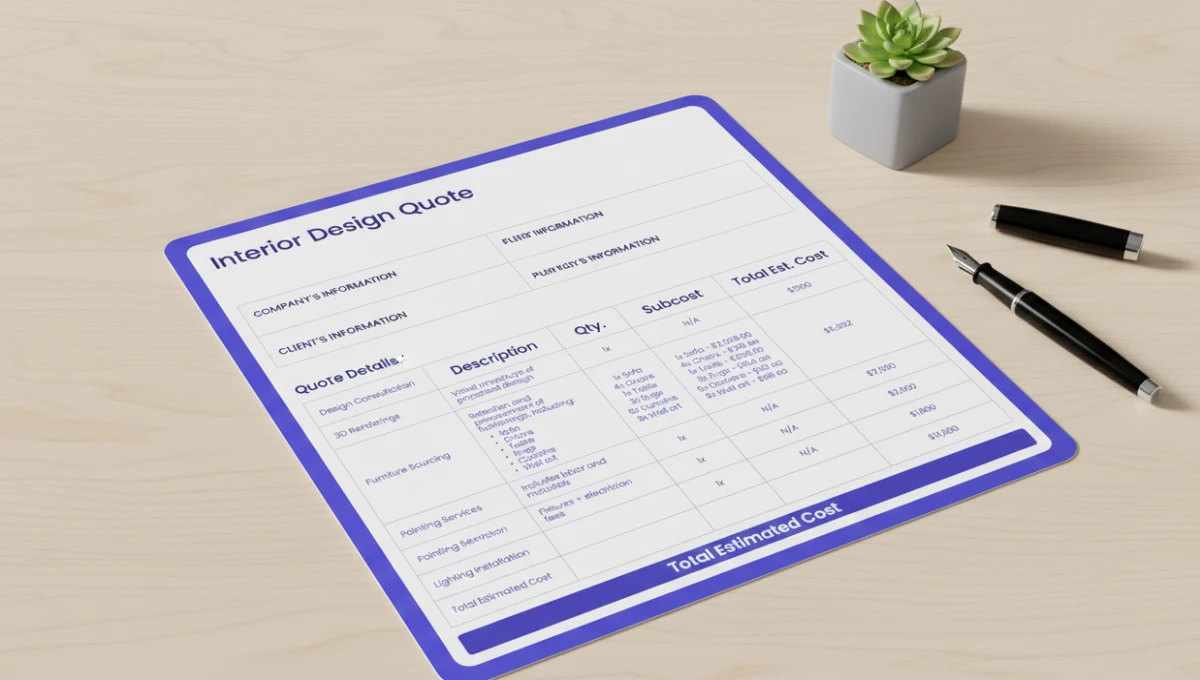
These additional costs — the actual furniture, materials, and construction — are almost always the largest portion of a project’s total spend. A designer whose fee is $8,000 might be overseeing a project where the total spend including furniture and renovation work is $60,000 or more.
Always ask your designer to walk you through exactly what their fee covers and what will be billed separately before you commit to anything.
What Drives Interior Designer Costs Up
Experience and reputation A designer with 15 years of experience and a strong portfolio commands significantly higher rates than someone just starting out. That experience usually translates to fewer mistakes, better vendor relationships, and more efficient project management — which often saves money overall.
Project complexity A single-room refresh is straightforward. A whole-home renovation with structural changes, custom furniture, and high-end finishes requires far more time, coordination, and expertise. Complexity drives cost directly.
Location As the city breakdown above shows, location has an enormous impact. Designers in high-cost metros charge more simply because their operating costs — rent, staff, overhead — are higher.
Level of service A consultation-only service costs a fraction of full-service design with project management. Full-service design means the designer handles everything from concept through completion, including contractor oversight. That level of involvement is time-intensive and priced accordingly.
Timeline Rush projects cost more. If you need a space completed in 6 weeks instead of 6 months, expect to pay a premium for priority scheduling and expedited sourcing.
What Type of Designer Do You Need?
Not every project needs the same level of expertise. Understanding the difference between an interior designer and an interior decorator helps you hire the right professional for your specific situation.
An interior designer has formal education and training. They can work with structural changes, space planning, building code compliance, and coordination with architects and contractors. If your project involves moving walls, changing layouts, or significant renovation work, you need a licensed interior designer.
An interior decorator focuses on aesthetics — furniture, color, textiles, accessories, and styling — within the existing structure. No formal licensing is required in most states. If your space is structurally sound and you just want it to look better, a decorator can be a more affordable choice.
For homeowners exploring different 7 types of interior design styles before hiring someone, understanding what direction you want to go in first helps your designer work more efficiently which ultimately saves you money.
Virtual Interior Design A More Affordable Option
If your budget doesn’t stretch to traditional in-person design services, virtual interior design has become a genuinely good alternative. Online designers typically charge $159 to $2,099 per room — a flat rate that includes a design concept, furniture recommendations, a shopping list, and mood boards delivered digitally.
The tradeoff is that the designer can’t physically see your space, which means lighting nuances and spatial relationships can sometimes be harder to assess accurately from photos alone. For most homeowners working on a single room or a smaller refresh, though, virtual design delivers strong value at a fraction of the in-person cost.
Some well-known platforms offering virtual design services include Decorilla, Havenly, and Modsy. Many independent designers also offer virtual consultations starting at $150 to $300 per session.
How to Get the Most Value From Your Interior Designer
Be clear about your budget upfront. Designers work better when they know your real number. Don’t artificially inflate or deflate it — give them the honest figure so they can plan accordingly.
Prepare before your first meeting. Bring inspiration photos, a list of your must-haves, and a clear sense of how you use the space. The more direction you provide upfront, the less time gets spent on back-and-forth revisions.
Ask for a detailed scope of work in writing. Before signing anything, get a clear written description of what is and isn’t included in the fee. This protects both you and the designer and prevents misunderstandings later.
Ask about trade discounts. Many designers have access to trade pricing — typically 20% to 40% below retail — on furniture, lighting, and materials. Depending on your project size, these savings can meaningfully offset the design fee.
Clarify the billing structure. Know whether you’re on hourly or flat fee billing, and if hourly, ask for an estimated range of hours upfront. Set a clear approval process for any work that could push beyond that estimate.
If you’re also budgeting for other parts of your home at the same time, understanding interior paint cost per square foot helps you get a more complete picture of your total renovation spend before your first designer meeting.
Frequently Asked Questions
Q: Is it worth hiring an interior designer for a single room?
Yes, for most homeowners it is. A designer helps you avoid costly mistakes, identify pieces that work well together, and source items at trade pricing that’s often lower than retail. For a single room, many designers offer flat-fee packages starting around $1,500 to $3,500, which typically pays for itself in avoided mistakes and smarter purchasing decisions.
Q: What is the difference between an interior designer and an interior decorator?
An interior designer has formal education and can work with structural changes, space planning, and building code compliance. An interior decorator focuses purely on aesthetics — furniture, color, textiles, and accessories — within the existing structure. Designers typically charge more, but the scope of what they can help you achieve is significantly broader.
Q: How do I know if a designer is worth their fee?
Ask to see their portfolio, specifically projects similar in scope and style to yours. Ask for client references and actually call them. A designer who is confident in their work will welcome this. The fee is worth it when the designer’s experience, taste, and process align clearly with what you’re trying to accomplish.
Q: Can I negotiate an interior designer’s fee?
Yes, in many cases. Designers are often willing to adjust scope to fit a budget — doing design-only work without furniture sourcing, for example, or limiting the project to specific rooms. What they charge per hour or per project is typically less negotiable than the scope of work itself.
Arch Joy is a licensed interior designer with over 10 years of hands-on experience transforming residential and commercial spaces across the USA, Canada, UAE, and Europe.
With a background in architectural design and space planning, Arch specializes in modern, functional interiors — from open-plan living rooms to compact urban apartments and luxury home makeovers.
Every article on this site is written or reviewed by Arch Joy to ensure the advice is accurate, actionable, and grounded in real project experience.
B.Arch – Architectural DesignBased in USA | Serving Global Clients10+ Years Professional Experience






1 thought on “How Much Does an Interior Designer Cost in 2026”
Comments are closed.