Last Updated on 4 months ago by
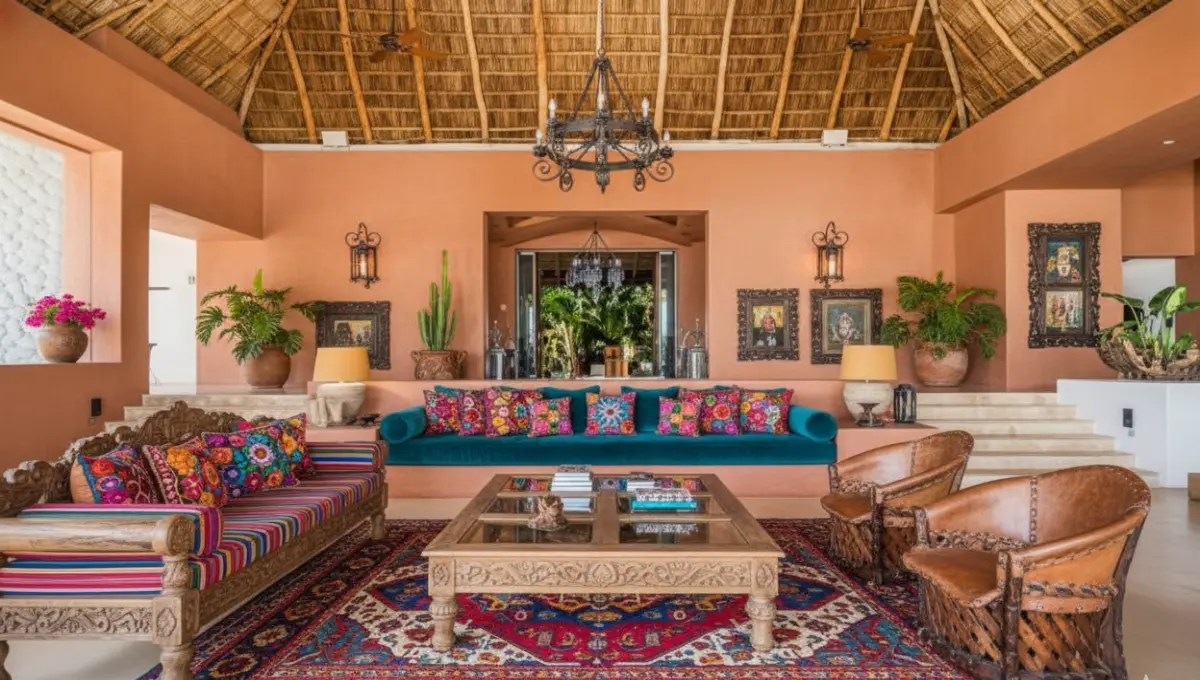
The moment you step into a well-designed Mexican home, you’ll feel it. There’s a warmth to the walls. Every corner has its own character. It feels like the space was designed with purpose and love, not just picked from a catalog.
That’s the essence of modern Mexican interior design, and it’s why the style has been growing in popularity across the United States, Canada, and Europe in the past few years. It takes Mexico’s rich cultural heritage handmade tiles, woven fabrics, earthenware terracotta, and bright colors like cobalt and mustard—and strips away the unnecessary to create something that’s both timeless and truly refreshing.
Whether you’re just renovating a room or starting from scratch, this guide will show you step-by-step everything you need to make your home ready for 2026.
Modern Mexican Interior Design Different
Essentially, modern Mexican interior design is all about balance. It honors a deep and specific cultural heritage, but doesn’t let that heritage overpower it. This modern take on the style practices a restraint not typically seen in traditional Mexican interiors instead of layering cultural elements on every available surface, handcrafted objects are used as focal points against a calm, earthy backdrop.
Think of it this way: Traditional Mexican design says more is better. Modern Mexican interior design says one extraordinary thing, thoughtfully placed, is worth more than ten ordinary things scattered about.
The result is a home that is warm, grounded, and full of story but never cluttered or theme park-like.
The Core Elements
Color
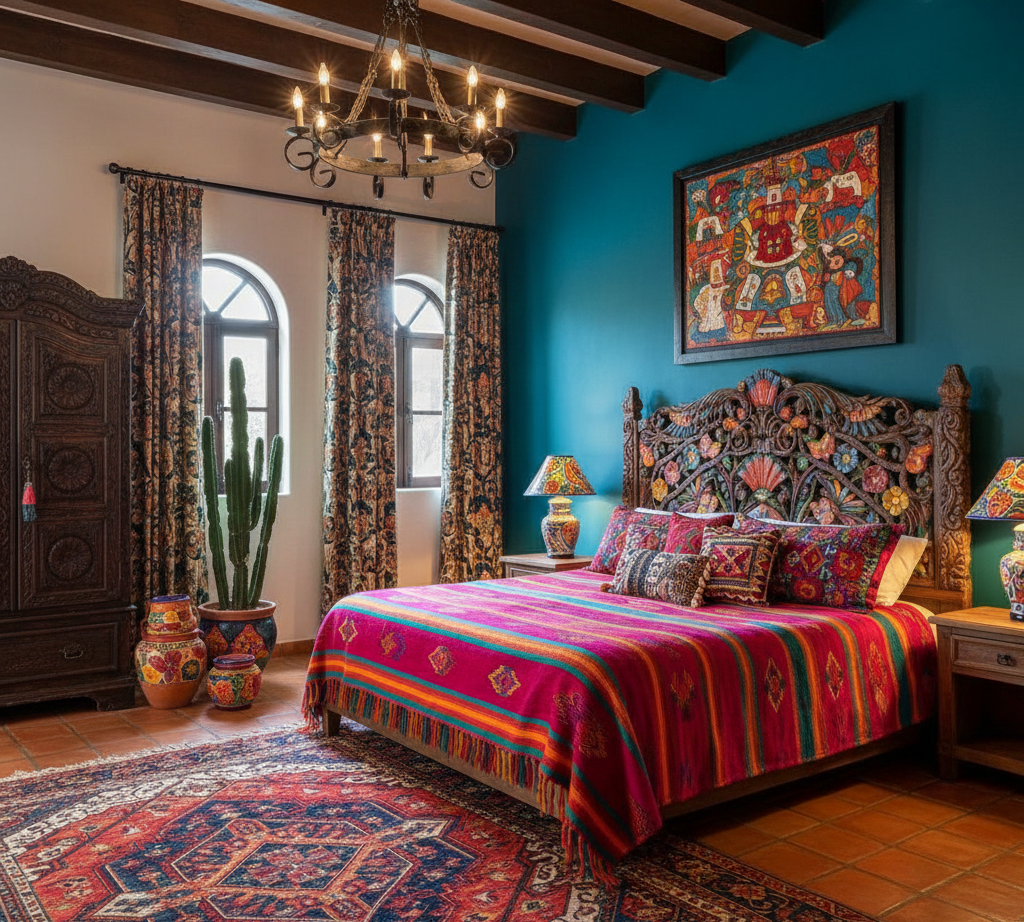
When it comes to Mexican design, people think of color first, and for good reason. The color scheme is distinctive and deeply rooted in the Mexican landscape —terracotta, dusty adobe, sun-bleached creams on one side, and cobalt blue, mustard yellow, burnt orange, and deep red on the other.
In the modern context, neutral colors close to the earth play a key role. Warm whites, sandy beiges, terracotta, and warm gray-browns serve as the base. Then, bold accent colors are deliberately added a cobalt blue tiled backsplash in the kitchen, mustard yellow throw pillows in the living room, a deep red woven rug on the floor. These accents bring energy and vibrancy to the space without overwhelming it.
The basic rule of modern Mexican interior design is: choose one or two bold accent colors and use them consistently throughout the room. Three colors can also be used, if they are chosen carefully. More than that can make the space feel cluttered rather than vibrant.
Natural Materials
Natural materials are the structural backbone of this style both literally and aesthetically. Wood, clay, stone, and woven fibers all have deep roots in Mexican craftsmanship traditions, and they translate beautifully into contemporary interiors.
Terracotta is perhaps Mexico’s most iconic material. Whether as clay tiles on floors, rough plaster on walls, or handmade pottery on shelves, terracotta brings an earthy touch that no artificial material can replicate.
Wood — especially locally harvested pine, mesquite, or walnut is used for furniture, ceiling beams, and decorative trim. Visible wood grain, natural forms, and simple, clean designs are hallmarks of the modern version of this style, with handcrafted wooden furniture.
Stone—roughly cut limestone, slate, and igneous rockcreates a connection to the Mexican landscape and adds texture. A stone accent wall, kitchen countertop, or bathroom floor beautifully reinforces this array of natural materials.
Rugs, baskets, wall hangings, and home furnishings are made from woven fibers like jute, sisal, agave, and cotton. These handmade textiles bring a warmth and texture that perfectly complement the hard natural elements.
Handcrafted Details
If natural materials are the body of modern Mexican interior design, then handcrafted craftsmanship is its soul. Mexico has one of the richest artisanal traditions in the world and the modern version of the style honors that tradition through selective and purposeful choices rather than using it all over every surface.
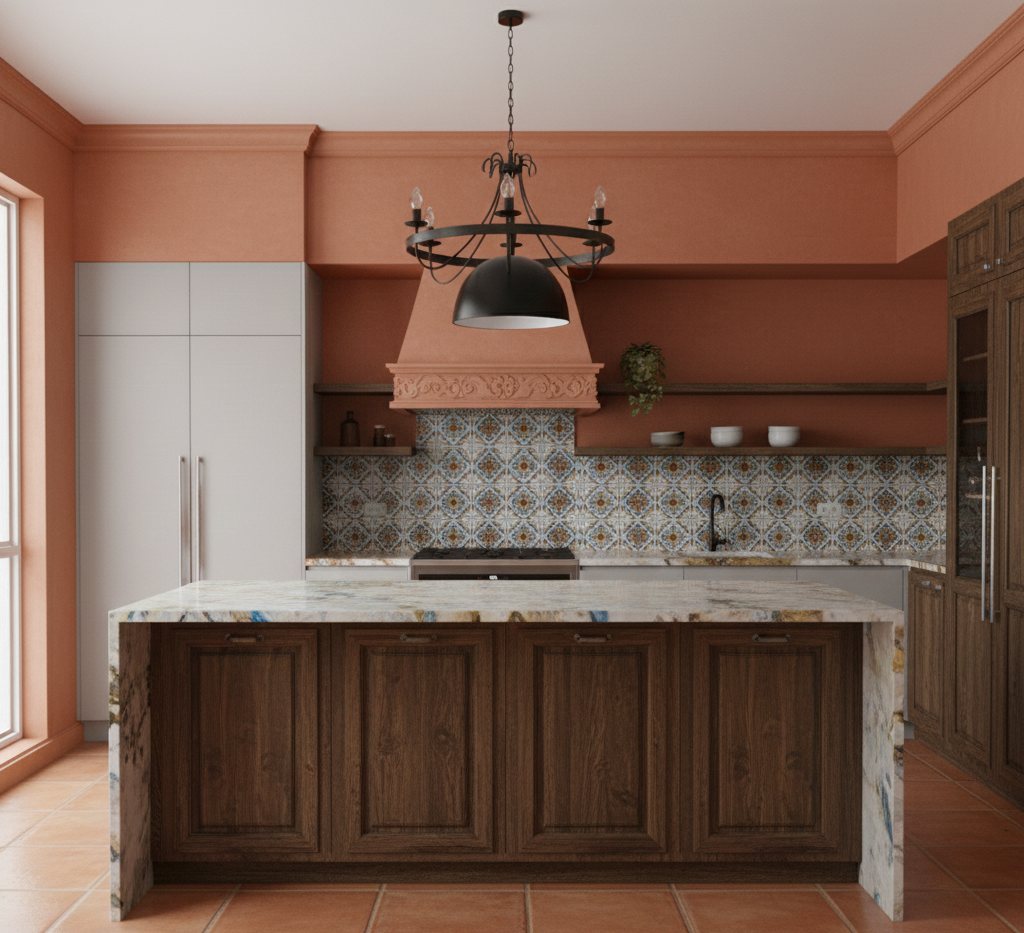
Talavera tiles are its most recognizable element. These hand-painted ceramic tiles in blue-and-white or multicolored patterns are used as kitchen backsplashes, bathroom accents, and decorative insets. Used in a specific area rather than an entire space, a single piece of Talavera tile becomes a strong focal point that gives the entire room a foundation.
Wahacan wood carvings brightly painted wooden animals and figurines add color and whimsy to shelves and side tables. Hand-blown glassware from Tlaquepaque is featured in pendant lights, vases, and goblets. Embroidered textiles from Chiapas and Oaxaca bring intricate, hand-crafted designs to throw pillows, table runners, and wall hangings.
Modern style is all about picking these things out. A beautiful Talavera backsplash in the kitchen is much more powerful than using Talavera everywhere. A single carved Oaxacan figurine on a shelf tells a story. A dozen figurines compete with each other.
Architecture
The most distinctive elements of Mexican design are architectural. Arched doorways and windows soften the rigid geometry of modern interiors, creating a sense of flow. Exposed wooden ceiling beams bring warmth to the room a reference to traditional hacienda construction. Large courtyards, covered patios, and sliding glass doors that connect the interior to the garden reflect a distinctly Mexican philosophy of living close to nature.
Not all homes can incorporate all of these elements but small gestures can make a big difference. A curved archway between two rooms, a wooden beam above the kitchen island, or a large sliding glass door that opens onto the patio any of these can take a space in that direction.
Room-by-Room Guide
Living Room
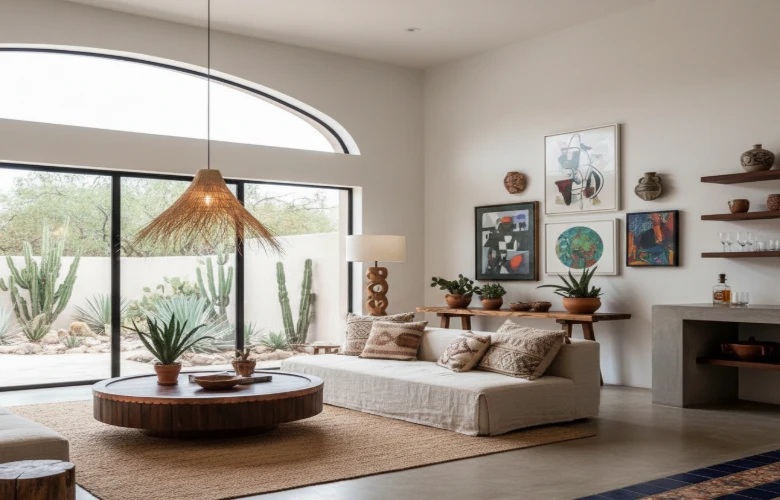
Modern Mexican living rooms are built on comfort and visual interest. Start with low-slung seating in warm neutral fabrics natural linen, cotton canvas, or warm camel or cream leather. Add a natural wood coffee table that shows its grain and character. Let the textiles do the work of color: a geometric Zapotec-inspired rug in terracotta and cream, a cobalt blue or mustard throw pillow, and a handwoven blanket casually draped behind the sofa.
An accent wall in warm terracotta or deep adobe creates a strong focal point without having to paint every wall with bold color. Wrought iron details in light fixtures, picture frames, and hardware add structure. This material has a distinctly Mexican character that works wonderfully alongside wood and clay.
Plants are key here. Large potted cactus in terracotta containers, agave plants, and tropical species these reinforce the indoor-outdoor connection that is at the heart of this style.
Kitchen
The most dramatic and functional expression of modern Mexican interior design occurs in the kitchen. A Talavera tile backsplash behind the stove or next to the countertop anchors the space it becomes the focal point of the room. Place items on open shelving that bring the style to life: hand-painted ceramic dishes, clay pots, copper cookware, hand-blown glass drinkware.
These everyday items also serve as decor but they don’t feel staged, they feel authentic. Simple hardware with natural wood cabinetry keeps the space modern. A copper fixture a farmhouse sink, cabinet pull, or range hood adds warmth and creates a distinctly Mexican material richness. A concrete countertop provides a neutral, contemporary surface that doesn’t compete with colorful tile and handcrafted accents.
Bedroom
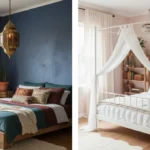
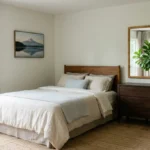
The modern Mexican bedroom is a warm, restful space. Keep the base calm white or warm cream walls, natural linen or cotton bedding. Richness comes from layered textiles and a few carefully chosen accessories.
A wooden bed frame with clean lines and a natural finish is the foundation of the entire room. An embroidered or hand-woven blanket at the foot of the bed —in terracotta, rust, or cobalt adds both color and warmth.
A Talavera lamp on the nightstand, a side table made of woven baskets next to it, and some dried botanicals in a small hand-painted ceramic vase —the cultural richness created by combining these details gives the bedroom a genuinely Mexican feel. Not like a souvenir shop.
Keep the window treatments light. White linen curtains let in natural light, and if there is a garden view outside, they beautifully frame it — a reminder of how important outdoor connection is in this style.
Bathroom
The bathroom is where this style is most dramatic. Talavera tile as a feature wall behind the sink, a decorative border around the mirror, or a patterned band on the shower any of these can make the space feel genuinely luxurious.
Starting with a terracotta floor brings that earthy warmth right away. White walls, a simple wooden vanity, and copper fixtures that’s all it takes to complete the palette. Nothing more is needed.
Small details do the most for the least amount of money. A handmade clay soap dish, a woven basket for storage, a copper mirror frame, and a small cactus or succulent in a terracotta pot all it takes is one thing to transform the look of a bathroom.
Design Section
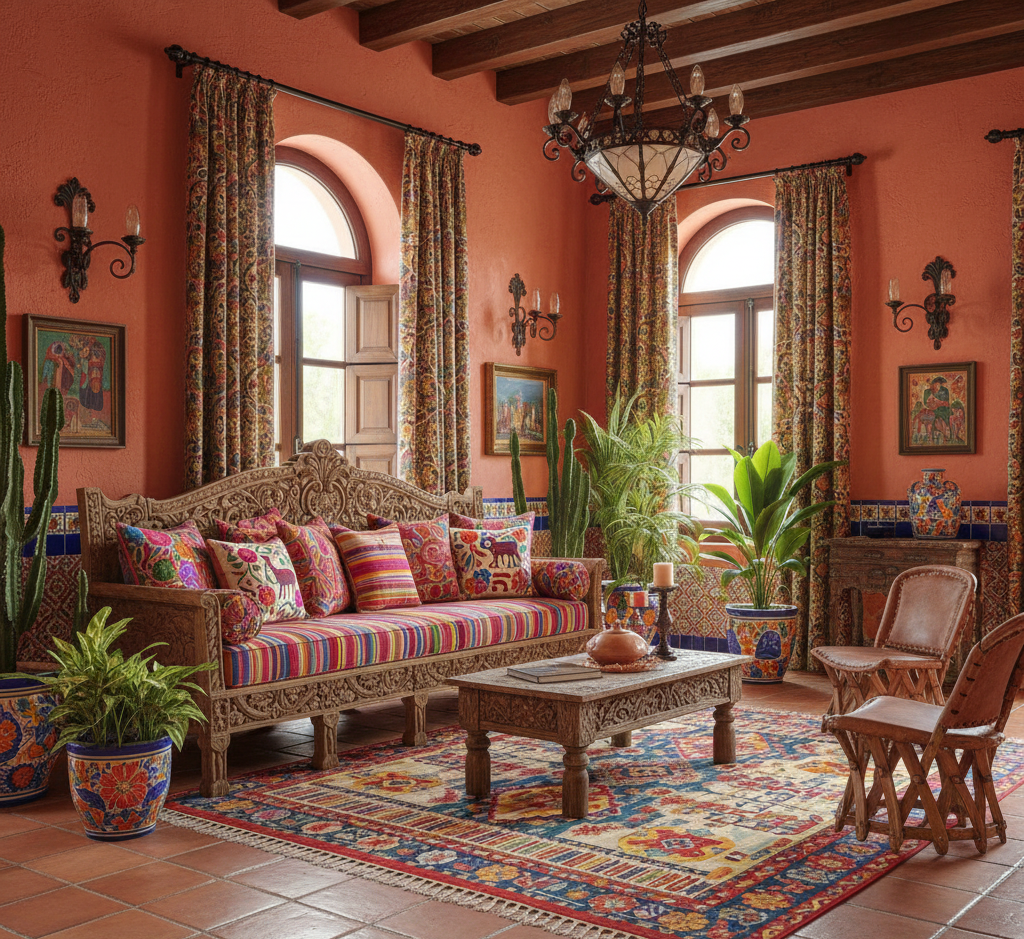
Start with one statement piece in each room. A beautiful Talavera backsplash, a hand-carved wooden dining table, a large Zapotec rug — one strong piece creates a home’s identity. Everything else supports it.
Mix handcrafted and contemporary. Mexican interiors that really work combine handmade cultural pieces with clean-lined modern furniture. A simple contemporary sofa, a hand-woven throw on it, a Talavera side table on the side that works. But if you fill the entire room with heavily carved rustic furniture, it’s no longer modern, it’s traditional.
Add plants, lots of them. Cactus, succulents, agave, large tropical species they all have their place in this style. A large specimen in a terracotta container creates that indoor-outdoor connection that’s the best part of Mexican living.
Buy from an authentic artisan. You can tell the difference between genuine hand-painted Mexican pottery and mass-produced imitations. There are many authentic Mexican artisan sellers on Etsy. And in cities with large Mexican-American communities, you can find genuine handcrafted pieces at a local Latin market or import store they’re worth the search.
Keep the base calm. Earthy neutral walls and simple contemporary furniture help the handcrafted accents stand out. If the background is too busy, the beautiful things will get lost in the noise.
How This Style Compares
Understanding how modern Mexican interior design sits relative to other popular styles helps you decide whether it’s the right direction and how far to take it.
Mexican vs. Rustic Both are styles value natural materials and warmth, but rustic interior design leans toward raw, unfinished surfaces and a countryside or cabin aesthetic. Modern Mexican is more colorful, more culturally specific, and more refined in its handcrafted detail.
Mexican vs. Bohemian There’s genuine overlap in the love of handmade objects and mixed textiles. But bohemian interior design is globally eclectic and culturally non-specific. Modern Mexican draws from a specific heritage with deliberate, intentional choices.
Mexican vs. Wabi Sabi Modern wabi sabi interior design shares an appreciation for natural materials and imperfection but is considerably more restrained and muted. Wabi sabi uses quiet neutrality as a core principle. Modern Mexican embraces color and cultural richness equally.
Mexican vs. Modern Classic Modern classic interior design leans toward European-influenced elegance and formal symmetry. Modern Mexican is warmer, more earthy, and considerably more personal in its cultural expression.
Mistakes to Avoid
The biggest mistake is to take everything literally. If you fill every surface with a Mexican motif, the space doesn’t feel designed, it feels themed. Choose pieces that are truly beautiful, and keep them intentionally. Cultural identity comes from the quality and character of what you choose not how much you put in.
Mixing too many bold colors together is another problem. Cobalt blue, mustard yellow, burnt orange, bright red these are all authentic parts of this palette, but not all together in the same room. Choose one or two accent colors, and keep them consistent throughout the space.
Don’t buy mass-produced imitations. You can tell the difference between authentic hand-painted Mexican pottery and factory-made versions by looking at them. Buy the real thing even if you buy less. A genuine Talavera tile section is worth much more than filling an entire backsplash with imitation tile.
Keep an eye on scale. A focused Talavera backsplash works great in a small kitchen. But putting Talavera on every wall in that same kitchen will make everything look overwhelmed. Make every decision by understanding the size of the space and the weight of the surrounding elements.
Frequently Asked Questions
Q: What are the key colors in modern Mexican interior design?
The base palette uses warm neutrals — terracotta, sandy beige, warm cream, and adobe. Bold accent colors include cobalt blue, mustard yellow, burnt orange, turquoise, and deep red. The most effective approach is to use earthy neutrals as the foundation and introduce one or two bold accent colors selectively through textiles, ceramics, and architectural details.
Q: What is the difference between traditional and modern Mexican interior design?
Traditional Mexican interiors tend to be ornate, maximalist, and richly detailed throughout every surface. Modern Mexican interior design takes the same cultural elements and uses them more selectively — as statement pieces against cleaner, calmer backgrounds. The result honors the tradition while feeling contemporary and uncluttered rather than overwhelming.

You actually make it seem so easy with your presentation but I find this matter to be actually something that I think I would never understand. It seems too complex and very broad for me.I’m looking forward for your next post, I will try to get the hang of it!
Thank you for your kind words! I’m glad you found the guide interesting. I’ll do my best to provide more detailed posts soon to make the topics easier to understand. Stay tuned for the next update .
Thanks
Thank you for your kind words! I’m happy the Modern Mexican interior design guide was easy to understand. I always aim to break down interior design concepts into simple, actionable tips.
is there a magazone you put out? My friends are building a home in Mexico and I sent them this link.
Are there magazines you like that are current?
Thanks for your question! We currently focus on publishing online guides rather than a printed magazine. All images and design ideas in the article reflect current interior design trends and styles used in modern homes. If your friends are building a home in Mexico, this guide should definitely help them with inspiration.