Last Updated on 4 months ago by
Design is made to break the rules. This is not an inspirational cliché. In postmodern interior design, breaking the rules is literally the foundation of the entire movement.
Postmodern interior design actually started as a kind of rebellion in the late 1970s. Modern design back then was very cold, formal—everything was “function first, form later.” But postmodernism came along and said that design didn’t just have to be functional—it could be fun, it could be weird, even a little dramatic.
What was the result? Spaces began to emerge that were completely different. Curved sofas, mismatched patterns, bright colors next to classical columns—everything seemed to be a bit of a contradiction on purpose. And the interesting thing is, “irony” was also used as a design tool. That is, design wasn’t just seriousit could also be playful.
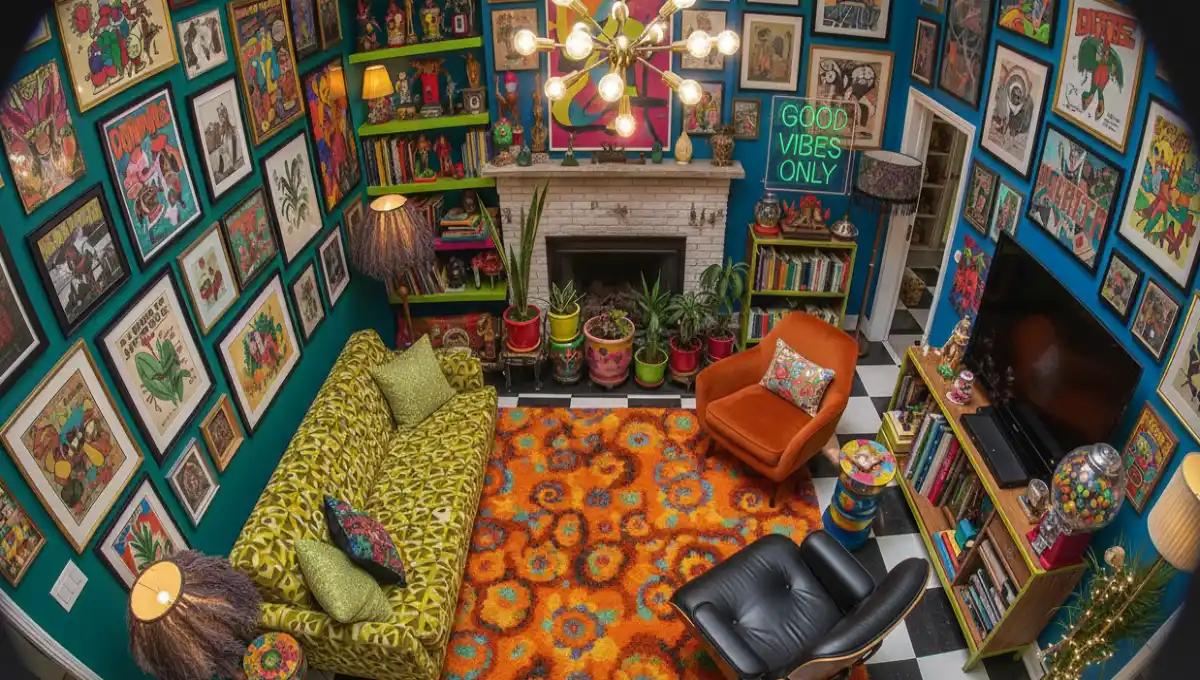
Now, in 2026, especially in many American cities—New York, Los Angeles, Miami, Chicago—postmodern design is making a comeback. But not as over-the-top as before. The current version is much more refined, more livable. That is, the original vibe—creativity, personality, a little quirky feel—is there, but without the clutter that was so obvious.
Many homeowners are now looking to break out of the monotony of minimalism. They are a little tired of seeing the neutral tones and clean lines of the past. They want something that will reflect their personality—that you can tell just by looking at it, that this house has its own character.
In this guide, you will get the whole thing clear—what are the main elements of postmodern design, how to use it according to the room, what a realistic budget can be, where to buy it in the USA, and most importantly—how to use this style to keep your space stylish, but without it looking like a time capsule from 1987.
What Is Post Modern Interior Design
The term gets used loosely online. Worth being precise about what it actually describes.
Post modern interior design is a philosophy, not a formula. It borrows freely from multiple historical periods simultaneously. It mixes high and low, serious and playful, traditional and contemporary, without apology or explanation. The style treats design history as a resource to plunder rather than a canon to respect. Nothing is too contradictory. Nothing is too theatrical. If it communicates something true about who lives in the space, it belongs.
Robert Venturi and Denise Scott Brown are widely credited as the founding voices of the movement. Their 1972 book “Learning from Las Vegas” made a direct argument: the visually complex, symbol-laden commercial architecture of the Las Vegas Strip was more honest about human experience than the severe buildings coming out of high modernism. Complexity, contradiction, and irony were not failures. They were design.
That argument translated into interiors that looked unlike anything before. Multiple competing floor patterns. Memphis Group furniture in bold geometric shapes and primary colors. Columns with no structural purpose. Oversized decorative elements used purely for effect.
The 2026 version keeps the core sensibility. Be bold. Be personal. Mix freely. Take design seriously but not too seriously.
The History Behind the Style
Modern design dominated the mid-20th century around one central conviction: rational, functional design could improve society. The Bauhaus school in Germany, Mies van der Rohe’s “less is more,” the International Style in architecture, all of these shared the belief that beauty and utility were the same thing and that ornamentation was essentially dishonest.
By the 1970s, that conviction had produced a global built environment of glass box towers, uniform housing blocks, and interiors that felt clinical and emotionally empty.
Postmodernism responded directly. In architecture, Michael Graves designed the Portland Building in Oregon in 1982 with classical columns and a giant painted figure on its facade. Philip Johnson topped the AT&T Building in Manhattan with a Chippendale broken pediment. Both were deliberately provocative by modernist standards. That was the point.
In interiors, the Memphis Group, founded in Milan in 1981 by Ettore Sottsass, produced the movement’s visual signature. The Carlton bookcase with asymmetrical laminate planes. The Bel Air chair in bold primary colors. Objects that looked more like three-dimensional paintings than functional furniture.
In the USA, post modern interior design filtered through the design culture of New York, Miami, and Los Angeles throughout the 1980s. South Beach’s Art Deco revival, the maximalist hotel lobbies of that era, and the bold graphic design of the decade all carry its influence. By the early 1990s the movement had exhausted its shock value and faded. In 2026, it’s back, and the designers leading its revival understand both what was brilliant about the original and what needs editing.
How to Start a Post Modern Interior Design Project Without Wasting Money
The biggest mistake people make is buying bold pieces without a plan. While postmodern design may seem spontaneous, it’s not. Every good postmodern room has a foundation usually a neutral foundation that supports the bold choices. Without that foundation, you’ll just get illusion instead of personality. Here’s a practical sequence that works, based on how we work on these projects:
Step 1: First, choose your one main piece of furniture. It could be your sculptural sofa, your striking chair, or your exceptional light fixture. Everything else in the room should coordinate with this piece. Don’t buy anything else until you know what it’s going to be. Budget $600–$3,000 for a good quality vintage or contemporary piece from Chairish, 1stDibs, or CB2.
Step 2: Create a neutral foundation around it. Paint the walls a warm white, greige, or light cream. Use a simple rug, which can be solid or very delicate in texture. This will make your main furniture feel intentional rather than abrupt. Benjamin Moore Chantilly Lace or Sherwin-Williams Alabaster fit perfectly here.
Step 3: Add a bold color in a specific area. A wall. An eye-catching wallpaper behind the bed. A set of dark kitchen cabinet doors. Not everywhere in one area. This is where Benjamin Moore’s Deep River, Sundance 2020-20, or Farrow & Ball Emerald prove their worth.
Step 4: Layer on pattern with textiles. A geometric patterned rug, two or three patterned throw pillows, maybe a graphic throw. Rugs USA, E-SellRags, and West Elm have some options that work well here, ranging from $150–$900. The key is: Your textiles should match the color of the main furniture by at least one color.
Step 5: Finally, add artwork. Artwork in a postmodern home should feel like an interesting addition — the detail that makes everything else make sense. Fine-tuned prints from Saatchi Art, local gallery exhibitions in cities like Chicago or Miami, and even Society6 are available at a variety of prices. A word of caution for contractors: If you’re doing any architectural work like arched doorways, painted columns, or striking tiles get a firm price agreement before you start work. We’ve seen clients in Houston and Atlanta get a quote of $4,000 for a tile backsplash, but end up paying $7,500 when the contractor used a “similar” tile that cost twice as much. Be sure to list the brand, SKU, and color of each material in writing. No exceptions.
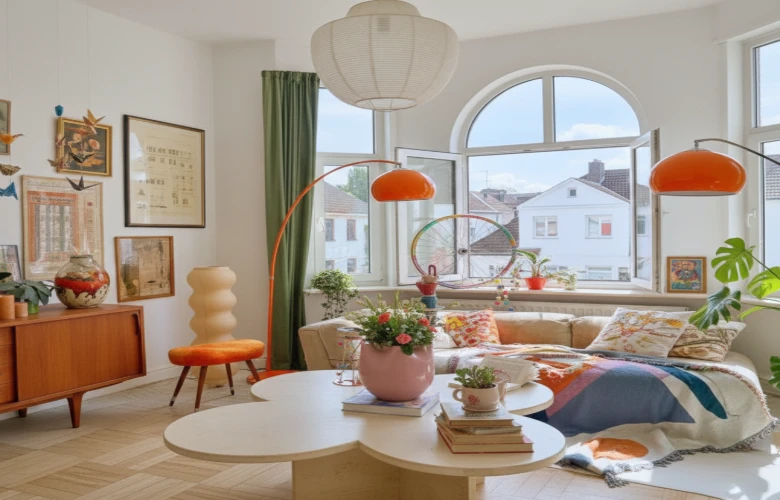
6 Core Elements of Post Modern Interior Design
1. Bold, Deliberate Color
Color in post modern interior design is not subtle. It is used intentionally and confidently, often in combinations that conventional design advice discourages.
The original postmodern palette ran to primary and secondary colors in high saturation. Cobalt next to cherry red. Bright yellow with black graphic patterns. In 2026, the palette has matured. The boldness remains but the specific colors are more sophisticated:
- Deep terracotta
- Saturated olive green
- Rich plum
- Electric teal
- Mustard yellow
- Saturated cobalt blue
The key is using bold color with intention rather than everywhere at once. One deeply colored wall in a neutral room. A single bold furniture piece against restrained surfaces. A saturated accent color carried through multiple objects. The contrast between bold and restrained is what gives the color its impact.
Specific paint recommendations that work well in post modern spaces: Benjamin Moore Midnight Navy 2067-10, Sherwin-Williams Antique Red SW 0006, Farrow and Ball Emerald No. 79, and Benjamin Moore Sundance 2020-20.
2. Geometric and Sculptural Forms
Post modern interior design does not trust rectangles. It reaches for triangles, circles, arches, irregular polygons, and forms that have no obvious precedent. Furniture silhouettes are sculptural. Architectural details are exaggerated. Shapes reference art history, science fiction, and pure invention simultaneously.
In 2026, the geometric element expresses itself most through furniture with unexpected silhouettes. Sofas with curved, asymmetrical arms. Coffee tables with irregular forms and graphic bases. Chairs where the proportions prioritize visual drama alongside actual comfort.
The original Memphis Group pieces are now sold as design classics. Reissues and contemporary interpretations are available through Design Within Reach, 1stDibs, and Chairish.
3. Pattern Mixing and Layering
One of the most distinctive features of post modern interior design is its willingness to layer multiple patterns within a single space. Geometric floor tile with graphic wallpaper. A patterned rug under a patterned sofa. A striped accent chair beside a check throw pillow.
The skill is maintaining enough color consistency across competing patterns that the room reads as intentional rather than chaotic. Three patterns sharing two colors can coexist convincingly. Three patterns with no color relationship will just fight each other.
4. Historical References Used Ironically
Post modern interior design borrows from design history without reverence. Greek columns used decoratively. Victorian moldings in a contemporary space. Medieval tapestry patterns on a modern sofa. These references are not meant to create a period-accurate environment. They are cited deliberately out of context, often exaggerated to make the reference visible.
This is what separates post modern interior design from historic revival styles. A Victorian interior tries to authentically recreate a Victorian environment. A postmodern interior quotes Victorian elements knowingly, making the reference part of the design conversation.
5. Deliberately Mixed Materials
Modern design was careful about material consistency. Post modern design mixes materials that conventional wisdom says should not coexist. Glossy lacquer next to rough stone. Polished brass beside raw concrete. Velvet upholstery on a metal frame. Plastic laminate that mimics marble without pretending to be marble.
The contrast between materials is the point, not a problem to resolve. In 2026, this translates to interiors where natural materials meet synthetic ones, rough surfaces sit beside polished ones, and the combination creates visual tension that keeps the space genuinely interesting.
6. Statement Pieces as Functional Art
Post modern interior design treats furniture and objects as art. A chair is not just something to sit in. It is a visual statement about the occupant’s relationship to design history and convention. A lamp is not just a light source. It is a sculptural object that happens to produce light.
This elevation of functional objects to art status is one of the most practical entry points into the style for American homeowners who are not ready to commit to a fully postmodern interior. A single sculptural chair or unusual light fixture introduces the sensibility without transforming the entire room.
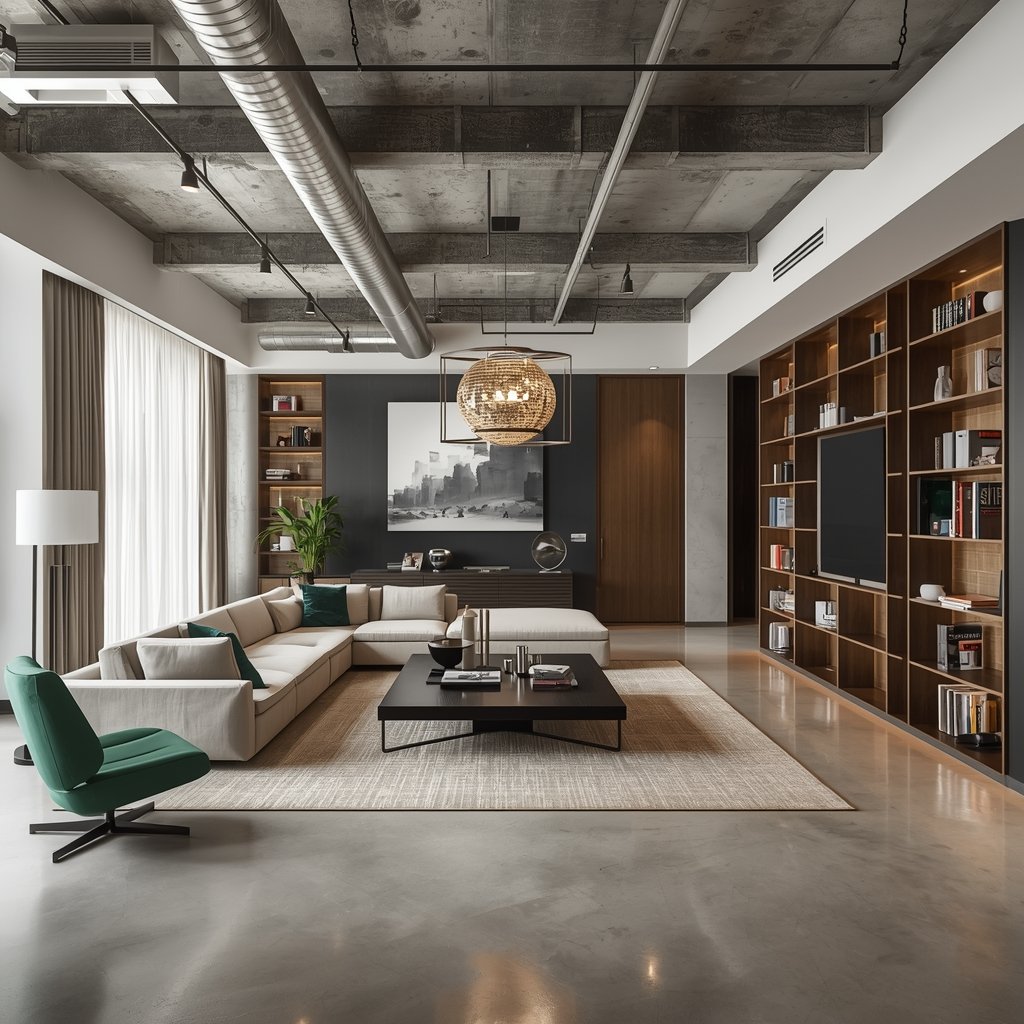
Post Modern Interior Design Room by Room
Living Room
The post modern living room is built around at least one statement piece that breaks the rules of the surrounding space. In a room with otherwise clean contemporary surfaces, a single piece of Memphis-influenced furniture introduces the style’s personality immediately.
Color comes through one wall or a significant textile. Deep terracotta, rich plum, or electric teal on a single wall creates a backdrop for statement furniture without overwhelming the room. Remaining walls stay neutral, which makes the bold wall more powerful by contrast.
Pattern enters through the rug and throw pillows. A geometric rug in two or three colors paired with pattern-mixed cushions creates layered visual complexity without structural changes.
Art in a postmodern living room is typically graphic, large-scale, and conceptually loaded. Pop Art references, abstract geometric compositions, and works that play with perception all fit the style. Artsy, Saatchi Art, and local art fairs in cities like New York, Los Angeles, and Chicago are good sources for work that complements post modern interior design in residential settings.
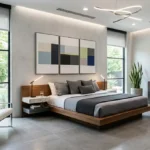
Bedroom
The post modern bedroom takes its cue from maximalist hotel design in cities like Las Vegas, Miami, and New York, where bold pattern, saturated color, and theatrical lighting have been standard practice for years.
The bed frame is the room’s statement piece. Upholstered headboards with unexpected shapes, oversized proportions, or graphic fabric choices all align with the style. Wallpaper behind the bed is one of the most effective moves available. Bold geometric patterns, large-scale florals in unexpected colorways, or pattern combinations that conventional design would avoid all work well here.
Brands including Farrow and Ball, Cole and Son, and Hygge and West produce wallpapers that suit post modern bedrooms at various price points.
Kitchen
The post modern kitchen resists the uniform aesthetic that dominated American kitchen design throughout the 2010s. Colored cabinetry is the most direct expression. Deep navy base cabinets with cream uppers. Saturated green on a kitchen island contrasting with natural wood-tone perimeter cabinetry. Bold terracotta tile on one wall behind the range while other walls stay neutral.
Graphic backsplash tile in geometric patterns is one of the most affordable entries into post modern kitchen design. Fireclay Tile, Heath Ceramics, and Cle Tile all carry options that fit the style at varying budgets.
Mixing hardware finishes, considered an error in conventional kitchen design, is a deliberate choice here. Brass pulls on painted cabinets with matte black fixtures. Polished nickel hardware on dark cabinetry with a copper sink. The mixing feels intentional when the choices are made confidently.
Bathroom
The post modern bathroom uses the confined scale of the room to create a concentrated version of the style’s visual intensity.
Bold geometric floor tile is the most transformative single element. A black-and-white geometric pattern, a primary-color mosaic, or a pattern referencing historical tile work ironically all create the visual impact the style calls for. In a bathroom the contained scale means a bold floor tile that might feel overwhelming in a larger room reads as exactly the right intensity.
The vanity should be a design statement. A freestanding piece with architectural character or a console referencing industrial design history works better than standard builder-grade cabinetry. Signature Hardware, Kohler, and custom millwork shops in major cities offer options across the budget spectrum.
Post Modern Interior Design vs. Other Styles
Understanding where post modern interior design sits relative to adjacent styles helps you decide how far to take it and how to layer it with elements you already love.
| Style | Key Difference from Post Modern |
|---|---|
| Modern | Values restraint and function. Post modern deliberately rejects both. |
| Mid-Century Modern | Functional elegance with organic forms. Post modern is ironic and theatrical where MCM is earnest. |
| Bohemian | Global eclecticism, organic accumulation. Post modern is more conceptually deliberate and geometrically structured. |
| Brutalist | Raw materials and structural honesty. Post modern uses irony and historical reference. Brutalism is serious where postmodernism is playful. |
| Modern Classic | Uses historical references earnestly for refinement. Post modern uses them ironically and out of context. |
Post Modern Interior Design Cost Breakdown
One thing most design guides skip entirely: what this actually costs in the USA. Here are real numbers.
| Approach | Estimated Cost Per Room | What It Gets You |
|---|---|---|
| Budget entry | $200 to $800 | Bold paint on one wall, graphic rug, thrift store statement piece, one piece of graphic art |
| Mid-range | $2,500 to $8,000 | Quality vintage furniture, graphic wallpaper, bold tile backsplash or floor, designer light fixture |
| High-end | $15,000 to $50,000+ | Authentic Memphis Group pieces, custom cabinetry, professional design services, full room transformation |
| Full home (mid-range) | $20,000 to $60,000 | Complete post modern interior across multiple rooms with quality pieces throughout |
For most American homeowners, the mid-range approach delivers the strongest results relative to investment. A quality vintage sofa with an unusual silhouette from Chairish ($800 to $3,000), a bold geometric rug from Rugs USA or eSaleRugs ($300 to $900), and graphic wallpaper on one wall from Cole and Son or Hygge and West ($200 to $600) transforms a room convincingly for under $5,000 total.
Understanding what professional interior designers charge helps if you want professional help executing a post modern interior. Hourly rates for designers experienced with this style run $100 to $350 in most USA markets, with flat-fee project packages starting around $3,000 for a single room.
Where to Shop for Post Modern Interior Design in the USA
Finding the right pieces matters as much as knowing the design principles.
For furniture and statement pieces:
- Chairish and 1stDibs for vintage and authentic Memphis Group pieces
- Design Within Reach for contemporary reissues of classic postmodern designs
- CB2 and West Elm for accessible sculptural furniture with postmodern sensibility
- Local estate sales in New York, Los Angeles, Miami, and Chicago for genuine 1970s and 1980s pieces at reasonable prices
For graphic wallpaper:
- Cole and Son (UK brand widely available in USA) for bold geometric and graphic patterns
- Hygge and West for more affordable graphic options
- Tempaper and Chasing Paper for removable peel-and-stick options ideal for renters
For graphic tile:
- Fireclay Tile for handmade geometric options in bold colors
- Heath Ceramics for designer-quality tile with graphic character
- Floor and Decor for budget-friendly geometric tile starting around $3 per square foot
For art:
- Artsy and Saatchi Art for original work with postmodern sensibility
- Society6 and Minted for affordable graphic prints
- Local gallery openings in major cities for original work at accessible price points
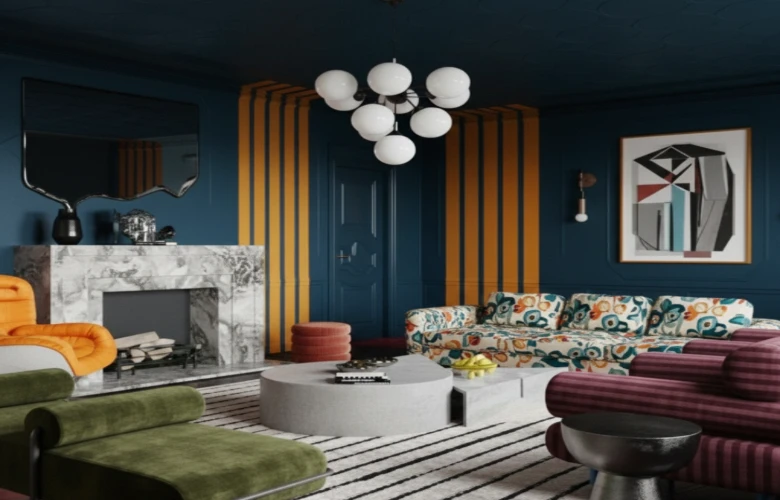
Common Post Modern Interior Design Mistakes
Going too literal with the 1980s. Recreating the original postmodern moment in its most dated form is the most common mistake. Neon colors, the most extreme Memphis pieces, and the full visual language of 1980s excess reads as costume rather than design in 2026. Take the philosophy and sensibility from the movement, not the most extreme aesthetic signatures of its peak period.
No neutral foundation. The contrast between bold and restrained is what makes postmodern choices read as deliberate. When every surface competes simultaneously, the room becomes exhausting rather than interesting. A neutral foundation is what gives bold elements their power and prevents the space from feeling chaotic.
Choosing bold without choosing well. One genuinely excellent piece with unusual form does more than five aggressively styled but poorly designed objects. The style’s wit depends on design intelligence, not just visual noise.
Ignoring scale in small spaces. Sculptural furniture needs physical space to read correctly. Scale each piece to the room even when breaking every other rule.
How to Get Started With Post Modern Interior Design Today
The style is easy to approach gradually. Most American homeowners begin with one or two moves rather than a full room transformation.
Start with a statement piece. A single sculptural chair in a living room otherwise designed in a different aesthetic introduces the spirit of post modern interior design without requiring anything else to change. The chair makes the statement. The rest of the room can stay exactly as it is while the room’s personality shifts.
Add a bold rug. A large geometric rug in two or three strong colors brings postmodern energy into any room without touching the walls, furniture, or architecture. Rugs are also the most easily changed major design element, which makes them a low-commitment test of a direction.
Use bold color on one wall. A single deeply saturated wall in a room where everything else stays neutral creates the contrast and drama that post modern design depends on. One quart of paint costs under $20. The effect on a room’s personality is significant.
Mix something historical with something contemporary. A vintage chair from a completely different era placed deliberately beside a contemporary sofa creates the temporal mixing that is fundamental to post modern interior design. Estate sales, antique markets, and platforms like Chairish are the best sources for this kind of piece in cities across the USA.
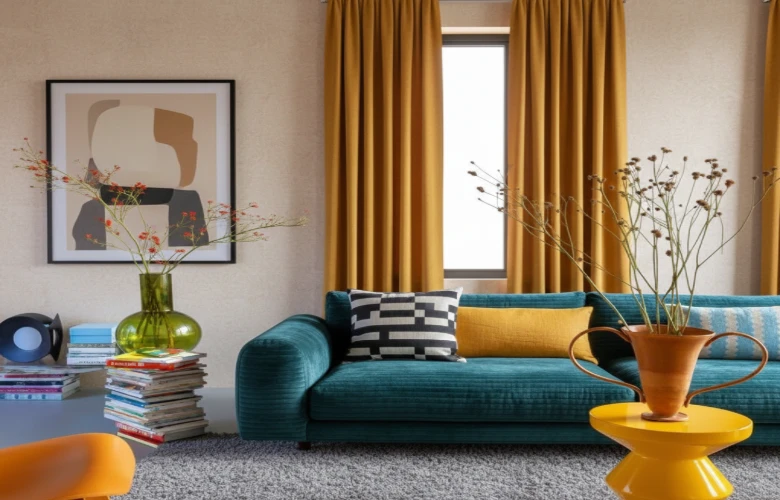
Post modern interior design style
Post modern interior design style is about disobeying and combining comfort and creativity with it. This style is an exaltation of vibrant colors, geometric forms, and unusual blends unlike stringent modern design. It is a combination of art, personality and functionality that is expressive and comfortable to the contemporary American households.
Frequently Asked Questions- Post Modern Interior Design.
What is the postmodern interior design?
The Postmodern style of interior design is a form that disobeys the conventional rules. It employs vivid colors, innovative designs and blended fabrics to convey individuality and liberation within a room.
What is the 3 5 7 rule of interior design?
This rule of 3 5 7 implies that an odd number of decorative objects ( 3, 5 or 7 ) should be used to achieve a greater visual balance and interest in the interiors.
What is the 60/40 rule of interior design?
The principle of 60/40 rule consists of 60 percent of a major color and 40 percent of a secondary one to make the space balanced and easier to the eye.
What is the 3 4 5 rule of interior design?
The 3 4 5 rule is used with the spacing and proportions. It is mostly applied to match the size of furniture and decorative items to give a natural flow in a room.
How to choose lighting fixtures for post modern interior design?
Try to Select resolute, sculptural fixtures of unusual shapes or vivid colors. Find statement lamps or unique shaped hanging lights, which serve as works of art.
Where can I find examples of postmodern living room decor?
Inspirations can be found in Pinterest, interior design blogs or in design magazines. Inspirational searching of 1980s Memphis-style interiors is also very visual.
Can post modern interior design be costly?
Depending on the selection of materials and furniture, it can be cost effective.
Is it possible to combine post modern with other styles?
Yes, it is good mixed with modern or rustic.
Conclusion
Post modern interior design is a most expressive and creative interior design style in the market today. It does not restrict freedom, personality and artistic expression yet it is functional. It is after knowing what constitutes post modern interior design and the ways in which it differs with the mid century modern interior design that you can select the most appropriate mix to use in your home. Even minor details, considerate decisions, and individual fashion can make a difference and make any place special and significant.
If you are planning a project, you can check our guide on Interior Design Quotation to learn how pricing works.

1 thought on “Post Modern Interior Design ,Colors & Cost Ideas 2026”