Last Updated on 4 months ago by
Walk into any house and the living room tells you everything. How the family lives. What they care about. Whether anyone actually wants to spend time there. I’ve been in hundreds of homes across New York, Texas, and California over the years. The ones that feel good all have one thing in common every decision was made on purpose.
This isn’t a mood board article. It’s real living room interior design ideas with actual layouts, real budgets, and honest advice. What works in a 900 sq ft Brooklyn apartment is not the same as what works in a 2,500 sq ft house in Austin. I’ll cover both.
Why Most Living Rooms Feel Off
Here’s what I keep seeing: someone spends $1,800 on a sofa, ignores the lighting, pushes all the furniture against the walls, and then can’t figure out why the room still feels wrong.
The furniture-against-the-wall habit is probably the most common mistake I see in American homes. It sounds backwards, but pulling your pieces away from the walls even just 8 to 12 inches creates a better conversation area and makes the room feel bigger. I saw this fix a narrow living room in a Chicago condo last spring. Same furniture. Same square footage. The owner was genuinely shocked.
A few other things that quietly wreck a room:
- One overhead light with no backup (makes everything feel flat and harsh)
- Art hung too high (center it at 57 to 60 inches from the floor, not near the ceiling)
- A rug that’s too small (it should sit under the front legs of all your seating, not just under the coffee table)
- Too many things competing for attention at once
Fix those four things and you’ve already handled most of the problem.
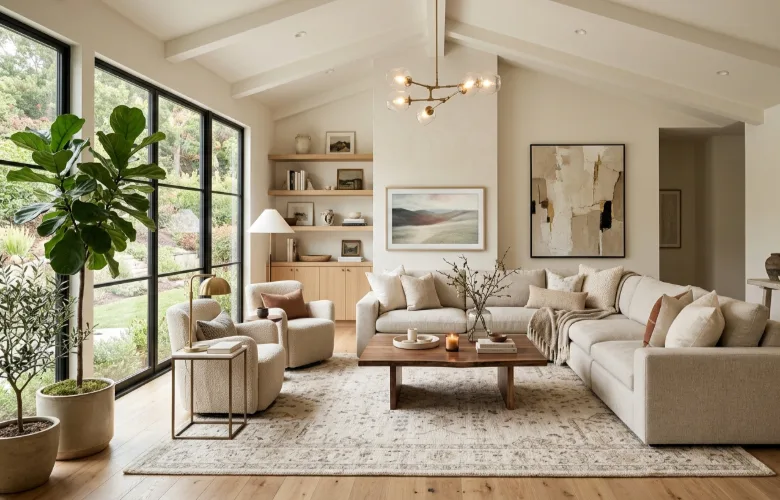
The 5 Things Every Living Room Needs
Start With Layout, Not Furniture
Before you buy anything, figure out how people move through the room. Where do they come in? Where do they naturally sit down? What’s the main focal point a fireplace, a TV wall, a window with a good view?
Most living rooms do well with one central seating area. A sofa, one or two chairs, a coffee table close enough that people can actually talk. If you have an open floor plan (very common in newer homes across the South and Midwest), your furniture has to define the space since the walls won’t.
For a long, narrow room: try placing the sofa perpendicular to the long wall instead of along it. It breaks up the tunnel feeling and helps the room breathe.
Furniture That Fits the Space
Scale matters more than style. A big sectional that looks great in a showroom will completely take over a 12×14 room. Measure the space before you go shopping. General rule: 18 inches between the sofa and coffee table, at least 30 inches for any walkway.
If budget is tight, IKEA’s KIVIK sectional and HAVSTA storage pieces have held up well in client homes I’ve checked in on. Wayfair has solid mid-range options if you’re willing to wait for a sale. West Elm and Pottery Barn are worth it for pieces you plan to keep long-term the frame quality is genuinely better.
When money is limited, put it toward the sofa first. Side tables and accent chairs can wait.
Lighting The Layer Most People Skip
One overhead light is the number one reason living rooms feel dull. You need at least three: ambient (the ceiling light), task (floor lamps, table lamps), and accent (wall sconces, a light strip behind the TV cabinet).
Last year I worked on a room in Denver where we kept everything exactly the same and just added two floor lamps and a dimmable ceiling fixture. The client said it felt like a different house. Total cost: about $380.
In rooms with high ceilings older craftsman homes in Portland and Seattle tend to have these a pendant or chandelier brings the eye down and makes the space feel less like a warehouse.
Color That Actually Works in Your Room
Online color advice is almost always too vague. “Gray is neutral” except north-facing rooms in the Pacific Northwest turn gray walls muddy by late afternoon in winter. The right color depends on your specific light.
South-facing rooms handle cooler whites and lighter grays well. North-facing rooms need warm undertones creamy whites, soft greiges, warm taupes. East-facing rooms look beautiful in the morning and need colors that still work in afternoon shadow.
Sherwin-Williams Accessible Beige (SW 7036) and Benjamin Moore White Dove (OC-17) are two I keep coming back to. Both read neutral without going cold. For something with more character, Sherwin-Williams Evergreen Fog (SW 9130) has shown up in a lot of 2025 and 2026 projects and works in more rooms than you’d expect.
Accessories Without the Mess
Accessories make a room feel personal. Too many make it feel scattered. The answer is editing. Pick a loose direction natural textures, a color family, a design style and run everything through that filter.
Three plants look better than seven spread around randomly. One large piece of wall art beats five small frames fighting for attention. A throw and two pillows that actually go together look more put-together than a pile of random patterns.
Living Room Styles: What Works in a Real Home
Modern Living Rooms
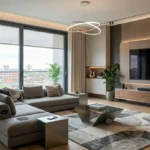
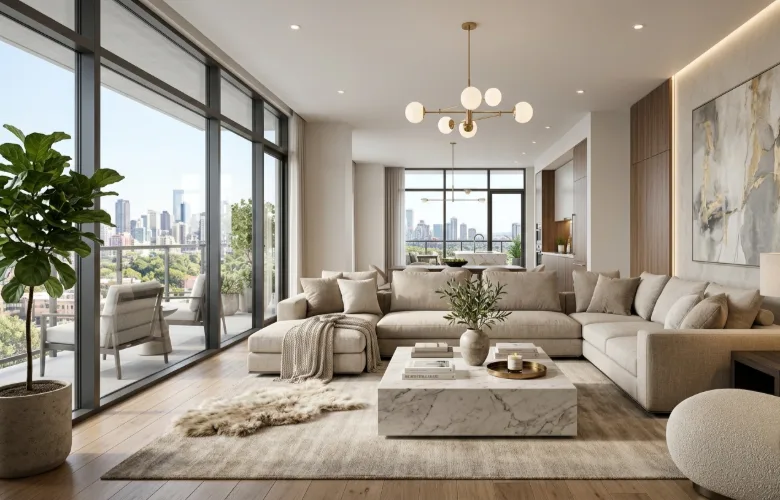
Clean lines, simple furniture, neutral tones. The trick is keeping it from feeling cold. One good texture, one warm accent. A concrete planter, a linen sofa, some visible wood grain these keep a modern room from feeling like a hotel lobby.
A client in Miami went with Calacatta marble side tables, a low charcoal sofa, and wide-plank white oak floors. Total furniture cost: around $4,200. It photographs well and feels even better in person because they kept the fabrics warm. For more ideas on materials and layout, the modern interior design guide is worth a read.
Farmhouse Living Rooms
Shiplap, reclaimed wood, soft linen. This style is forgiving it works with mixed furniture and handmade pieces in a way modern design doesn’t.
The problem is when it gets too themed. Real farmhouse rooms feel like they were put together over time, not ordered from the same catalog. One good antique from an estate sale does more than a whole matching set from a big box store.
Stick with white or cream walls, a jute rug, and warm-toned wood. Gray-washed finishes are starting to look tired.
Scandinavian and Boho
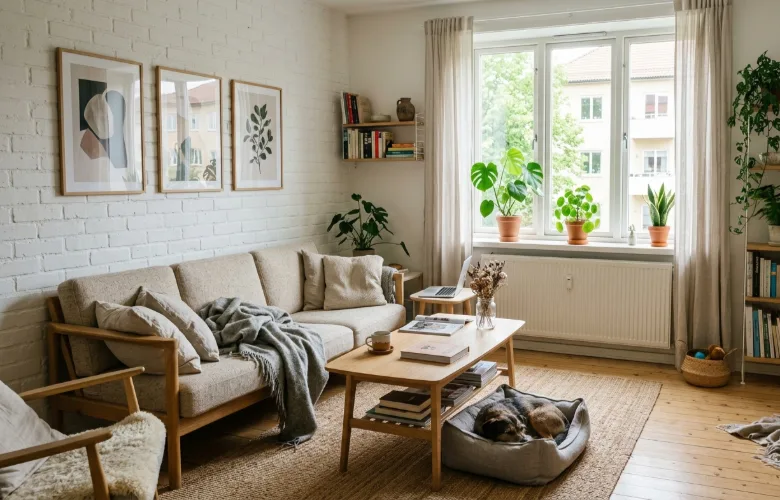
Scandinavian works because it’s simple and light. White walls, natural wood, clean upholstery. The risk is ending up with a room that looks exactly like an IKEA display. Add one or two pieces with more personality to fix that.
Boho is the opposite: layered textiles, plants everywhere, vintage rugs, collected objects. It’s easy to overdo. The anchor piece usually the rug sets the color story for everything else. Get the rug right and the rest is easier.
Both styles use natural materials and both connect naturally to rustic interior design if you want to mix in some of those ideas.
Small Living Room Ideas
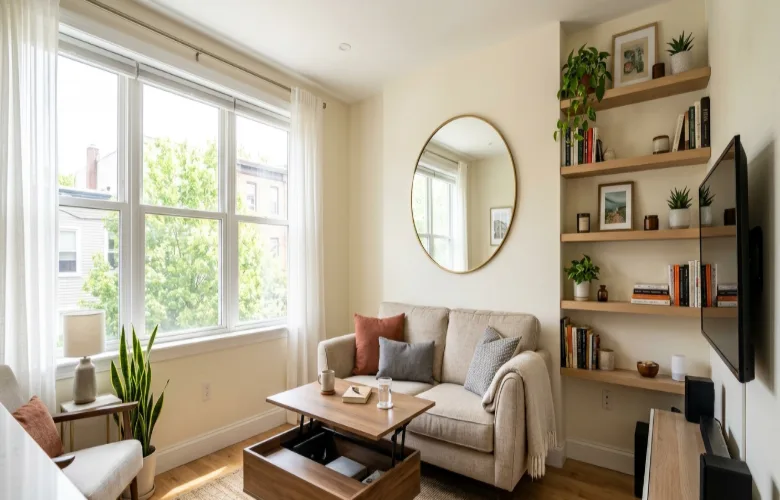
Yes, mirrors help. A big mirror across from a window bounces light and adds depth. But that tip shows up in every article and then the advice just stops. Here’s what else actually works in rooms under 150 square feet:
Furniture with legs. Sofas and chairs that sit on visible legs open the room up. The eye can see floor space underneath, and the room reads as less blocked. Pieces that sit flat on the floor eat visual space.
Vertical storage. Shelves that go up close to the ceiling draw the eye up and free floor space. IKEA BILLY bookcases with the height extension add a lot of storage without taking up more floor room.
Multi-purpose pieces. An ottoman with storage inside. A sofa bed in a studio. A console table that also works as a desk. In New York apartments especially, every piece should do at least two things.
One strong piece instead of several small ones. In a small room, clutter does real damage fast. One interesting sofa makes a stronger impression than three accent chairs and a bench that all compete with each other.
For specific layouts with actual measurements, small living room ideas covers this in more detail.
Wall Decor: What to Hang and Where
Gallery walls look good when there’s one thing tying them together same frame color, same mat, same subject matter. Without that connection, it just looks like a bunch of random pictures.
For a single large piece of art, center it on the wall with the midpoint at 57 to 60 inches from the floor. If there’s a sofa underneath, the bottom of the frame should clear the sofa back by about 6 to 8 inches.
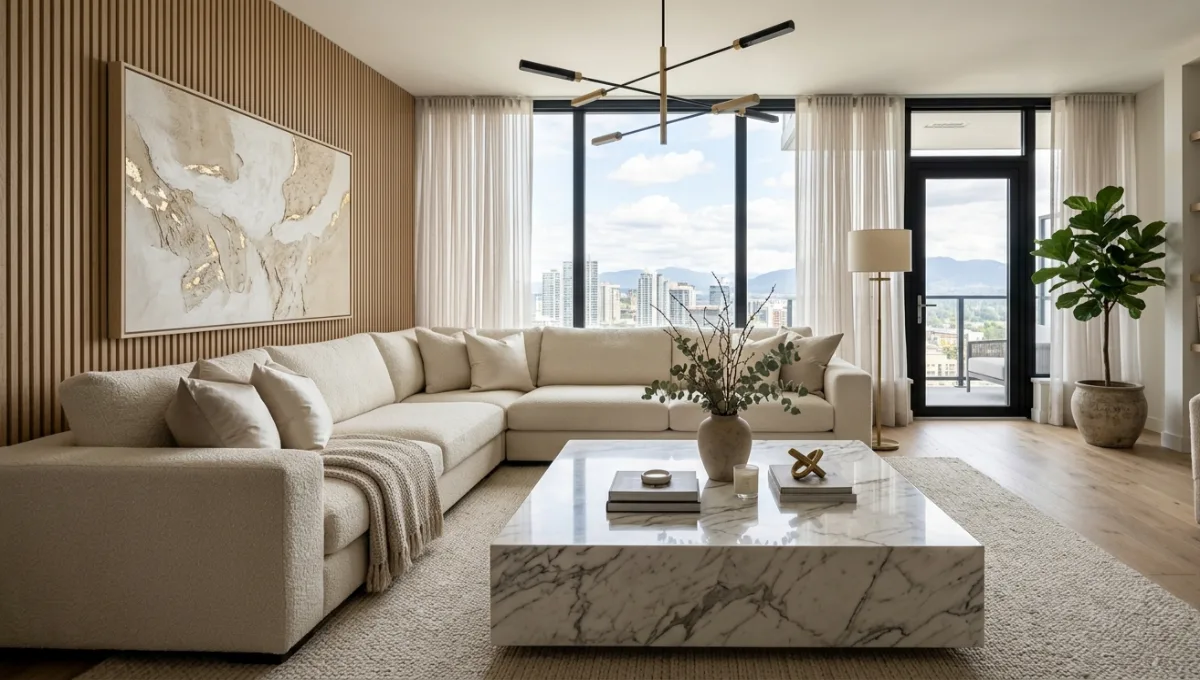
Accent walls are back in 2026 but the approach is different now. Instead of one bold paint color, people are doing limewash, vertical wood panels, or textured plaster. Benjamin Moore’s limewash options and the plaster kits at Home Depot have both gotten easier to apply yourself.
TV walls get overlooked. A floating media cabinet or shelving on either side of the screen turns a blank wall into something intentional. Without any framing, a TV just looks like it was mounted and forgotten.
Color Combinations That Work
White and off-white rooms are versatile but go flat without texture. Bouclé fabric, natural linen, raw wood, and ceramic pieces add depth without adding more color.
Beige and greige rooms are the easiest to live with long-term. They go with almost everything. The only risk is that they get boring. Add one deeper color through a throw, a rug accent, or a terracotta vase.
Gray rooms look sharp in rooms with good natural light. In darker rooms, go warm gray rather than cool gray. Blue-gray works especially well in homes near the coast.
Green rooms are everywhere in 2025 and 2026. Sage, olive, and deep forest all read differently. Sage pairs well with natural wood and cream. Olive works with leather. Deep green needs light walls or it gets heavy.
Earth tones terracotta, warm brown, burnt sienna are hard to mess up and hold up over time. A terracotta living room will still look good in ten years. Trendy colors are a gamble.
What Different Budgets Actually Get You
| Budget | What You Can Do |
|---|---|
| Under $200 | New throw pillows, one good plant, a piece of wall art, a throw blanket |
| $200–$600 | A quality area rug (highest-impact purchase at this price), a new lamp |
| $600–$2,000 | Accent chair, coffee table, lighting upgrade, full accessory refresh |
| $2,000–$5,000 | New sofa, rug, coffee table, side tables, layered lighting |
| $5,000+ | Full redesign paint, furniture, lighting, window treatments |
The rug deserves extra attention. A good rug from Rugs USA, Loloi, or even the better IKEA options changes a room more than almost anything else you can buy. And if you pick the wrong one, you can swap it out. A sofa is harder to undo.
Living Room Trends for 2026
The clean, clinical look that was popular in the early 2020s has run its course. What’s showing up now:
Curved furniture. Rounded sofas, arched mirrors, organic coffee table shapes. It started as a trend but has stuck around because it works it softens hard angles and feels more comfortable to be around.
Warm neutrals instead of gray. Greige, warm white, cream, and linen tones have mostly replaced cool gray in living rooms. This shift has been building for a few years and feels settled now.
Lived-in over perfect. Rooms with actual books on the shelves. Old furniture mixed with new. Spaces that look like someone uses them. This is getting more attention than showroom-perfect interiors.
Secondhand and sustainable. A lot of homeowners are shopping Facebook Marketplace, Craigslist, and vintage stores rather than buying everything new. Older pieces often have better proportions than current mass-market furniture anyway.
How the Design Process Actually Works
Whether it’s a full redesign in Los Angeles or a single-room refresh in Boston, I usually follow the same order.
Figure out how you use the room first. A family with kids and a dog needs a completely different setup than two adults who work from home. The design should follow how you actually live.
Settle on your color palette before you buy furniture. It’s much easier to commit to a paint color on a swatch than after you’ve already bought a sofa that might not work with it.
Spend on the anchor pieces. Sofa and rug. Everything else is secondary.
Add lighting as you go. You won’t know exactly where you need a floor lamp until the furniture is actually in place.
Wait before you accessorize. Most people add accessories too fast. Give the room two or three weeks. What’s missing will become obvious.
If you’re thinking about hiring someone to help, it’s worth understanding how much an interior designer costs before you start making calls.
Living Room Design Ideas Faq
What color makes a living room look bigger?
Light, warm neutrals soft whites, creamy beiges, warm greiges. Pure bright white can actually read cold and tight. Finish matters too: matte or eggshell holds warmth better than satin. Sherwin-Williams Accessible Beige and Benjamin Moore White Dove are both solid choices.
How do I decorate a living room on a small budget?
Start with the rug, then lighting, then one or two quality accent pieces. Paint is the lowest-cost, highest-impact change you can make. Skip cheap furniture sets they look cheap and don’t last. A used sofa from Facebook Marketplace in good condition beats a new one at the low end of the market.
What wall decor works best?
One large piece or a cohesive gallery wall. Lots of small, unrelated frames just look busy. Keep artwork at eye level and close enough to the furniture that it feels connected to the room, not floating near the ceiling.
How do I make a small living room feel bigger?
Furniture with visible legs, tall storage, a rug that fits the whole seating area, a mirror across from the main light source, and light paint. Keep things tidy clutter hits harder in small spaces.
What’s the single most common mistake?
Furniture pushed all the way to the walls. Pull it in. Even a few inches makes a room feel more intentional and more comfortable.
What furniture do I actually need?
A sofa, a coffee table or ottoman, and one side table with a lamp. Start there and live in it. Add what feels missing rather than buying everything at once.
How do I figure out what style I want?
Look at what you’re actually drawn to, not just what’s trending. If you hate dusting and tidying, maximalist boho will drive you crazy. If minimal spaces feel cold to you, modern probably isn’t the right fit. The 7 types of interior design breakdown is a good starting point.